




Aluminum Baseboard Strength Performance System And Scene-Based Selection Guidelines
一. Core Strength Indicators and Substrate Benchmarks
The strength of aluminum baseboards is divided into two dimensions: substrate inherent strength and finished product comprehensive strength. The former is determined by alloy grade and heat treatment process, while the latter incorporates the combined effects of structural design, wall thickness, and surface treatment.
1. Mechanical Performance Standards for Substrates
Over 90% of aluminum baseboards in the industry are extruded from 6063 series aluminum alloys. The mechanical properties vary significantly under different heat treatment conditions, and core indicators must meet the requirements of GB/T 5237.1-2017 Aluminum Alloy Architectural Profiles - Part 1: Substrates:
| Material Condition | Tensile Strength (MPa) | Proof Strength (Non-Proportional Extension) (MPa) | Elongation after Fracture | Brinell Hardness of Substrate (HBW) | Application Scope |
|---|---|---|---|---|---|
| 6063-T5 (Industry Standard) | ≥175 | ≥130 | ≥8% | ≥60 | Standard for residential and general commercial use |
| 6063-T6 (High-Strength Grade) | ≥215 | ≥170 | ≥8% | ≥75 | High foot traffic and heavy-load scenarios |
Note: T5 refers to the process of air cooling + artificial aging after extrusion forming, which balances strength and surface forming quality and is the universal process for decorative aluminum profiles. T6 adopts solution quenching + artificial aging, which increases strength by approximately 25% but comes with higher forming difficulty and cost.
2. Comprehensive Performance Requirements for Finished Products
The strength of finished aluminum baseboards must meet both structural mechanics and surface damage resistance requirements. According to relevant specifications for decorative architectural aluminum profiles, qualified products must reach the following benchmarks:
Impact resistance: ≥8J, capable of withstanding daily furniture moving, cleaning tool impacts, and pedestrian collisions without permanent denting;
Flexural strength: ≥200MPa, maintaining no warping or deformation under long-term stress after installation, with stable wall fit;
Surface impact resistance: ≥50kg·cm for powder coating process, with no peeling or cracking of the coating after impact;
Surface hardness: ≥HB50 for the substrate; the anodized film layer can reach 120~180HV Vickers hardness, resistant to daily scratches and abrasion.
二. Four Core Factors Affecting Finished Product Strength
With the same substrate, the actual strength of finished products can differ by more than 40%, depending primarily on three design elements: wall thickness, structure, and process.
1. Profile Wall Thickness: The Most Intuitive Strength Variable
The conventional wall thickness in the industry ranges from 0.6mm to 1.5mm, and wall thickness is positively correlated with dent resistance and bending resistance:
Products with wall thickness below 0.6mm are non-standard material-reduced products, which can deform under hand pressure and are prone to loosening and gap widening after installation;
For every 0.2mm increase in wall thickness, impact resistance improves by approximately 20%~25%, making it the most direct way to upgrade strength.
"Nominal wall thickness exaggeration" is widespread in the market. For example, a product labeled 1.0mm may actually only measure 0.7~0.8mm. When selecting products, the actual wall thickness measured by calipers shall prevail, rather than the merchant's nominal value.
2. Cross-Section Structure: The Invisible Strength Support
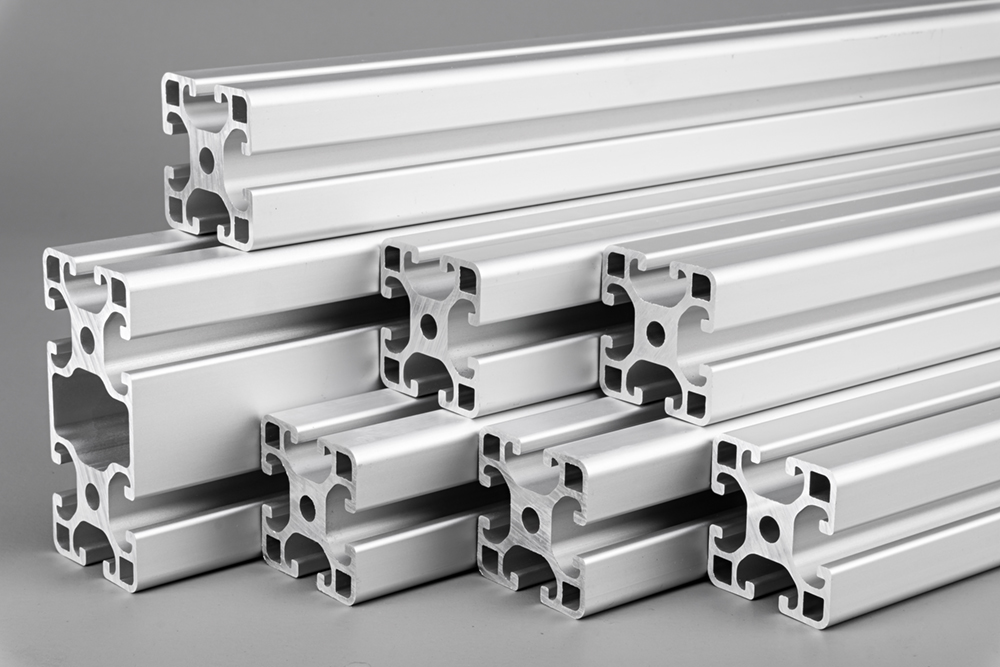
The mainstream L-shaped cross-section with back double buckle grooves + transverse reinforcing ribs can effectively disperse stress, improving bending and warping resistance by more than 25% compared to flat profiles without ribs. Some low-cost products eliminate internal reinforcing ribs and rely only on thin aluminum plates, which are prone to wavy deformation after long-term use.
3. Surface Treatment Process: Secondary Strength Enhancement
Surface treatments such as anodizing and powder coating not only improve decorativeness but also form a hardened protective layer on the aluminum surface:
When the anodized film thickness reaches 10~25μm, surface hardness increases significantly, and wear and scratch resistance are enhanced;
Thick-film powder coating can buffer mild impacts, reduce the risk of substrate denting, and improve corrosion resistance at the same time.
4. Installation Structure: The Final Guarantee of Strength
Buckled installation with expansion screw fixation provides more uniform stress distribution than adhesive installation, avoiding deformation caused by single-point stress. The back waterproof rubber strip groove can not only seal against moisture but also assist in dispersing wall impact forces.
三. Comprehensive Scenario-Based Strength Selection Guide
According to the foot traffic density and collision loss level of the application scenario, aluminum baseboards with different strength configurations can be matched accordingly:
1. Residential Scenarios
Conventional spaces (living room, bedroom, study): 6063-T5 substrate with measured wall thickness of 0.8mm and reinforcing rib structure is recommended. With low daily foot traffic and collisions mainly from cleaning tools and light furniture moving, this configuration fully meets residential durability needs and is the most cost-effective choice for home decoration.
High-wear residential spaces (entryway, hallways, households with children/pets): 6063-T5 substrate with measured wall thickness of 1.0mm is recommended. Its dent and scratch resistance is about 30% higher than the 0.8mm version, capable of withstanding toy impacts and pet scratches, maintaining better appearance over long-term use.
2. Commercial Public Scenarios
General commercial use (offices, small shops, hotel guest rooms): 6063-T5 substrate with measured wall thickness of 1.0mm is recommended. With moderate personnel flow and higher frequency of office furniture and luggage movement than residential settings, this configuration can withstand daily friction and mild impacts.
High foot traffic spaces (shopping malls, supermarkets, hospitals, school corridors): 6063-T5 substrate with measured wall thickness of 1.2~1.5mm is recommended; for higher requirements, it can be upgraded to 6063-T6 substrate. With frequent scraping and impacts from floor scrubbers, trolleys, and luggage, the combination of thick wall + reinforcing ribs can greatly reduce maintenance and replacement frequency.
3. Industrial / Special Heavy-Load Scenarios
(Factory workshops, warehouses, underground garages, logistics passages) 6063-T6 high-strength aluminum alloy with measured wall thickness of 1.5mm and above is recommended. With risks of forklift and hydraulic truck passage and heavy object collisions, the high-yield-strength substrate paired with thick-wall structure can resist impact and rolling from heavy equipment, meeting industrial-grade durability requirements.
四. Industry Status and Quality Identification Tips
Currently, the entry threshold for the aluminum baseboard industry is relatively low. Some merchants cut costs by reducing wall thickness, lowering substrate grade, and simplifying heat treatment processes, resulting in substandard product strength. During procurement and selection, quality can be identified through three key points:
Verify test reports: Require suppliers to provide mechanical performance test reports with CMA certification to confirm that core indicators such as tensile strength, yield strength, and impact resistance meet standards;
Measure wall thickness and structure: Measure the actual wall thickness of the profile with calipers, and check whether there are complete reinforcing ribs and buckle grooves on the back;
Confirm substrate identification: Clarify that the substrate grade is 6063-T5 to avoid passing off recycled aluminum or miscellaneous aluminum as qualified materials.
As the decorative building materials industry develops toward high quality, aluminum baseboards are evolving in the direction of "high strength with light weight, customized structure, and standardized performance". Clarifying the strength indicator system and standardizing scenario-based selection is not only the core of ensuring project quality, but also the key to promoting the sound development of the industry.