Leave a Message
Picking out an Aluminium Profile Machining Center isn’t just about grabbing faster equipment. It’s really about consistency, control over the process, and trusting your production in the long run.
In day-to-day fabrication, those tiny mistakes—like a two-millimeter shift in your profile or rough edges from a drilled hole—can end up costing you big time. Rushing a tool change? That could wreck an entire batch. Luckily, an Aluminium Profile Machining Center steps in to minimize these risks with computer-controlled cutting, drilling, tapping, and routing. Plus, it helps keep things consistent across doors, windows, curtain walls, or industrial frames. But hey, automation isn’t some magic fix. If your tooling’s off, feeds are wrong, or your operators aren’t trained properly, the results can still be pretty disappointing.
Yusuf Altintas, a well-known expert in machining dynamics, once said, “Machining is a science, but it’s also an art.” And honestly, that hits close to home on the factory floor. Sure, the machine gives you accuracy, but it’s the experienced humans who interpret things like vibrations, chip color, surface quality, and tool wear that really make the difference.
Choosing the right machine can cut down on manual transfers and speed up your overall workflow. It can also help cut down on material waste if you plan your nesting and cutting carefully. But don’t just fall for those fancy brochures—maximum spindle speed doesn’t automatically mean better productivity. When you’re evaluating options, think about the profile length, spindle power, travel axes, clamping design, software compatibility, maintenance ease, and whether you have good local support.
The best choice really depends on what you’re doing day to day. It’s a smart move to test out how it handles familiar profiles, measure your finished parts, and ask some tough questions. Sometimes, a simpler machine can actually be the smarter investment — it’s all about what works best for your specific needs.
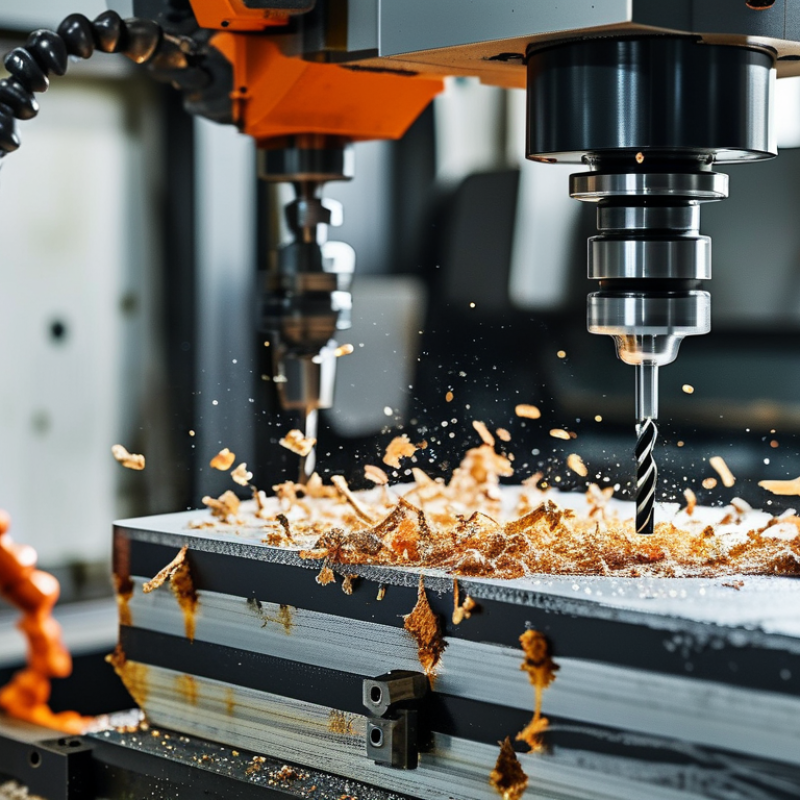
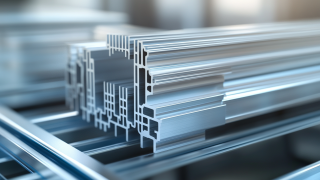
An Aluminum Profile Machining Center is a specialized machine designed to cut, drill, mill, and tap aluminium profiles with controlled accuracy. It uses computer-guided movement to position tools along several axes. This allows one machine to perform multiple operations without repeated manual setup.
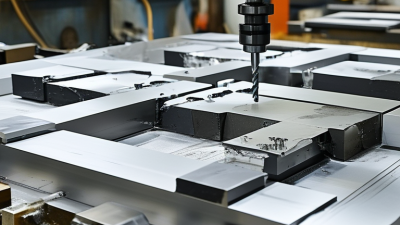
In practical workshop use, the process begins with a digital drawing and a securely clamped profile. The operator loads the material, checks its dimensions, and selects suitable cutting tools. A typical frame profile may receive end cuts, drainage holes, slots, and threaded openings in one cycle. Clean chips gather near the cutting area. The finished part should match the drawing with minimal adjustment.
It saves time.
However, the machine is not a magic box. Poor clamping can cause vibration, while incorrect feed settings may leave rough edges or visible tool marks. Aluminium also requires careful chip removal because soft chips can stick to the cutter. Experienced operators inspect the first piece before continuing production. They check hole positions, surface quality, and final length with calibrated measuring tools.
A reliable Aluminum Profile Machining Center should offer stable movement, repeatable positioning, practical safety protection, and accessible maintenance points. Its value depends on the entire process, not only on advertised speed. Regular tool inspection and accurate programming remain essential, even when the equipment appears highly automated.
| Data Dimension | Typical Data or Specification | Why It Matters | Practical Application |
|---|---|---|---|
| Definition | A CNC machine designed to mill, drill, tap, slot, cut, and contour aluminium profiles. | Combines several machining operations in one controlled setup. | Suitable for window and door frames, curtain-wall components, industrial frames, and linear aluminium parts. |
| Machine axes | Common configurations include 3-axis, 4-axis, and 5-axis systems. | More axes allow access to multiple faces and reduce manual repositioning. | 3-axis machining is suitable for standard face operations; 4- and 5-axis systems support angled and multi-face work. |
| Machining length | Often selected in working lengths from approximately 3,000 mm to more than 7,000 mm, depending on the machine configuration. | The working envelope determines the maximum profile length that can be processed in one setup. | Long-bed models are useful for continuous aluminium extrusion and large structural sections. |
| Spindle speed | High-speed spindles commonly operate in the approximate range of 12,000–24,000 revolutions per minute. | Aluminium is machined efficiently with high cutting speeds and sharp, suitable tooling. | Supports clean milling, drilling, and slotting while helping reduce cycle time when cutting parameters are correctly selected. |
| Positioning accuracy | Typical CNC specifications may be stated around ±0.01–0.05 mm, subject to machine design, calibration, temperature, and workholding. | Accurate positioning improves dimensional consistency between repeated parts. | Important for assemblies requiring aligned holes, repeatable joints, and consistent profile lengths. |
| Tool capacity | Automatic tool changers commonly hold approximately 6–24 tools, with capacity varying by configuration. | Multiple tools can be used in sequence without frequent manual intervention. | Allows one program to combine end milling, drilling, tapping, chamfering, and slotting operations. |
| Workholding | Pneumatic or hydraulic clamps are commonly used, with adjustable supports for different profile geometries. | Secure clamping reduces vibration and helps protect the profile from deformation. | Useful when machining thin-walled, hollow, or non-standard aluminium sections. |
| Programming and control | CNC control with CAD/CAM compatibility, program storage, tool libraries, and diagnostic functions. | Digital programming improves repeatability and simplifies production of complex geometries. | Suitable for customized batches, repeat orders, and designs with frequent dimensional changes. |
| Chip and coolant management | Typical systems include chip collection, air blast, mist lubrication, or flood coolant, depending on the process. | Aluminium chips must be cleared from the cutting zone to prevent recutting and surface damage. | Improves tool life, surface finish, housekeeping, and process stability. |
| Production efficiency | Several operations can be completed in one setup, reducing manual handling and intermediate positioning. | Fewer setups generally reduce handling time and the risk of cumulative positioning errors. | A strong choice for medium- to high-volume production and repeatable custom manufacturing. |
| Material compatibility | Primarily intended for aluminium alloys; some systems can also process other non-ferrous materials with suitable tooling and parameters. | Tool geometry, cutting speed, feed rate, and lubrication must match the material. | Provides controlled machining for extruded profiles while limiting burrs, heat buildup, and surface defects. |
| Primary benefits | High repeatability, flexible production, reduced manual labour, accurate multi-face machining, and consistent quality. | These advantages can improve throughput and reduce variation in finished components. | Best suited to manufacturers that need precise, repeatable, and scalable aluminium profile processing. |
| Note: Actual performance depends on machine structure, spindle power, tooling, profile geometry, workholding, cutting parameters, operator practice, and environmental conditions. The ranges shown are typical industry-level reference values rather than universal specifications. | |||
It loads the extrusion onto a rigid bed and secures it with pneumatic clamps. Sensors check length, orientation, and clamping pressure. The controller follows a programmed toolpath. The spindle then cuts holes, slots, pockets, and end features.
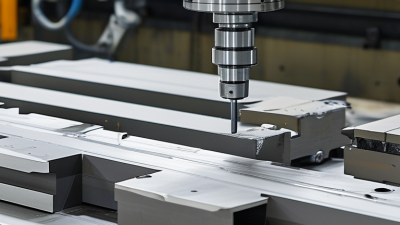
Shorter tools reduce vibration inside narrow profile channels. Long tools may deflect or chatter. This can leave rough surfaces and inaccurate features. Small details matter.
Coolant or minimum-quantity lubrication removes heat and helps carry chips away. Chip removal supports cleaner cuts and longer tool life. Too much coolant can reduce scrap recovery value.
Operators may use calipers, probes, or a coordinate measuring machine. They check dimensions, hole positions, burrs, and assembly fit. A countersunk hole with a small burr can cause trouble.
Common applications include windows, doors, curtain walls, solar rails, transportation parts, furniture, and automation structures. These systems process lightweight profiles with repeatable accuracy. The machine is useful, but not universal.
Match the working length to the longest profile, not the average one. Check spindle speed, tool access, chip removal, and fixture flexibility. Test a real production profile before making a decision.
They can, especially for customized parts and reduced manual transfers. However, programming and fixture preparation may take more time than expected. Low-volume work can make setup costs feel surprisingly high.
A fast cycle can still hide burrs, dimensional drift, or weak clamping. Operators should compare drawings, tool data, and inspection records. The process may look correct and still need adjustment.
Clean chips should be collected separately from mixed waste and excess coolant. Recycled aluminium requires about five percent of the energy used for primary production. Savings are not automatic. The scrap bin is part of quality control.
An Aluminium Profile Machining Center is a specialized CNC system designed to cut, drill, mill, tap, and shape aluminium profiles with high accuracy and efficiency. It typically uses computer-controlled tools, automated positioning, and optimized clamping systems to process long or complex aluminium components consistently. Depending on its configuration, it can perform operations such as end milling, slotting, hole drilling, contour cutting, and multi-sided machining, reducing the need for repeated manual setup.
The main advantages include improved precision, faster production, reduced material waste, and better repeatability, making it suitable for industries such as construction, transportation, solar energy, furniture, and industrial equipment. When evaluating models, buyers should consider spindle power, machining length, number of axes, tool-changing capability, software compatibility, workholding design, safety functions, maintenance requirements, and after-sales technical support. Choosing the right Aluminium Profile Machining Center can help manufacturers achieve reliable quality while improving overall production efficiency.