Leave a Message
Picking the right Aluminum Profile Cnc machining really starts with a simple question: what exactly needs to happen with the finished part? Aluminum’s great because it’s lightweight, resistant to corrosion, and conducts heat pretty well. But honestly, those perks only matter if the machining process is reliable. With aluminum profiles, you can turn extrusions into all kinds of stuff—frames, housings, rails, and precision brackets. The thing is, each of these applications requires a different mix of strength, speed, finish quality, and cost. A decent supplier won’t just rush into tooling options without digging into the drawings first, because skipping that step can lead to some costly mistakes.
Experience really shows in Cnc Aluminum Profile machining—it’s often about the small decisions that count. Skilled technicians pick cutters that help reduce burrs and avoid damaging delicate thin walls. They also take care to secure long sections properly, because vibrations can throw off an otherwise perfect cut. Things like choosing the right coolant, managing chip removal, and monitoring tool wear all play a role in getting that smooth surface finish. Even a seemingly simple slot can be pretty critical—it might determine how the whole assembly fits together. So, trustworthy shops double-check dimensions using calibrated calipers, height gauges, and even coordinate measuring machines. They keep detailed inspection records too, tracing everything from raw extrusion to the finished component. What does that give you? Not just a clean edge, but consistent, repeatable performance.
And this approach makes customizing parts way easier. You can drill holes, tap threads, cut pockets, or make angled cuts—not needing special molds for each variation. That kind of flexibility is a big win for engineers who want to test prototypes or tweak designs before going full scale. But hey, CNC isn't always the answer—especially when you’ve got huge production runs or if your drawings are a bit off. Sometimes other processes make more sense. Even the best teams should always double-check things like burrs, flatness, and how well parts fit during real-world assembly. The key is balancing material know-how, clear communication, and solid quality checks. That’s why, when you need precision, flexibility, and reliable delivery, aluminum profile CNC machining is still a solid choice—if you get it right.
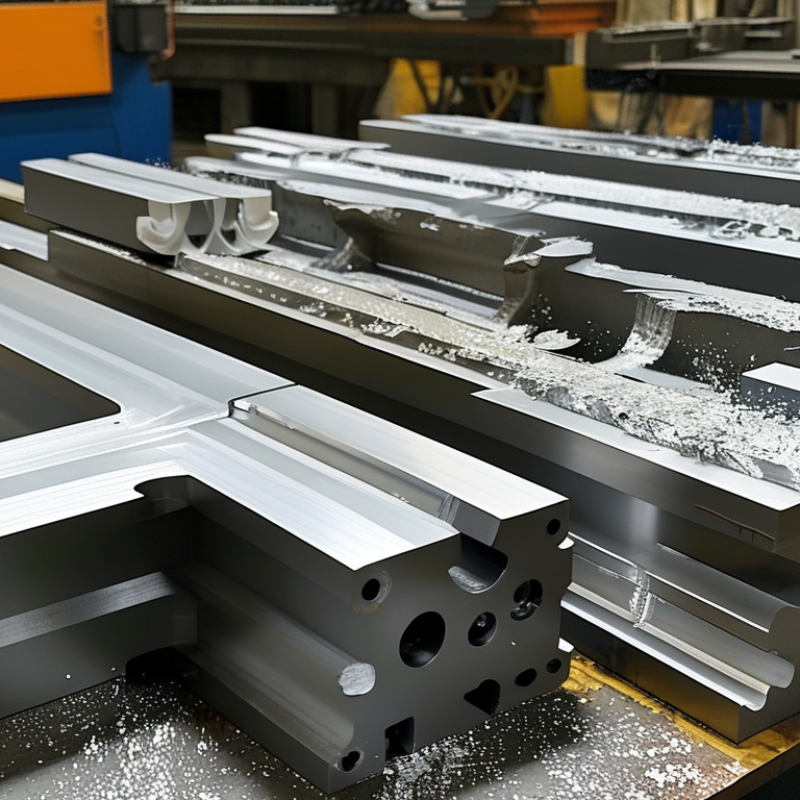
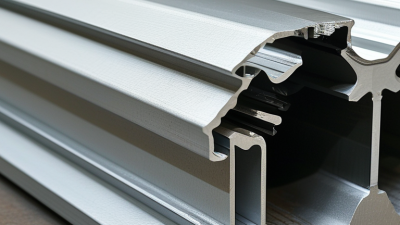
Aluminum profile CNC machining is a controlled process for shaping extruded aluminum sections with computer-guided cutting tools. The machine follows a digital drawing to mill slots, holes, pockets, angles, and precise mounting surfaces. Unlike simple sawing, CNC machining can produce repeated features with consistent dimensions. It also handles complex profiles that would be difficult to finish manually. In practical workshop use, machinists check the profile’s alloy, wall thickness, and straightness before programming. These details affect cutting speed, tool pressure, and final accuracy. A perfect first pass is not guaranteed.
Tips: Secure the profile firmly, but avoid crushing thin walls. Use sharp tools and suitable cutting fluid when required. Inspect critical dimensions after machining, not only before production. Remove burrs carefully, especially around holes and narrow channels.
Good CNC work begins with a realistic design. Extremely thin sections may vibrate during cutting. Deep pockets can also create tool deflection and rough surfaces. Engineers often add support points, reasonable corner radii, and accessible datums to improve stability. Tolerances should match the part’s function, because unnecessary precision increases machining time and cost. A coordinate measuring machine, height gauge, or calibrated caliper can verify important features. Surface marks may still appear, even when dimensions are correct. That difference deserves attention during quality review.
| Data Dimension | What It Means | Typical Facts and Data | Why It Matters |
|---|---|---|---|
| Definition | Aluminum profile CNC machining is the computer-controlled cutting, drilling, milling, tapping, or contouring of extruded aluminum profiles. | The CNC machine removes material according to a digital CAD/CAM program while holding the profile in a fixture. | It creates accurate holes, slots, pockets, angled cuts, and complex end features that are difficult to produce with manual tools. |
| Common Aluminum Alloys | Aluminum profiles are commonly made from alloys selected for strength, corrosion resistance, machinability, or extrusion performance. | Frequently used alloys include 6060, 6061, and 6063. Alloy properties vary by temper and product specification. | The alloy affects cutting performance, mechanical strength, surface finish, and suitability for structural or decorative applications. |
| Material Density | Aluminum is a lightweight engineering metal. | Aluminum density is approximately 2.70 g/cm³, which is about one-third the density of steel at approximately 7.85 g/cm³. | Lower weight can simplify handling, reduce equipment loads, and support lightweight product designs. |
| Machining Operations | A CNC setup can perform several operations on the same profile. | Typical operations include sawing, face milling, drilling, reaming, tapping, slot milling, pocketing, chamfering, and contour milling. | Multiple operations in one controlled setup can reduce repositioning errors and improve production consistency. |
| Typical Dimensional Capability | Achievable accuracy depends on the machine, tooling, workholding, profile geometry, thermal conditions, and drawing requirements. | General CNC milling tolerances are often specified around ±0.05 mm to ±0.20 mm for suitable features. Tighter tolerances require controlled processes and must be confirmed on the technical drawing. | Clear tolerance requirements help balance fit, function, inspection effort, and production cost. |
| Surface Finish | Machining produces a controlled surface on cut or milled areas, while the remaining profile may retain its original extruded finish or receive secondary treatment. | Possible finishes include as-machined, anodized, powder-coated, painted, or chemically treated surfaces. | Surface treatment can improve appearance, wear resistance, and corrosion protection, although coating thickness may affect dimensions. |
| Corrosion Resistance | Aluminum naturally forms a thin oxide layer that helps protect the underlying metal. | Corrosion performance depends on alloy, environment, surface condition, and any applied finish. | Aluminum profiles are suitable for many indoor, architectural, transportation, and equipment applications, provided the environment is properly evaluated. |
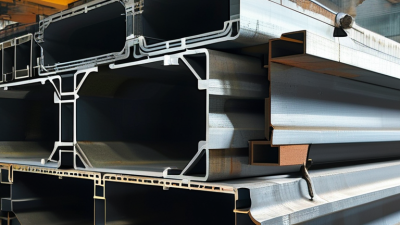
| Design Flexibility | Extruded profiles can provide a near-net cross-section before CNC machining. | Standard or custom profiles may include channels, ribs, bosses, and hollow sections that can be machined into finished components. | Combining extrusion with CNC machining can reduce material waste and shorten the time required to create complex parts. |
| Production Volume | CNC machining can support prototypes, low-volume orders, and repeat production. | Digital programs can be reused and adjusted for different batches, while fixtures can be designed to support repeatable loading. | The process is suitable when flexibility and consistent quality are more important than dedicated high-volume tooling alone. |
| Material Efficiency | Starting with an extruded profile can reduce the amount of material removed compared with machining a complete part from a solid billet. | Material savings depend on the profile cross-section, finished geometry, cut length, and machining allowance. | Reduced stock removal may lower machining time, tool wear, material consumption, and overall part weight. |
| Repeatability | CNC equipment follows programmed tool paths and can use dedicated fixtures or locating features. | Repeatability is influenced by machine condition, fixture rigidity, tool wear, thermal stability, and inspection controls. | Consistent processing helps maintain uniform dimensions across repeated parts. |
| Typical Applications | Machined aluminum profiles are used in products that require lightweight structures and accurately positioned features. | Applications include machine frames, automation equipment, guards, heat sinks, lighting structures, transportation components, architectural systems, and electronic enclosures. | The combination of low weight, machinability, and corrosion resistance supports a wide range of engineered products. |
| Heat Dissipation | Aluminum conducts heat efficiently compared with many common structural materials. | Thermal conductivity varies by alloy and temper; commercially pure aluminum is about 235 W/m·K, while many alloys have lower values. | Machined aluminum profiles can be useful for heat sinks, housings, and structures where thermal transfer is important. |
| Key Design Considerations | Profile geometry and machining requirements should be reviewed before production. | Important factors include wall thickness, unsupported spans, hole location, internal corners, clamping access, burr control, tolerances, and post-machining finish requirements. | Designing for tool access and stable workholding can improve quality, reduce cycle time, and prevent profile deformation. |
| Main Benefits | The process combines the advantages of aluminum extrusion with the precision of computer-controlled machining. | Lightweight, corrosion-resistant, flexible, repeatable, suitable for complex features, and often more material-efficient than machining from solid stock. | These characteristics make aluminum profile CNC machining a practical option for functional components and lightweight assemblies. |
: It converts an extruded aluminum section into a precise functional component. The process uses digital drawings, cutting tools, and inspection equipment. The first pass may fail.
An operator reviews the digital model and checks the raw profile. They inspect dents, twisting, and uneven wall thickness. Material condition matters.
Soft jaws or custom supports hold the profile during cutting. Supports should sit near major cutting areas. Poor clamping can cause vibration, like a ruler trembling over a table edge.
Roughing removes excess aluminum quickly. Finishing creates accurate holes, slots, channels, and edge details. Tool geometry, cutting speed, and coolant must suit the alloy.
Operators use probes, calipers, or coordinate measuring equipment. They check critical dimensions, positions, and surface details. Heat, burrs, and clamping pressure can change results.
Automation, electronics, transportation, medical equipment, and solar systems use them. Common parts include frames, sensor mounts, heat sinks, brackets, and equipment housings.
Drawings should define datums, tolerances, surface finishes, and inspection points. Engineers should also check tool access, wall thickness, grain direction, and fastening methods. Thin sections may warp.
Support the profile near every major cut and remove chips frequently. Track tool wear during repeated production. Keep aluminum chips clean and separated for better recycling. Perfect consistency is difficult.
Aluminum Profile Cnc machining is a precise manufacturing method used to shape aluminum profiles into customized components with accurate dimensions and complex features. The process generally includes selecting a suitable profile, creating a digital design, securing the material, programming the CNC equipment, and performing cutting, drilling, milling, or finishing operations. Aluminum is especially suitable because it is lightweight, corrosion resistant, easy to machine, and offers a useful balance of strength and flexibility.
The main advantages include excellent dimensional accuracy, repeatable production, efficient material use, and the ability to create both simple and highly detailed parts. Aluminum Profile Cnc components are widely used in construction, automation, transportation, electronics, renewable energy, and industrial equipment. When choosing a machining service, customers should evaluate technical capabilities, equipment quality, material options, quality control procedures, production capacity, delivery reliability, communication, and overall cost to ensure the service matches their design and application requirements.