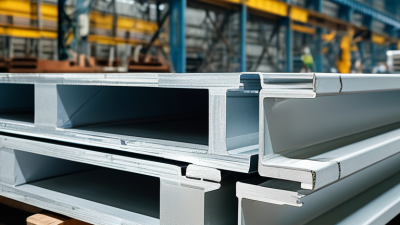
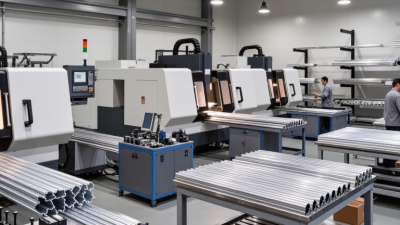
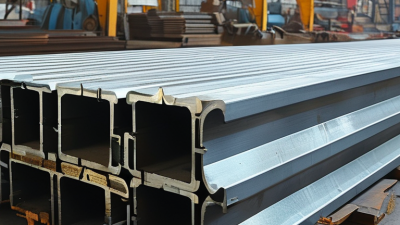
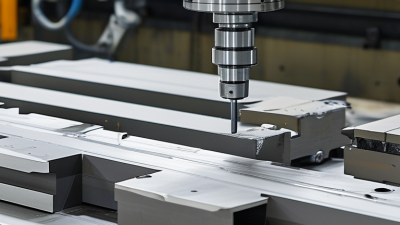
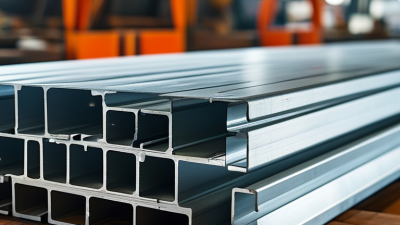
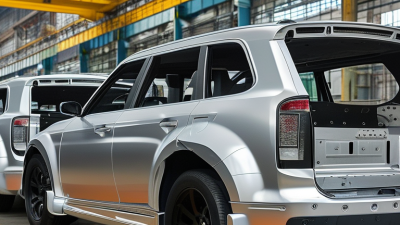
Ever wondered why so many folks are turning to aluminium profiles for industrial setups? Well, it’s not just about looking trendy—there’s real substance behind it. If you dig into the numbers, the International Aluminium Institute reported that in 2023, the global production of primary aluminium hit around 70.6 million tonnes. That’s a massive amount, and it shows how aluminium keeps playing a key role in everything from transportation and renewable energy projects to machinery and building structures. Plus, according to Grand View Research, Extrusion Aluminium is a pretty hot market right now—mainly because people love its lightweight feel and the flexibility to create modular stuff that’s easy to reconfigure.
That really matters.
For example, an Industrial Aluminium Profile can be a game-changer. Think rigid frames, protective workstations, conveyor supports, or even adaptable production units. One of the coolest things? Its smooth, clean surface, resistance to corrosion, and an excellent strength-to-weight ratio mean less maintenance hassle. Plus, engineers love how they can tweak and modify setups without having to do heavy welding—sometimes just a drill, some connectors, and a good plan are enough. It’s faster, it’s cleaner, and it allows for quicker changes—who doesn’t want that?
Roy Harvey, who used to lead Alcoa, once said aluminium is 'a material of choice for a sustainable future.' And honestly, that’s pretty spot on. The International Aluminium Institute’s studies show aluminium’s great recycling potential and durability over the long haul. But here’s the thing—it's not automatically eco-friendly. Picking the right mix of electricity sources, alloy quality, extrusion process, and how recycling is handled at the end makes all the difference. This is where some marketing claims tend to oversimplify the story.
So, if you’re after a dependable aluminium profile solution for your project, make sure it’s backed by verified alloy specs, precise load analyses, surface treatments, and transparent supplier info. On a workshop floor, profiles might look pretty much the same, but their tolerances and specifications are a whole different ballgame. Choosing the right system means figuring out a balance between cost, ease of assembly, safety margins, and future growth plans. Usually, the most affordable option upfront isn’t the best long-term—what matters is how well it adapts and stays useful as your needs evolve.
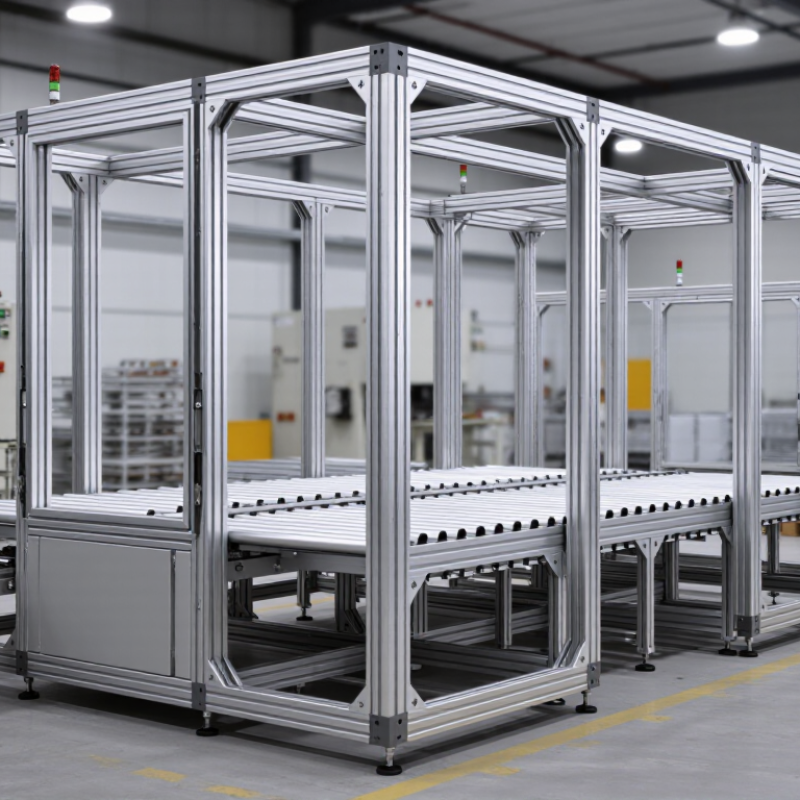
Aluminium’s 2.70 g/cm³ Density Cuts Weight by 65% Versus Steel
Why Choose Aluminium Profile Industrial Systems?
Aluminium has a density of 2.70 g/cm³, while typical steel measures about 7.85 g/cm³. For the same volume, aluminium weighs roughly 65% less. That difference is easy to feel when carrying a 1.2-metre frame across a workshop. One person can often position it without a trolley or lifting equipment.
This lower mass supports faster assembly and easier maintenance. Aluminium Profile Industrial systems can use lighter brackets, panels, and guarding components. Reduced weight also places less demand on floors, supports, and moving mechanisms. In practical installations, technicians spend less time aligning heavy sections. Small adjustments become manageable by hand.
Less weight does not mean unlimited strength. It depends on profile geometry, wall thickness, alloy, and connection design. A poorly selected section can bend under vibration or uneven loading. That is an important limitation. Designers should check span, deflection, fastener pull-out, and local loads rather than compare density alone. Aluminium also expands more with temperature changes than steel. Long frames may need thoughtful joint details.
The material’s clean surface and reusable connection methods can reduce workshop disruption. Cutting marks remain visible, though. Careful measurement still matters. A 65% weight reduction helps, but it cannot repair careless engineering.
6063-T6 Profiles Deliver Approximately 215 MPa Yield Strength
Why Choose Aluminium Profile Industrial Systems?
An Industrial Aluminum Profile made from 6063-T6 alloy offers a practical balance of strength, weight, and machinability. With an approximate yield strength of 215 MPa, it resists permanent deformation under demanding loads. This makes it suitable for machine frames, guarding, workstations, conveyor supports, and modular enclosures.
That number matters. Yield strength indicates when the profile may begin bending permanently, not its maximum breaking load. Actual performance depends on profile geometry, wall thickness, span, joints, and load direction. A larger hollow section can resist bending better than a smaller solid-looking section. Engineers should check deflection, fastener pull-out, and connection stiffness instead of relying on alloy data alone.
In workshop applications, 6063-T6 profiles are easy to cut, drill, and assemble with repeatable accuracy. Their smooth surface also supports clean production areas. However, careless corner joints can reduce the strength of an otherwise well-designed frame. I have seen rigid profiles move because the connectors were under-tightened. That detail is easy to miss.
Material certificates, dimensional checks, and sample load testing improve reliability. The stated 215 MPa value can vary with applicable standards, heat treatment, and section condition. It should be verified before safety-critical use. A thoughtful design leaves room for vibration, uneven loading, and future modifications. Real equipment is rarely as perfect as the drawing.
Pure Aluminium Conducts Heat at Up to 237 W/m·K
Why Choose Aluminium Profile Industrial Systems?
Pure Aluminium Conducts Heat at Up to 237 W/m·K
Pure aluminium can conduct heat at approximately 237 W/m·K near room temperature. This value appears in ASM Handbook data for commercially pure aluminium. NIST reference data also confirms that conductivity changes with temperature and material purity. The number is impressive. It is not a guarantee.
In practical profile systems, alloys usually replace pure aluminium because they improve strength, machinability, and corrosion resistance. Their thermal conductivity is often lower, commonly ranging from about 120 to 200 W/m·K, depending on alloy and temper. A heated frame beside a motor may spread warmth quickly through its length. However, joints, coatings, fasteners, and air gaps can interrupt that path. The profile alone cannot solve every thermal problem.
Engineers should measure the actual operating temperature. They should also check contact resistance and ventilation. This matters in machine guards, heat-spreading supports, inspection frames, and light equipment enclosures. ASM Handbook emphasizes that alloy selection affects both mechanical and thermal performance. The International Aluminium Institute’s material data further shows aluminium’s established role in industrial applications and recycling systems.
A small mistake remains common. Designers often quote 237 W/m·K for an alloy profile without verification. That assumption can distort thermal calculations. Product certificates, test conditions, and alloy specifications deserve careful review. Real performance depends on geometry. Surface area matters too.
EN 755-9 Specifies Millimetre-Level Extrusion Tolerances
Aluminium profile industrial systems depend on repeatable dimensions, not appearance alone. EN 755-9 specifies dimensional and form tolerances for extruded profiles, including width, height, wall thickness, straightness, and twist. These limits are measured in millimetres, often with tighter control for smaller sections. The permitted tolerance changes with profile size, shape complexity, and manufacturing condition. Therefore, “millimetre-level” does not mean every feature has identical precision.
Small deviations can affect brackets, sliding guides, seals, and automated assembly. A 0.5 mm variation may seem minor on paper. It can still create friction or misalignment across a long frame. Production teams should check critical dimensions against the applicable EN 755-9 table, rather than relying on a general tolerance statement. This step is practical. It is also often missed.
The International Aluminium Institute reported global primary aluminium production above 70 million tonnes in 2023, showing the scale of this highly engineered material sector. At that volume, consistent extrusion control becomes an industrial necessity, not a marketing detail. European Aluminium also reports that recycling aluminium can save up to 95% of the energy used for primary production. That advantage matters, but recycled content does not automatically guarantee profile accuracy. Alloy selection, die condition, cooling, and inspection still influence results. A specification can guide production, but it cannot replace measurement. Mistakes happen. Good systems leave room to detect them.
Natural 2–10 nm Oxide Layers Improve Corrosion Resistance
Why Choose Aluminium Profile Industrial Systems?
Industrial Aluminum Extrusion benefits from aluminium’s naturally protective oxide film. When fresh metal meets air, it forms a dense layer roughly 2–10 nm thick within moments. This invisible barrier slows oxygen and moisture from reaching the underlying metal. ASM Handbook, Volume 13A, identifies this passive film as a key reason for aluminium’s atmospheric durability.
The protection is practical. A cut profile may show a bright metallic surface, then quickly develop a dull, stable sheen. In many indoor and outdoor applications, this reduces routine coating requirements. NACE’s IMPACT study estimated global corrosion costs at about US$2.5 trillion annually, equal to roughly 3.4% of global GDP. Natural passivation cannot solve every corrosion problem. Chlorides, trapped water, acidic deposits, and contact with dissimilar metals still require careful design.
Engineers should provide drainage paths and avoid narrow moisture pockets. Correct alloy selection matters too. The International Aluminium Institute reports that aluminium recycling generally uses about 5% of the energy required for primary production, supporting longer-term material efficiency. Yet corrosion resistance is not automatic. Poor joints, scratched surfaces, or neglected fasteners can weaken a system’s real performance. Testing under local humidity and salt conditions remains essential. That step is often missed.
Recycling Aluminium Uses Only About 5% of Primary Energy
Why Choose Aluminium Profile Industrial Systems?
Aluminium profile industrial systems combine light weight, modular design, and practical reusability. An Aluminium Extrusion T Slot Profile can support workstations, safety guards, conveyors, and inspection frames. Its slots allow components to be adjusted without extensive welding or permanent drilling. That matters when production layouts change every few months.
Recycling aluminium uses only about 5% of the energy required for primary aluminium production. This represents roughly 95% less energy, according to widely cited industry assessments. The saving begins with the material itself. Scrap profiles can be collected, sorted, remelted, and formed into new products. A used frame may return to circulation instead of becoming waste.
The number is important. It is not magic. Collection, transport, paint, mixed alloys, and contamination can reduce the real benefit. Clean offcuts are easier to recycle than profiles covered with adhesives or foreign materials. Good workshop practice includes separating aluminium scrap and avoiding unnecessary material loss. Engineers should also consider service life, fastener reuse, and repairability when comparing system choices.
A recyclable frame is not automatically sustainable. Design decisions still matter. Oversized sections, frequent replacements, or poor scrap handling can weaken the result. Practical measurements are useful: record offcut weights, replacement rates, and transport distances. These details can reveal where the environmental improvement actually occurs.
T-Slot Systems Enable Modular Reconfiguration Without Welding
Why Choose Aluminium Profile Industrial Systems?
T-slot aluminium systems support modular construction without welding. Their slotted surfaces accept nuts, brackets, panels, and accessories. This allows technicians to adjust a frame with common hand tools. A workstation can move from 1,200 to 1,500 millimetres without cutting metal. That flexibility matters when production lines change.
Less welding means less heat distortion and fewer finishing steps. It also reduces the need for hot-work controls in many indoor projects. During practical assembly, installers can build a guarded machine frame, check its alignment, and reposition supports before final tightening. The process feels more forgiving. It is not foolproof.
Connections still require engineering judgment. Slot orientation, fastener grade, joint spacing, and expected vibration affect stability. A tall frame may need diagonal bracing, even when the profile looks rigid. Over-tightening can damage threads or distort a joint. Under-tightening creates movement, noise, and gradual loosening. Small details matter.
Reconfiguration is the strongest advantage. A sensor mount can slide along the profile instead of requiring a newly drilled plate. Panels can be removed for maintenance, then replaced with minimal downtime. However, modularity can encourage rushed changes. Every modification should be checked for load paths, pinch points, sharp edges, and access for tools. A quick adjustment is useful only when the revised structure remains safe, square, and serviceable.
Extruded Aluminum Profile for Support Frames: Design, Benefits, and Applications
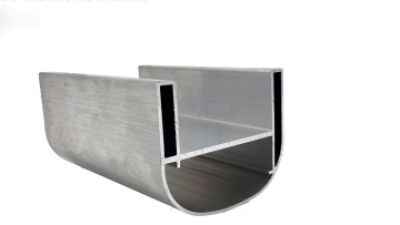
Extruded aluminum profiles provide a practical foundation for designing strong, adaptable support frames. Made from high-strength aluminum alloy, these profiles combine structural stability with a lightweight form, making them easier to transport, handle, and install than many traditional framing materials. Their precise extrusion process allows consistent dimensions, clean surfaces, and flexible cross-sectional designs that can accommodate different loads and assembly requirements. Profiles can be cut, connected, and adjusted with suitable fasteners, helping create customized frames without complicated fabrication.
For fitness venues, support frames made from extruded aluminum profiles can be used for equipment stands, functional training structures, storage systems, partitions, and protective enclosures. Their stable construction helps keep fitness equipment securely positioned during repeated use, while their relatively low weight simplifies layout changes and facility upgrades. Modular connections also allow operators to expand or reconfigure a frame as training areas and equipment needs evolve.
The material offers additional benefits in demanding indoor environments. Aluminum naturally resists corrosion, requires limited maintenance, and presents a clean, professional appearance suitable for gyms, studios, rehabilitation centers, and community recreation spaces. Smooth profile surfaces are easy to clean, while rounded or enclosed designs can reduce exposed edges around active training areas. With thoughtful engineering, extruded aluminum support frames can deliver reliable performance, efficient installation, and a secure experience for fitness enthusiasts.
FAQS
Pure aluminium can conduct about 237 W/m·K near room temperature. This figure is impressive. It is not a guarantee. Alloy profiles usually conduct less heat, often between 120 and 200 W/m·K.
Alloys usually provide better strength, machinability, and corrosion resistance. Their thermal performance may be lower than pure aluminium. Designers should verify the alloy, temper, and test conditions.
It can spread heat along its length. However, joints, coatings, fasteners, and air gaps may interrupt the thermal path. Measure the frame temperature during real operation.
Geometry, surface area, ventilation, and contact resistance all matter. A wide frame may release heat better than a narrow one. Quoting one conductivity value is often too simple.
Fresh aluminium quickly forms a dense oxide layer, roughly 2–10 nanometres thick. This invisible film slows oxygen and moisture. It does not protect every design automatically.
Chlorides, trapped water, acidic deposits, and contact with dissimilar metals can increase corrosion. Provide drainage paths and avoid narrow moisture pockets. Local humidity and salt testing remains wise.
Slotted surfaces accept nuts, brackets, panels, and accessories. Technicians can adjust a 1,200-millimetre workstation to 1,500 millimetres without cutting metal. Common hand tools are often enough.
No. Fastener grade, slot direction, joint spacing, vibration, and load paths affect stability. Tall frames may require diagonal bracing. Over-tightening can damage threads, while loose joints can create noise and movement.
Conclusion
Aluminium Profile Industrial systems offer an effective balance of low weight, strength, thermal performance, precision, durability, and sustainability. With a density of approximately 2.70 g/cm³, aluminium profiles can reduce structural weight by about 65% compared with steel, while 6063-T6 profiles provide a yield strength of around 215 MPa for many industrial applications. Aluminium also conducts heat at up to 237 W/m·K, supporting efficient thermal management in equipment and enclosures. In addition, EN 755-9 defines millimetre-level extrusion tolerances, helping manufacturers achieve consistent dimensions and reliable assembly.
A natural oxide layer, typically about 2–10 nm thick, improves resistance to corrosion and reduces maintenance requirements. Aluminium is also highly recyclable, requiring only around 5% of the energy used for primary production when recycled material is processed. T-slot systems further enhance practicality by allowing components to be assembled, adjusted, expanded, or reconfigured without welding, making them suitable for flexible production lines, machine frames, workstations, guards, and modular industrial structures.