Picking out China’s top Framing Tech Aluminum Extrusion suppliers isn’t just about comparing price tags. You really have to look beyond that. The right partner should have their control over alloy quality, die design, tolerance levels, surface finishing, and delivery reliability all dialed in. I mean, sure, a profile might look shiny and perfect under warehouse lighting, but then you take it to assembly, and if a corner joint twists, that’s a whole different story. Those little details matter more than you’d think.
Industry pro John T. Slater sums it up simply: “A strong frame starts with a controlled profile, not a shiny brochure.” That’s pretty much our guideline when we review top Chinese manufacturers like CHAL, Guangdong Xingqiu Aluminium Profiles, Jiangsu Weiye Aluminum Technology, and Foshan Nanhai Yongyingfeng Aluminum. Their strengths can vary a lot. Some are big on architectural systems, while others are more into industrial automation, machine guards, modular workbenches, or even cleanroom setups.
When assessing these suppliers, we look at their extrusion equipment, alloy choices, tooling experience, CNC capabilities, anodizing and powder coating processes, packaging, and support for export. Don't overlook factory communication, either. Getting slow feedback on drawings can lead to costly revisions. And if the inspection records are incomplete? That just raises more red flags.
Let’s be honest—no supplier’s perfect. Even well-established companies can have uneven lead times, limited English documentation, or inconsistent support when it comes to customization. So, it’s smart to ask for recent samples, tolerance reports, mill certificates, and videos of relevant production lines. A virtual factory tour helps, but it’s no substitute for doing your own verifications.
This article lays out a straightforward shortlist of China’s top Framing Tech Aluminum Extrusion suppliers. We focus on evidence, how well their products fit your needs, and how reliable they’ve proven to be over time—rather than just shiny marketing claims. Remember, the cheapest quote isn’t always the best choice. Sometimes, choosing a supplier who can catch small profile issues before they become big problems can save you a lot of headaches down the line.
Aluminum Extrusion Framing Technology in China
China’s aluminum extrusion framing technology has moved beyond simple profile production. It now combines billet homogenization, precision die design, controlled quenching, and automated cutting. The International Aluminium Institute reported that China produced roughly 59% of global primary aluminum in 2023. This scale supports stable material access, but capacity alone does not prove process quality.
A practical supplier review should examine press capability, alloy control, and profile tolerances. For modular framing, common alloys include 6063-T5 and 6061-T6. The production team should verify chemical composition, tensile strength, surface finish, and straightness against applicable GB or EN standards.
USD 86.5 billion
Grand View Research estimated the global aluminum extrusion market at about USD 86.5 billion in 2023, with continued growth expected through 2030.
That expansion increases competition. It also makes careful technical screening more important.
Look closely at the factory floor. Ask for billet heat records, die-maintenance logs, sample inspection reports, and coating thickness data. Anodized surfaces should show consistent color under natural light, not only under showroom lamps.
In my experience, small profile warping often appears after cutting, not during extrusion. That detail is easy to miss.
Factory audits, trial orders, and independent dimensional checks reduce this risk. A supplier may present excellent samples, yet struggle with long-term batch consistency. That weakness deserves attention.
Key Criteria for Evaluating Chinese Extrusion Suppliers
Evaluating Chinese aluminum extrusion suppliers requires more than comparing quoted prices. Check the supplier’s experience with framing systems, alloy grades, and Large Aluminum Extrusion Profiles. Ask for evidence. Request production photos, inspection records, and recent sample reports. A polished website is not proof.
Review the extrusion press capacity against your required profile size. Confirm die design experience, wall-thickness control, straightness, surface finish, and cutting accuracy. Ask how operators measure dimensions during production. Reliable suppliers usually provide material certificates, batch traceability, and clear packaging specifications. Details matter. Visit the factory when possible, or arrange a live video audit.
Communication also deserves careful testing. Send a technical drawing with several tolerances and observe the response. Does the engineer identify risks, or simply promise everything? Check prototype lead times, corrective-action procedures, and production scheduling. Ask for references from comparable projects, without relying only on testimonials. No supplier is perfect. A minor capability gap can be acceptable when it is disclosed and managed openly. I would be cautious if answers change between sales staff, engineers, and quality personnel. Clear records, realistic timelines, and consistent technical explanations are stronger indicators of reliability than a low initial offer.
Leading Supplier Categories and Product Specializations
China’s framing market contains several supplier categories, not one universal “top” group. International Aluminium Institute data placed China’s primary aluminium output near 41.5 million tonnes in 2023. That scale supports broad extrusion capacity, but volume alone does not prove engineering quality. Grand View Research estimated the global aluminium extrusion market at about USD 88.8 billion in 2023, with strong growth expected through 2030. Buyers should examine process control, not only factory size.
General extruders usually supply standard channels, T-slots, angles, and Aluminum Extrusion Tube Profiles . They suit machine frames, partitions, and light structural assemblies. Precision specialists focus on tight tolerances, thin walls, and complex dies. Their products often serve electronics, automation, and transport equipment. Finishing specialists add anodizing, powder coating, brushing, or protective films. Some suppliers also provide cutting, drilling, tapping, welding, and kitted delivery. This reduces assembly work, though it can raise inspection requirements. A perfect supplier matrix is unrealistic.
Tips: Request a sample profile, die drawing, tolerance table, and coating report. Check alloy grades against applicable standards. Ask for hardness, surface thickness, and batch traceability records. A supplier’s response should be specific, dated, and measurable. If every answer sounds perfect, investigate further. Small gaps sometimes reveal weak production discipline. Consider independent dimensional inspection before approving a large order.
Materials, Profiles, and Customization Capabilities
Selecting China-based suppliers for Industrial Aluminum Extrusion requires close attention to material grades, profile accuracy, and customization control. The common 6063 alloy offers smooth surfaces and good anodizing performance. The 6061 alloy provides higher strength for heavier structures. Ask for mill certificates, hardness data, and coating thickness records. A bright sample can still hide poor internal quality.
Suppliers may produce T-slot, square, rectangular, channel, and angle profiles. T-slot systems support fast assembly with sliding nuts and standard connectors. Profile wall thickness, slot width, and corner radius affect stability and fitting. For a 40 mm frame, uneven slots can make panels sit crooked. Cut ends should be square, clean, and free from heavy burrs. Small errors become obvious during assembly.
Customization usually starts with CAD drawings, load requirements, and surface treatment preferences. A capable supplier can design an extrusion die, then provide a trial profile for approval. CNC cutting, drilling, tapping, and chamfering may follow extrusion. Ask how tolerances are measured, not only how they are promised. Some quotations hide tooling, packaging, or secondary machining fees. That creates avoidable pressure later. A pilot batch is safer than immediate mass production, although it adds time and cost. I would also inspect packed profiles, because scratches often happen after finishing, not during extrusion.
Manufacturing Standards, Quality Control, and Certifications
China Top Framing Tech Aluminum Extrusion Suppliers?
Manufacturing Standards, Quality Control, and Certifications
When evaluating Chinese aluminum extrusion suppliers, production evidence matters more than sales claims. Reliable manufacturing starts with controlled alloys, trained operators, and documented processes. For framing systems, drawings should define alloy, temper, wall thickness, straightness, and allowable surface marks. Common references include EN 755, EN 12020, and ASTM B221, but the selected standard must match the project market. A supplier should explain how its process meets those requirements, not merely display a certificate. Good documentation includes controlled drawings, material certificates, and batch identification.
At the factory, quality control should follow the profile from billet to packed frame. Inspectors can verify billet chemistry with spectrometry before heating. During extrusion, records should capture temperature, speed, die number, and quenching conditions. After aging, technicians measure dimensions using calibrated gauges or coordinate equipment. Tensile strength, hardness, and coating thickness need recorded test results. A practical check is a trial assembly. Small gaps matter. It reveals twisting, burrs, or holes that pass a simple visual inspection.
Look for valid ISO 9001 certification covering the actual extrusion facility and production scope. Environmental or occupational certificates can support responsible operations, but they do not replace product testing. Ask for recent audit reports, calibration records, inspection plans, and corrective-action records. The issuing body and certificate dates deserve independent verification. Polished reports can still hide weak sampling plans. That risk is easy to overlook. A dependable supplier accepts sample approval, retains traceability, and reports defects without changing records. No system is perfect. Clear corrective action often matters more than a flawless-looking first report.
Ordering Process, Costs, Lead Times, and Export Support
Choosing China’s top framing technology aluminum extrusion suppliers requires more than comparing catalog prices. Request a technical review before placing an order. Share drawings, alloy requirements, profile length, surface finish, tolerances, and estimated monthly volume. A capable supplier should confirm extrusion feasibility, tooling design, minimum order quantity, and inspection points in writing.
Tooling often costs separately and may range from a few hundred to several thousand dollars, depending on profile complexity. Unit prices usually depend on alloy, weight per meter, machining, finish, packaging, and order volume. Ask for a detailed quotation. Avoid vague totals. For an Aluminum Extrusion Heatsink, confirm flatness, thermal contact surfaces, and cutting accuracy. Small errors can affect assembly.
Lead times commonly include tooling, sampling, mass production, and export preparation. A realistic schedule may take three to eight weeks after drawing approval, but capacity changes can create delays. I prefer a signed production timeline with photo updates and a pre-shipment inspection. My own mistake was approving samples without checking carton dimensions. Freight costs increased later. It was preventable.
Export support should cover commercial invoices, packing lists, certificates, pallet requirements, and agreed shipping terms. Confirm whether the supplier handles customs coordination or only factory delivery. Request photos of packed goods, weight records, and label details before shipment. Payment protection, traceable communication, and a clear corrective-action process matter as much as the lowest quotation. No process is perfect. Leave room for verification.
China Top Framing Tech Aluminum Extrusion Suppliers: Ordering Process, Costs, Lead Times, and Export Support
Indicative industry benchmarks for sourcing custom aluminum framing profiles from China. Actual figures vary by alloy, profile complexity, surface finish, order volume, packaging, destination, and shipping method.
Typical Ordering Process RFQ and drawings → quotation → die approval → samples → mass production → inspection and export.
Indicative Cost Structure Profile material commonly represents the largest share, followed by tooling, finishing, packaging, and freight. Custom dies often cost about US$300–1,500.
Export Support Standard support may include commercial invoices, packing lists, certificates of origin, inspection records, and coordination with freight forwarders.
Benchmark ranges are non-company-specific estimates for planning purposes and should be confirmed in the supplier quotation and sales contract.
Aluminum Radiator Housing: Design, Benefits, Applications, and Selection Guide
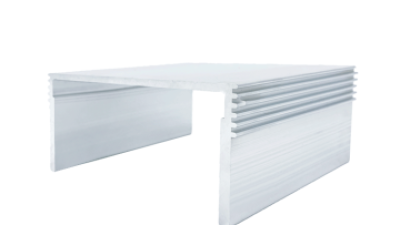
Aluminum radiator housing is a custom-extruded aluminum casing designed to support efficient heat dissipation in modern cooling assemblies. It functions as the outer shell, mounting base, and thermal carrier, helping transfer heat away from internal components while protecting them from dust, vibration, and mechanical impact. The extrusion process allows manufacturers to create precise profiles with integrated fins, grooves, fastening channels, and installation features, reducing assembly complexity and improving structural stability.
Its lightweight construction, high thermal conductivity, corrosion resistance, and excellent machinability make aluminum a practical choice for demanding equipment. The housing can be cut, drilled, anodized, or surface-treated according to specific requirements, while its rigid structure supports reliable long-term operation. Proper fin spacing, wall thickness, airflow direction, and contact area should be considered during design to achieve a balanced combination of cooling performance, strength, and material efficiency.
Aluminum radiator housings are suitable for device cooling assemblies, new energy battery systems, motor controllers, power supplies, inverters, and industrial machinery. When selecting a housing, users should evaluate the component’s heat load, available installation space, mounting method, environmental conditions, and required protection level. Custom dimensions and thermal interface features can also help ensure compatibility with circuit boards, heat sources, fans, and other cooling components.
FAQS
Request controlled drawings, material certificates, batch identification, inspection plans, and recent audit records. Clear records matter.
Drawings should state alloy, temper, wall thickness, length, straightness, tolerances, and acceptable surface marks. Vague drawings create disputes.
Inspectors can test billet chemistry before heating. Production records should include temperature, extrusion speed, die number, and quenching conditions.
Technicians should measure dimensions, hardness, tensile strength, and coating thickness. Calibrated gauges or coordinate equipment improve reliability.
Trial assembly can reveal twisting, burrs, holes, and small gaps. A profile may look acceptable but fit poorly. I would not skip this step.
Verify that certification covers the actual extrusion facility and production scope. Check the issuing organization, certificate dates, and audit evidence.
Ask for tooling, alloy, weight per meter, machining, surface finish, packaging, and unit pricing. Avoid vague totals. Cheap quotes can become expensive.
Use a signed timeline covering tooling, samples, production, and export preparation. Request packed-goods photos, carton sizes, weights, labels, and inspection results. I once missed carton dimensions. Freight costs increased.
Conclusion
China has become a major source of Framing Tech Aluminum Extrusion solutions, offering a broad range of structural profiles for industrial workstations, machine frames, guarding systems, modular enclosures, and custom assemblies. When evaluating suppliers, buyers should consider material grades, profile dimensions, machining capabilities, surface treatments, engineering support, production capacity, and experience with international orders. Different manufacturers may specialize in standard T-slot systems, heavy-duty structural sections, lightweight profiles, or highly customized components.
Reliable suppliers should demonstrate consistent manufacturing standards, documented quality-control procedures, accurate dimensional inspection, and relevant certifications for their target markets. Buyers should also clarify the ordering process, including drawings, samples, minimum quantities, tooling costs, packaging, payment terms, and delivery schedules. Lead times can vary according to profile complexity, finishing requirements, and customization levels. Strong export support, clear communication, secure packaging, and complete documentation can further reduce purchasing risks and help ensure that the selected aluminum extrusion supplier meets both technical and commercial expectations.