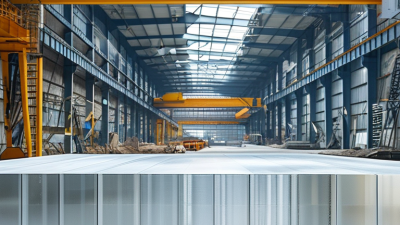
China has really stepped up as a major hub for manufacturing aluminum construction profiles—think stuff used in building facades, windows, doors, curtain walls, and inside systems. According to the International Aluminium Institute, global production of primary aluminum has been pushing past 70 million tonnes a year recently. China dominates that figure, building a pretty extensive supply network that handles everything from extrusion and finishing to machining and assembly. It’s impressive, but honestly, just big numbers alone don’t tell the whole story.
You’ve got to dig a little deeper for reliable sourcing. The ISO standards, like ISO 9001, are great for ensuring consistent quality management, while ISO 14001 focuses on environmental practices. If you’re looking at architectural coatings, then reviewing certifications like Qualicoat or similar standards can really help distinguish experienced manufacturers from those just trading products with limited control over quality.
In this guide, we’ll look at some notable Chinese suppliers—think Guangdong Weiye Group, Guangdong Xingqiu Aluminium, and Guangdong Jianmei Aluminum Profile. But, don’t just go on their words or brochures. Make sure to check their capabilities through documented tolerances, alloy options, extrusion capacity, coating systems, tooling support, and whether they’ve handled export assignments. Samples are helpful, yeah, but nothing beats doing a factory audit. Seeing the operation firsthand really makes a difference.
Now, market figures and large production numbers sound impressive, but they don’t always guarantee things like perfect color matching or precise cuts. Sometimes, even well-published supplier info leaves out details about defect rates, lead times, or if they’re subcontracting parts of the job. That’s why verifying everything carefully isn’t just a chore—it’s essential.
When comparing suppliers, look beyond just the surface. Consider their manufacturing depth, product consistency, certifications, ability to customize, and how well they communicate. It’s also crucial to see if they can handle tight construction schedules. And remember, certifications and project references can change over time. So, it’s smart to double-check current credentials and recent project info directly with the suppliers—what worked last year might not cut it today, and that’s something you definitely want to keep in mind.
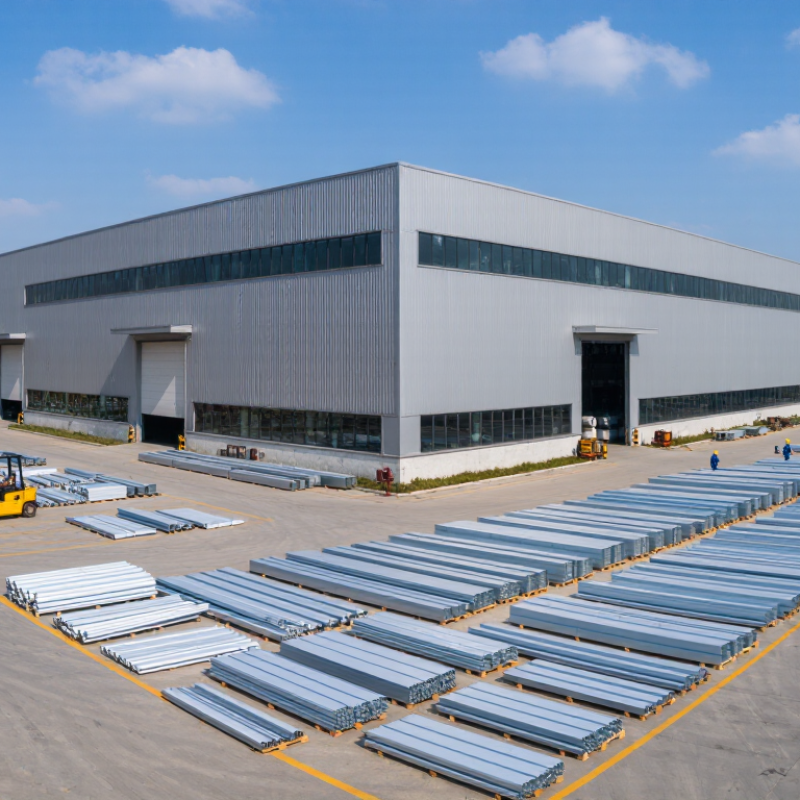
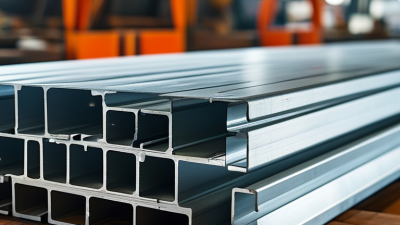
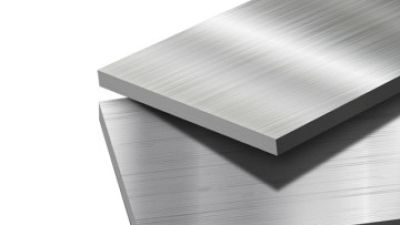
Aluminum construction profiles are shaped sections made by forcing heated aluminum billets through a precision die. This process is calLed Extrusion. The result may look simple, but its geometry carries the load. Grooves, channels, ribs, and hollow chambers can improve strength while reducing unnecessary weight. Common profiles support doors, windows, curtain walls, partitions, railings, and equipment frames.
In practical projects, engineers select profiles by reviewing load, span, wind pressure, corrosion exposure, and connection design. Large Aluminum Extrusion Profiles may form long beams for industrial roofs or broad architectural frames. Smaller sections often fit around glass panels, flooring, or modular partitions. A profile with a thicker wall is not always better. It can increase cost, weight, and installation difficulty.
Surface treatment also matters. Anodizing can improve appearance and wear resistance, while powder coating provides wider color choices. Fabricators should check straightness, dimensional tolerance, alloy grade, and cutting accuracy before production. A two-millimeter error may create visible gaps at a corner. That detail is easy to underestimate. I have seen projects where the profile was strong, yet poor drainage design caused staining and maintenance problems. Supplier evaluation should include technical drawings, test records, sample inspection, and communication during revisions. Price alone cannot show whether a profile is suitable. Sometimes, the cheapest section becomes the most expensive mistake.
China remains a practical sourcing base for construction profiles because its aluminum supply chain is broad and responsive. Extruders, mold makers, finishing plants, and packaging teams often operate within one industrial region. This can shorten development time and reduce coordination costs. Buyers can request Aluminum Extrusion Tube Profiles in custom lengths, wall thicknesses, and surface finishes.
A capable supplier should provide alloy certificates, dimensional reports, and clear production samples. I would check die design, straightness, corner accuracy, and anodizing consistency before placing a large order. Small details matter. A two-millimeter mismatch can complicate installation on a curtain wall or partition frame. Factory audits, video inspections, and independent testing also improve reliability. Do not rely on photographs alone.
China offers competitive pricing, but the lowest quotation can hide weaker packaging or unstable tolerances. That is where careful sourcing becomes important. Ask about material traceability, moisture protection, bundle labeling, and replacement procedures for damaged goods. Communication deserves equal attention. Drawings should show tolerances, hole positions, finish requirements, and packaging rules. I have seen projects lose time because one detail stayed informal. A written approval process feels slower, yet it prevents expensive corrections. Some suppliers may meet the first sample but struggle with repeat batches, so regular inspection remains necessary.
Ask for alloy certificates, extrusion tolerances, and batch traceability. For common architectural profiles, 6063-T5 or 6063-T6 may be suitable, but the design determines the correct temper. Check compliance with standards such as EN 755 or ASTM B221. Request recent laboratory reports for coating thickness, hardness, corrosion resistance, and dimensional accuracy. For Aluminum Heatsinks Profiles, inspect thermal conductivity data and fin consistency. A sample should match the mass-production drawing, not merely look similar.
Choosing among China aluminum construction profiles suppliers requires more than comparing prices. Product standards reveal whether a profile can perform after installation. EN 755 specifies mechanical properties and dimensional tolerances for many extruded aluminum products. EN 12020 is more specific for precision profiles. ASTM B221 remains useful when projects follow North American specifications. Ask for the exact alloy, temper, wall-thickness tolerance, and test method. “6063 aluminum” alone is incomplete.
Certifications also need careful reading. ISO 9001 indicates a quality-management system, not perfect profiles. ISO 14001 addresses environmental management, while ISO 45001 covers occupational safety. Request current certificates, issuing-body details, and the certified factory address. Independent testing should confirm tensile strength, surface treatment thickness, coating adhesion, corrosion resistance, and dimensional accuracy.
The International Aluminium Institute reports that recycling aluminum can save about 95% of the energy needed for primary production. Therefore, recycled content and chain-of-custody evidence may matter in green-building projects. Still, recycled content can affect consistency if controls are weak.
Tips: Ask suppliers for batch records, furnace logs, inspection photos, and sample sections before signing. Require a third-party inspection for the first production run. Check whether anodizing follows recognized requirements, such as minimum coating thickness and sealed-surface testing. I have seen attractive samples hide uneven corners or thin coatings. That weakness is easy to miss. A certificate may also cover an office, not the extrusion line making your order. Verify the scope, expiry date, and traceability codes.
Quality and service separate strong suppliers from low-price exporters. The International Aluminium Institute reports that buildings consume roughly one quarter of global aluminium demand. That scale makes traceability important, not decorative. Reliable suppliers should provide alloy certificates, extrusion records, dimensional inspection data, and coating reports for every batch. For common 6063 profiles, buyers should check tensile results, wall-thickness variation, straightness, and surface consistency. Small defects become obvious beside glass façades.
Service is easier to measure than many buyers expect. Ask how quickly engineers return shop drawings, approve samples, and explain nonconformities. A capable supplier should support die design, packaging tests, loading plans, and installation questions. The 2023 World Bank Commodity Markets Outlook shows aluminium prices remain exposed to energy and supply-chain volatility. Suppliers with stable production planning can therefore protect delivery schedules better. Still, promises are not evidence.
I would compare three recent batches, not one polished sample. Check coating thickness at corners, where weak coverage often appears. Review the corrective-action report, too. It reveals more than a sales presentation. ISO 9001 certification supports process control, but it does not guarantee perfect profiles or helpful communication. No scorecard is perfect. Buyers should record response times, revision counts, rejection rates, and final packing quality. This practical evidence makes supplier comparisons more reliable.
Before placing an order, buyers should verify more than profile appearance. The International Aluminium Institute reported global primary aluminium production at about 70.6 million tonnes in 2023, making traceability increasingly important. Ask for the alloy, temper, batch number, and mill test certificate. Check whether dimensions and tolerances follow EN 755-9, EN 12020, or ASTM B221. These standards matter when a frame must fit a 2.0-millimetre gap. Request a production sample before approving the full tooling. For Customized Wall Supports Profiles Aluminum Brackets, confirm load calculations, die ownership, minimum order quantity, and replacement terms. Cheap tooling can become expensive after revisions.
Surface treatment also deserves close inspection. Specify anodizing thickness, coating type, colour tolerance, and testing methods in writing. A supplier should provide inspection records, not only attractive photographs. Check hardness, tensile strength, straightness, and cut-length accuracy through an independent inspection agency when the order is large. Packing details matter too: foam separation, moisture protection, pallet strength, and visible batch labels reduce transit damage. The International Aluminium Institute states that recycled aluminium requires roughly 5% of the energy used for primary aluminium production. Therefore, ask for recycled-content evidence if sustainability affects your purchasing decision. Still, certificates can be incomplete. I would review one real batch report before trusting a polished presentation. Payment milestones should follow measurable approvals, including sample acceptance and pre-shipment inspection.
| No. | Buyer Checkpoint | Relevant Data or Common Requirement | What Buyers Should Request | How to Verify Before Ordering |
|---|---|---|---|---|
| 1 | Alloy and Temper | 6063-T5 Common for architectural frames, doors, windows, and decorative profiles. 6063-T6 Higher strength than T5 when required by the design. 6061-T6 Often selected for structural or higher-load applications. | Specified alloy designation, temper condition, applicable standard, and intended end use. | Compare the quotation with the approved drawing and check the alloy and temper on the material certificate and purchase order. |
| 2 | Mechanical Properties | Typical minimum values vary with alloy, temper, and wall thickness. As a general reference, 6063-T5 commonly has tensile strength around 175 MPa and proof stress around 110 MPa; 6061-T6 commonly has tensile strength around 260 MPa and yield strength around 240 MPa. | Minimum tensile strength, yield or proof stress, elongation, and the thickness range covered by the specification. | Require a heat-lot test certificate. For critical structural parts, use independent tensile testing on production samples. |
| 3 | Dimensional Tolerance | Extruded-profile tolerances depend on profile size, wall thickness, shape complexity, and the selected standard. Common references include EN 755-9, EN 12020-2, ASTM B221, or an agreed customer drawing. | Permitted limits for width, height, wall thickness, straightness, twist, corner radius, and cut length. | Approve a dimensioned inspection plan and measure samples with calibrated calipers, micrometers, gauges, and a straightedge. |
| 4 | Minimum Wall Thickness | There is no universal wall-thickness value for every construction profile. Many architectural extrusions use approximately 1.2–2.0 mm walls, while load-bearing or large profiles may require more. | Minimum wall thickness at every critical section, including local thin areas, screw channels, and joining features. | Check the approved extrusion drawing and measure multiple locations on first-article and mass-production samples. |
| 5 | Surface Finish | Typical options include mill finish, anodized finish, powder-coated finish, wood-effect finish, and PVDF-coated finish. Gloss, color, texture, and allowable visual defects must be agreed in writing. | Finish type, color reference, gloss level, texture, appearance limit samples, and acceptable defect criteria. | Approve a physical color and appearance sample before production. Inspect under consistent lighting and viewing distance. |
| 6 | Anodizing Thickness | Architectural anodizing is commonly specified in approximately 10–25 μm classes, depending on the exposure environment and applicable standard. Higher exposure may require a thicker or specially controlled coating. | Nominal anodic coating thickness, permitted minimum, color uniformity requirement, and sealing requirement. | Use an eddy-current thickness gauge and review sealing or coating inspection records for the production lot. |
| 7 | Powder-Coating Thickness | A common architectural powder-coating range is approximately 60–120 μm, but the required value depends on the coating system, profile geometry, and project specification. | Coating system, target thickness, minimum local thickness, gloss range, adhesion requirement, and color tolerance. | Measure several points on each profile batch and perform adhesion testing according to the agreed test method. |
| 8 | Corrosion and Weather Resistance | Outdoor profiles require a finish suitable for humidity, ultraviolet exposure, salt spray, industrial pollution, or coastal conditions. No single salt-spray duration guarantees service life in every environment. | Exposure category, pretreatment process, coating system, test method, test duration, and warranty conditions. | Review coating test reports, pretreatment records, and the supplier's written limits for coastal or high-humidity applications. |
| 9 | Extrusion Die and Tooling | Die design affects dimensional stability, surface quality, weld lines, metal flow, and scrap. Complex hollow profiles may require porthole or bridge dies and additional trial adjustments. | Die cost, die ownership, revision policy, expected die life, trial quantity, and responsibility for tooling corrections. | Confirm the die drawing and first-article approval process. Do not approve mass production solely from a two-dimensional quotation. |
| 10 | Cutting and Machining | Common secondary operations include precision cutting, drilling, punching, milling, tapping, CNC machining, assembly, and protective-film application. | Cut-length tolerance, hole position tolerance, burr limits, machining datum, quantity per package, and required protective film. | Inspect first-article parts against the approved machining drawing and verify critical dimensions with a coordinate or suitable gauge inspection. |
| 11 | Material Traceability | A controlled production lot should be traceable from billet or cast batch through extrusion, heat treatment, surface finishing, inspection, and packing. | Lot number, production date, alloy and temper, quantity, inspection status, and certificate reference. | Check that package labels, inspection reports, and material certificates use matching lot numbers. |
| 12 | Quality Documentation | Typical documents include approved drawings, material certificates, dimensional inspection records, surface-finish reports, packing lists, and certificates of conformity. | Document list, document language, issue date, approval procedure, and retention period. | Make document submission a contractual milestone and require approval of samples before the balance payment or shipment. |
| 13 | Packaging and Protection | Aluminum profiles should be protected from scratching, rubbing, moisture, and deformation during handling and transport. Paper interleaving, foam, end protection, bundles, and suitable outer packing are commonly used. | Profile quantity per bundle, maximum bundle weight, interleaving material, moisture protection, labels, and loading method. | Approve a packing photograph or packing specification and inspect packaging condition before shipment. |
| 14 | Order Quantity and Commercial Terms | Tooling charges, minimum order quantities, cut-length surcharges, finishing charges, packing fees, inland freight, export freight, and taxes can materially change the final landed cost. | Itemized quotation, price basis, currency, validity period, minimum order quantity, payment schedule, and delivery term. | Compare suppliers using the same alloy, temper, finish, tolerances, quantity, packaging, and delivery basis. |
| 15 | Lead Time and Capacity | Production time depends on die readiness, billet availability, extrusion capacity, finishing capacity, inspection, and shipping. Lead time should be separated into tooling, sampling, production, and dispatch stages. | Milestone schedule with dates for die completion, first samples, approval, mass production, inspection, and shipment. | Request a written production plan and confirm capacity for the required profile length, weight, finish, and delivery window. |
| 16 | Sample Approval | A representative approved sample should show the actual alloy, geometry, dimensions, surface finish, color, machining, and packaging method intended for production. | Sample quantity, approval criteria, retained reference sample, permitted changes, and procedure for nonconforming samples. | Sign and retain an approved sample or control specimen before releasing the production order. |
| 17 | Pre-Shipment Inspection | A practical inspection plan normally covers quantity, profile dimensions, wall thickness, straightness, surface condition, finish thickness, color, machining, labeling, and packaging. | Inspection level, sampling plan, acceptance limits, nonconformity procedure, and inspection-party responsibility. | Use an agreed inspection checklist and require corrective action or replacement for nonconforming goods. |
| 18 | Contract Protection | Clear requirements reduce disputes regarding color variation, scratches, tolerance deviations, shortages, delayed delivery, and damage during transport. | Approved drawings, technical specification, acceptance criteria, warranty scope, claim period, replacement terms, and dispute process. | Attach all technical documents and approved samples to the purchase contract rather than relying only on email or verbal commitments. |
The growing demand for lightweight, durable consumer electronics is supporting interest in specialized aluminum profiles. Grand View Research’s aluminum market report identifies transportation, construction, and electrical applications as major demand sectors, while continued industrial adoption is expected to sustain market growth through the decade. Within this trend, 6061 special aluminum alloy profiles offer a practical material solution for mobile phone shells, combining moderate strength, fracture toughness, corrosion resistance, fatigue resistance, and reliable forming performance.
6061 belongs to the Al-Mg-Si-Cu alloy family and can be extruded into precise, thin-wall sections for different housing designs. Its balance of machinability and structural stability makes it suitable for CNC cutting, drilling, edge finishing, and other precision operations. After machining, anodizing and coloring can improve surface hardness, corrosion protection, and visual consistency, while allowing manufacturers to develop shells in varied shapes, dimensions, and finishes. These characteristics can help reduce housing weight without sacrificing everyday durability.
Grand View Research also points to the expanding use of aluminum in high-value, lightweight applications, where recyclability and material efficiency are increasingly important purchasing considerations. For mobile phone housing production, 6061 profiles are therefore recommended when designers require dimensional accuracy, dependable surface treatment, and flexibility across multiple product specifications. Proper alloy selection, extrusion control, CNC tolerances, and anodizing parameters remain essential for achieving consistent quality in volume manufacturing.
Request alloy certificates, temper details, extrusion tolerances, and batch traceability records. “6063 aluminum” is incomplete. The temper matters.
EN 755 covers mechanical properties and dimensional tolerances for many extrusions. EN 12020 suits precision profiles. ASTM B221 may fit projects using North American specifications.
Check the certificate’s expiry date, issuing body, factory address, and covered production site. A certificate may cover an office. Not the extrusion line.
Request recent tests for tensile strength, hardness, coating thickness, adhesion, corrosion resistance, and dimensional accuracy. For heat-transfer profiles, inspect thermal conductivity and fin consistency. Small fin differences matter.
Compare at least three production batches, including one with ordinary surface finishing. One attractive sample proves very little. That is easy to forget.
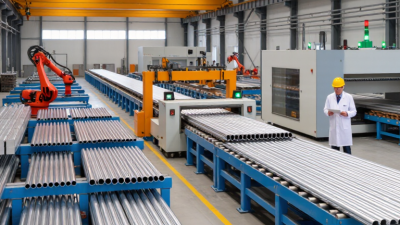
Check billet sources, press capacity, die maintenance, inspection equipment, and rejected-profile records. Look for actual production evidence. Not just polished displays.
Measure coating thickness, check sealed surfaces, and inspect corners for uneven treatment. Thin coatings may look acceptable under showroom lighting. They can fail later.
Request recycled-content evidence, chain-of-custody records, and energy data. Recycling can reduce production energy use significantly. However, weak controls may reduce consistency.
Vague answers about wall thickness or tolerances may create expensive rework. Ask for drawings, test methods, inspection photos, and batch records. Clear replies are not everything. But unclear replies are warning signs.
Aluminum Construction Profiles are lightweight, corrosion-resistant, and highly adaptable components used in building frames, curtain walls, doors, windows, partitions, and structural systems. China has become a major sourcing destination because of its broad manufacturing capacity, competitive pricing, advanced extrusion technology, and ability to support customized shapes, finishes, and large-volume orders. However, buyers should evaluate suppliers carefully rather than focusing on price alone.
A reliable supplier should demonstrate consistent alloy composition, dimensional accuracy, surface quality, production capacity, quality-control procedures, and experience with international projects. Buyers should also verify relevant product standards, testing reports, environmental documentation, and certifications required in the target market. Comparing suppliers should include communication efficiency, engineering support, sample approval, packaging, lead times, after-sales service, and order flexibility. Before placing an order, confirm drawings, alloy grades, temper, tolerances, finishes, inspection requirements, payment terms, shipping responsibilities, and warranty conditions in writing. Thorough preparation helps reduce quality risks and supports a stable, long-term supply relationship.