Picking the right 2026 Best Aluminum Extrusion Heatsink supplier isn’t just about scanning through price lists. You’ve really gotta dig a bit deeper. The perfect supplier needs to understand stuff like thermal resistance, airflow, alloy choices, surface treatments, and how tight their production tolerances are. Sure, a shiny, polished profile looks great, but if those fins are sitting in dead air, it’s not doing much good.
Dr. Alfonso Ortega, a thermal engineer, puts it perfectly: “A heatsink can’t make up for bad airflow.” That’s something worth keeping in mind, for real. You might see a heatsink that looks super efficient on paper, but inside a cramped enclosure? Not so much. It’s all about reviewing fin spacing, how thick the base is, contact pressure, mounting direction, and the actual heat you're dealing with.
And don’t just take their word for it—ask for thermal test data, not just estimates. Reliable suppliers will also be upfront about what they can and can’t do. Details like the aluminum alloy used, extrusion length, CNC precision, anodizing thickness, burr control, and how they pack everything—those little things matter a lot. A scratched anodized surface or a slightly uneven base could throw off your whole assembly. Small defects can make a big difference.
Experience really counts here. Good suppliers will even suggest profiles before they start production. Top teams offer prototypes, thermal simulations, inspection reports, and sample measurements—stuff that really helps you make an informed decision. But remember, no one’s perfect. Data you find on specs sheets may be based on lab tests that don’t exactly match your real-world setup—like your enclosure, fan curves, dust exposure, or ambient temperature. Be honest with yourself about that gap.
In this guide, we’re taking a closer look at the top 2026 suppliers, focusing on their engineering skills, customization options, quality consistency, delivery schedules, and how they support your application. We’ll also cover some questions buyers often miss—like minimum order quantities, who owns the tooling, revision control, and whether they can provide long-term replacement parts. You’ll get some handy comparisons, but at the end of the day, just remember: going for the cheapest extrusion isn’t always the smartest move. Sometimes, you get what you pay for—or end up paying more later.
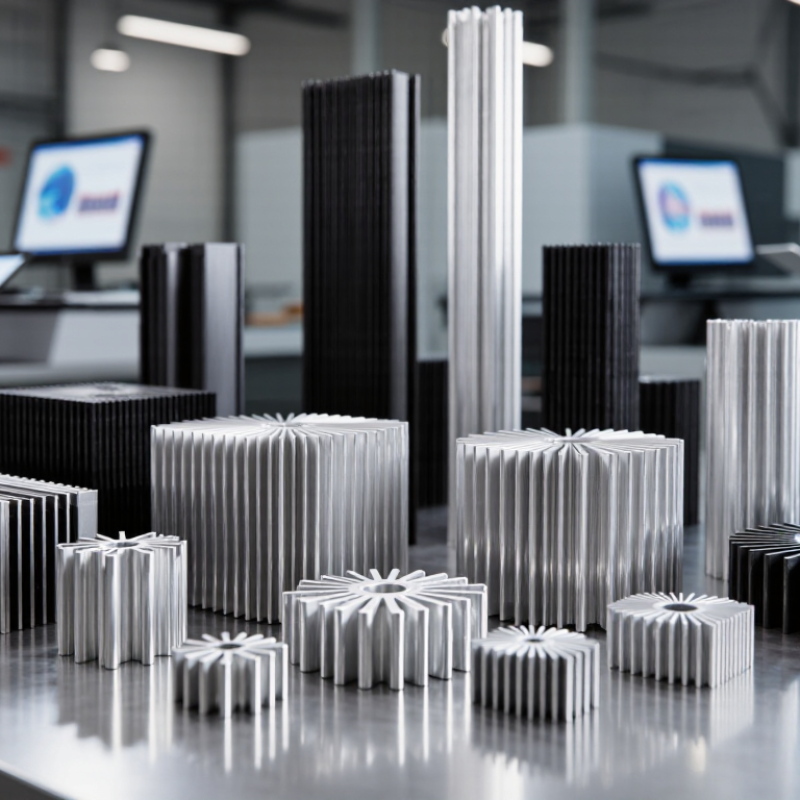
An aluminum extrusion heatsink is a passive thermal component made from a continuous aluminum profile. It is formed by pushing a heated aluminum billet through a shaped die. The die creates a base and repeated fins in one profile. These fins enlarge surface area, helping air remove heat from LEDs, processors, power supplies, and battery electronics. Common 6063 alloys support detailed fin geometry, while 6061 provides greater mechanical strength. Cutting, drilling, anodizing, and flatness control complete the usable part.
Simple, but not effortless. Thermal resistance depends on fin spacing, airflow, contact pressure, and interface material, not aluminum alone. This distinction matters when comparing an Industry Aluminum Heatsink with a generic metal block.
Market evidence reflects this engineering need. Grand View Research estimated the global thermal management market at about USD 15.2 billion in 2023, with growth expected through 2030. The International Aluminium Institute also reports that roughly 75% of all aluminum ever produced remains in use. These figures support aluminum’s continuing role in durable thermal hardware.
However, a report cannot replace testing. I would request thermal resistance data, alloy certificates, dimensional tolerances, and test conditions from any supplier. A heatsink may look impressive under bright showroom lighting, yet perform poorly with restricted airflow. I have also seen designs prioritize tall fins while ignoring mounting pressure. That mistake is easy to make. A careful review should include actual power load, ambient temperature, fan behavior, surface contact, and corrosion requirements.
Aluminum extrusion heatsinks remove heat through a simple, repeatable path. Heat travels from an electronic component into a flat mounting base. It then spreads through the aluminum and reaches the fins. Larger fin surfaces release heat into surrounding air.
The process depends on conduction and convection. Conduction moves heat inside the metal. Convection carries heat away from the fin surfaces. Natural airflow works quietly, but it needs open space around the heatsink. Forced airflow can improve performance, especially when fins are narrow and closely spaced. However, tighter fins may restrict airflow and collect dust more easily.
Good extrusion suppliers control alloy consistency, flatness, fin dimensions, and surface quality. A thin thermal interface layer also matters. Too much paste can increase resistance instead of reducing it. In practical testing, I use thermocouples, measured airflow, and steady operating loads. A first estimate is often wrong. Real temperatures can exceed calculations because nearby parts block air. I once overlooked mounting pressure, and the result changed noticeably. That small mistake still shapes how I review drawings and production samples. Reliable suppliers should provide dimensional inspection data and support thermal validation, not only attractive catalog figures.
In 2026, aluminum extrusion heatsink selection requires more than comparing unit prices. Experienced buyers should examine alloy consistency, thermal performance, and production control. Ask for material certificates, dimensional reports, and surface-treatment records. A reliable supplier can explain each result clearly.
Request a small sample before approving mass production. Measure fin spacing, base flatness, wall thickness, and mounting-hole position. For demanding electronics, review thermal resistance data under realistic airflow conditions. Supplier testing should identify equipment, temperature, airflow, and measurement methods. Vague charts are warning signs. They waste time.
Production capacity also matters. Check die-making experience, minimum order quantities, lead times, and backup equipment. Digital traceability is increasingly valuable in 2026, especially for recycled content and energy-use records. Inspect how the supplier handles design changes, packaging damage, and rejected parts. An honest supplier admits process limits. That matters more than polished promises. I would still avoid choosing from documents alone. A factory visit, video audit, or independent inspection can reveal inconsistent deburring, crowded storage, or weak quality checks. No supplier scores perfectly. The practical question is whether its weaknesses are visible, controlled, and openly discussed.
| Evaluation Criterion | Suggested Weight | Recommended 2026 Benchmark | Evidence to Request | Scoring Guidance |
|---|---|---|---|---|
| Thermal Material Performance | 20% | Provide the exact alloy and temper. Common heatsink alloys include 6063-T5/T6, with typical thermal conductivity around 200–210 W/m·K, and 6061-T6, typically around 165–175 W/m·K. Values must be confirmed for the specified alloy and temper. | Alloy certificate, temper designation, mill test report, and thermal simulation or test data for the proposed profile. | 1–5 points |
| Extrusion Profile Capability | 15% | Demonstrate the ability to produce the required fin height, fin thickness, fin pitch, wall thickness, length, and complexity without distortion or incomplete fill. Thin fins and high aspect ratios should be validated through a production trial. | Similar-profile samples, die-flow analysis, trial-extrusion report, and dimensional inspection records. | 1–5 points |
| Dimensional Accuracy | 13% | Use a clearly defined tolerance standard, such as EN 755-9 or an agreed drawing-specific tolerance. Critical dimensions should have individually stated tolerances rather than relying only on general extrusion tolerances. | Inspection plan, calibrated measurement records, capability study, and first-article inspection report. | 1–5 points |
| Surface Finish and Flatness | 8% | Define acceptable limits for scratches, die lines, twist, bow, dents, burrs, and flatness. For anodized parts, specify coating color, thickness, appearance, and acceptable cosmetic zones. | Approved appearance standard, surface-finish sample, coating specification, and lot inspection photos. | 1–5 points |
| Finishing Process Control | 8% | Evaluate anodizing, powder coating, chemical conversion, machining, deburring, and masking capabilities. Coating thickness and adhesion should be measured against the approved specification. | Process flow chart, coating test results, adhesion test method, color-control procedure, and subcontractor controls where applicable. | 1–5 points |
| Thermal Design Validation | 10% | The supplier should support thermal-resistance calculations or testing using defined conditions, including heat load, airflow, orientation, interface material, ambient temperature, and contact resistance. | Thermal test report, test-fixture description, boundary conditions, temperature measurements, and correlation between simulation and test results. | 1–5 points |
| Quality Management System | 8% | A certified ISO 9001 quality management system is a strong baseline. Automotive, aerospace, or other regulated applications may require additional sector-specific controls. | Current certificate, certificate scope, audit status, corrective-action records, and documented change-control procedure. | 1–5 points |
| Material Compliance | 5% | Confirm compliance with applicable requirements such as RoHS and REACH. Material declarations should cover the alloy, plating, coatings, lubricants, and packaging when relevant. | Declaration of conformity, restricted-substance statement, supply-chain declarations, and test reports for controlled substances. | 1–5 points |
| Production Capacity and Lead Time | 5% | Assess die-development time, extrusion capacity, finishing capacity, machining throughput, minimum order quantity, standard production lead time, and surge capacity. Require separate figures for prototype and mass production. | Capacity statement, production schedule, equipment list, die timeline, capacity-planning method, and recent on-time-delivery performance. | 1–5 points |
| Traceability and Documentation | 4% | Each production lot should be traceable from aluminum billet or extrusion batch through finishing, inspection, packaging, and shipment. Records should be retained for the period required by the purchasing specification. | Sample certificate of conformity, lot-control procedure, barcode or labeling format, inspection records, and retention policy. | 1–5 points |
| Sustainability and Energy Management | 2% | Evaluate recycled-content disclosure, scrap-recycling practices, energy monitoring, responsible sourcing, wastewater control, and relevant environmental certifications such as ISO 14001. | Environmental certificate, recycled-content statement, energy or emissions data, recycling records, and environmental compliance documentation. | 1–5 points |
| Total Cost of Ownership | 2% | Compare total delivered cost rather than extrusion price alone. Include die charges, setup, scrap, finishing, machining, packaging, freight, inspection, inventory, and nonconformance risk. | Itemized quotation, tooling terms, packaging specification, freight assumptions, warranty terms, and price-adjustment formula. | 1–5 points |
Best Aluminum Extrusion Heatsink Suppliers in 2026
Choosing the best aluminum extrusion heatsink suppliers in 2026 requires more than comparing unit prices. Grand View Research values the global aluminum extrusion market at about USD 88.13 billion in 2023. Its forecast also indicates a 7.2% compound annual growth rate through 2030. This growth increases supplier choices, but quality can vary widely. Look for suppliers with verified alloy control, stable die design, and measured thermal performance. For Large Aluminum Extrusion Profiles, request proof of straightness, wall thickness, surface finish, and cut-length accuracy. Alloys such as 6063-T5 suit many cooling assemblies, while 6061-T6 may support higher mechanical demands.
A reliable supplier should provide thermal resistance data under defined airflow conditions. Ask for sample profiles before approving mass production. Inspect the base flatness with a gauge, not only photographs. Anodizing thickness, burr control, and mounting-hole accuracy also affect assembly time. Industry reports from MarketsandMarkets continue to identify electronics, automotive systems, and power equipment as important demand areas for thermal management components. Yet market growth does not guarantee better engineering. A polished website is not technical evidence. This is where many purchasing teams still make mistakes.
Tips: Compare three samples using identical fans, loads, and temperature sensors. Request inspection records and material certificates. Confirm tooling ownership, minimum order quantities, and replacement support. Do not accept thermal claims without test conditions. Even a small profile twist can create uneven contact and reduce cooling efficiency.
Choosing an aluminum extrusion heatsink supplier in 2026 requires more than comparing catalog prices. Material selection affects thermal performance, strength, weight, and surface finish. Alloy 6063 usually offers smooth extrusion and attractive anodizing. Alloy 6061 provides greater mechanical strength but may require more careful machining. Ask for alloy certificates, temper details, and thermal test data. A polished datasheet is not enough.
Tips: Request a sample before approving production. Measure fin thickness, flatness, and mounting holes. Check performance under your real airflow conditions. Small details matter.
Profile design should match the heat source, not merely resemble a standard shape. Dense fins can increase cooling area, yet restrict airflow and collect dust. Custom Aluminum Extrusion Tube Profiles may suit compact electronics, especially when internal channels support cooling or wiring. Discuss tooling costs, minimum order quantities, tolerances, and secondary cutting before signing an agreement. An experienced supplier should explain these trade-offs clearly. I have seen designs fail because the mounting surface was slightly warped. It looked minor. It was not. Reliable partners provide inspection records, prototype feedback, and consistent communication. Still, no supplier removes every risk; your team should verify samples, thermal resistance, and long-term corrosion behavior independently.
Choosing an Industrial Aluminum Extrusion supplier requires more than comparing the lowest unit price. A reliable quotation should separate die charges, alloy costs, machining, surface treatment, packaging, and freight. Ask whether tooling remains usable for repeat orders. A low initial price can become expensive after revisions, scrap, or special packaging.
Lead time must be measured in stages. Confirm engineering review, die production, sample approval, extrusion, finishing, and final inspection separately. For a heatsink, request a dated sample plan. A supplier promising seven days may exclude anodizing or testing. Our first comparison once failed because “production time” began after sample approval. That detail mattered.
Quality evidence should include dimensional reports, alloy certificates, surface-finish records, and thermal test data. Check flatness, fin thickness, burr control, and contact-surface roughness. Ask how many pieces are inspected from each batch. Certifications also need careful review. ISO 9001 supports process control, but it does not guarantee excellent heatsink performance. Confirm certificate validity, issuing body, and covered facility. Environmental or material declarations should match the exact alloy and coating. I would also request traceability from billet to shipment. It adds paperwork, yet it protects against mixed materials. Some suppliers resist this request, which deserves reflection. A clean factory visit helps, but one visit cannot prove long-term consistency. Production samples and independent verification remain valuable.
Choosing an aluminum extrusion heatsink supplier starts with your thermal target, not a polished catalog. Define heat load, airflow, orientation, space limits, and allowable case temperature.
Ask for measured thermal resistance, test conditions, alloy certificates, and extrusion tolerance data. A supplier quoting 6063-T5 may suit a light, high-fin design. A 6061-T6 profile can offer greater strength, but machining may cost more. Request samples with your actual fan, interface material, and mounting pressure. Laboratory values can disappoint in a crowded enclosure.
Demand traceability. Review anodizing thickness, flatness, burr control, and batch records. EN 755-9 or an agreed drawing standard can clarify dimensional expectations.
The International Aluminium Institute reports that recycled aluminum requires roughly 5% of the energy used for primary aluminum production. Still, recycled content should not compromise alloy consistency or surface quality.
Ask how defects are contained, not merely how they are inspected. A supplier may provide impressive test charts, yet miss your real contact resistance. I learned that the hard way.
Production capacity matters, but verified process capability matters more.
Heat moves from the component into the flat mounting base. It spreads through the aluminum and reaches the fins. The fins release heat into surrounding air. Simple path.
Conduction carries heat through the metal. Convection moves heat from the fins into the air. Natural airflow works quietly but needs open space. Fans can improve cooling performance.
No. Narrow, crowded fins may restrict airflow. They can also collect dust more easily. A wider fin arrangement may work better inside a restricted enclosure. More metal is not always better.
Define heat load, airflow, orientation, available space, and allowable temperature. Include the actual fan and mounting method. A polished catalog is not enough. Start with your thermal target.
Request the exact alloy, temper, dimensional tolerances, and surface records. A 6063-T5 profile may suit lightweight fin designs. A 6061-T6 profile may provide greater strength. Machining can cost more.
Ask for separate costs for tooling, alloy, machining, finishing, packaging, and freight. Confirm whether the tooling remains usable for repeat orders. A low unit price can hide revision or scrap costs. Cheap can become expensive.
Separate engineering review, die production, sample approval, extrusion, finishing, and inspection. Request dates for each stage. Some suppliers start production time only after sample approval. That wording matters.
Request dimensional reports, alloy certificates, surface-finish records, and thermal test data. Check fin thickness, flatness, burrs, and contact-surface roughness. Ask how many parts each batch receives inspection. Samples reveal flaws.
No. A process certificate does not guarantee strong thermal performance. Verify the certificate, issuing organization, and covered facility. Match environmental declarations to the exact alloy and coating. Documents need context.
Traceability connects the billet, production batch, inspection records, and shipment. Prototype testing can expose contact resistance and airflow problems. Use the actual interface material and mounting pressure. My first estimate was wrong.
This guide explains what an Aluminum Extrusion Heatsink is and how it removes heat from electronic components through conductive contact and increased surface-area airflow. It examines the main factors for evaluating suppliers in 2026, including extrusion capability, profile design, alloy selection, thermal performance, machining accuracy, surface treatment, quality control, and customization services. Readers will learn how different materials, fin structures, dimensions, and mounting options influence cooling efficiency and product integration.
The article also provides a practical framework for comparing suppliers according to pricing, minimum order quantities, lead times, production capacity, certifications, testing procedures, and communication quality. Rather than focusing on specific companies, it explains how to match a supplier’s technical strengths with the requirements of applications such as power electronics, industrial controls, lighting, and computing equipment. By considering operating temperature, available space, airflow conditions, required quantity, budget, and long-term reliability, buyers can select the most suitable Aluminum Extrusion Heatsink supplier for their project.