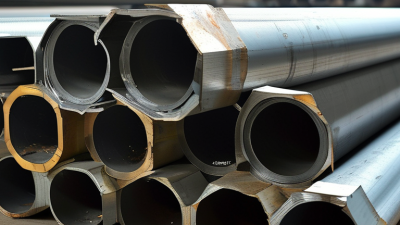
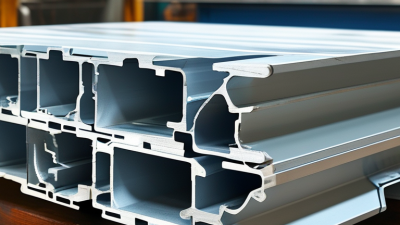
You know, China's become the go-to place for sourcing Aluminium Extrusion Tube products – and it's not hard to see why. They've got massive smelting capacity, some seriously advanced extrusion presses, and a whole ecosystem of downstream manufacturing to boot. According to the International Aluminium Institute, back in 2023 China churned out around 41.5 million tonnes of primary aluminium, which is nearly 60% of the world's total. That's a pretty huge chunk, honestly. Look, scale definitely matters—nobody's denying that. But just because something has big numbers doesn't automatically make it a reliable supplier. I mean, you can't just point to volume and say 'they're solid.' There's more to it.
Take the aluminium extrusion market, for instance. Grand View Research put the global figure at around $78.4 billion in 2023, and they've got projections showing continued growth up to 2030, mostly thanks to construction, transport, renewable energy, and industrial equipment. That all sounds impressive, but here's the catch: that number covers way more than just tubes. So you shouldn't really treat it as some kind of exact valuation for the Aluminium Extrusion Tube segment specifically. It's more of a general ballpark, if you will.
You know, Tom Dobbins—he's the CEO of The Aluminum Association—has said that aluminum is infinitely recyclable. That's a pretty big deal when you're sizing up Chinese suppliers, especially those touting recycled-content alloys, billet traceability, or lower-carbon production methods. But here's the thing: you can't just take their word for it. You need real evidence—verified certificates, energy data, and clear material declarations. So yeah, it's a solid principle, but you've got to dig deeper and check the proof.
Alright, so here we're looking at ten Chinese suppliers, and to be honest, you can't just pick one on a whim. We're going to size them up based on the stuff that actually matters when you're buying — like alloy options, how tight the tolerances can go, wall thickness, surface finish, what their tooling can handle, minimum order quantities, how long production takes, inspection records, and whether they've got export experience. Oh, and here's a classic gotcha: a tube with a bright anodized finish might look killer under showroom lights, but if the concentricity is off, it'll bite you during assembly. So keep that in mind.
Look, no ranking is perfect – that's just the way it goes. Supplier strengths shift over time, depending on their equipment, management, and what your project actually needs. So before you place an order, you really should double-check the samples, certifications, test reports, and how well they communicate. Don't just take the ranking's word for it.
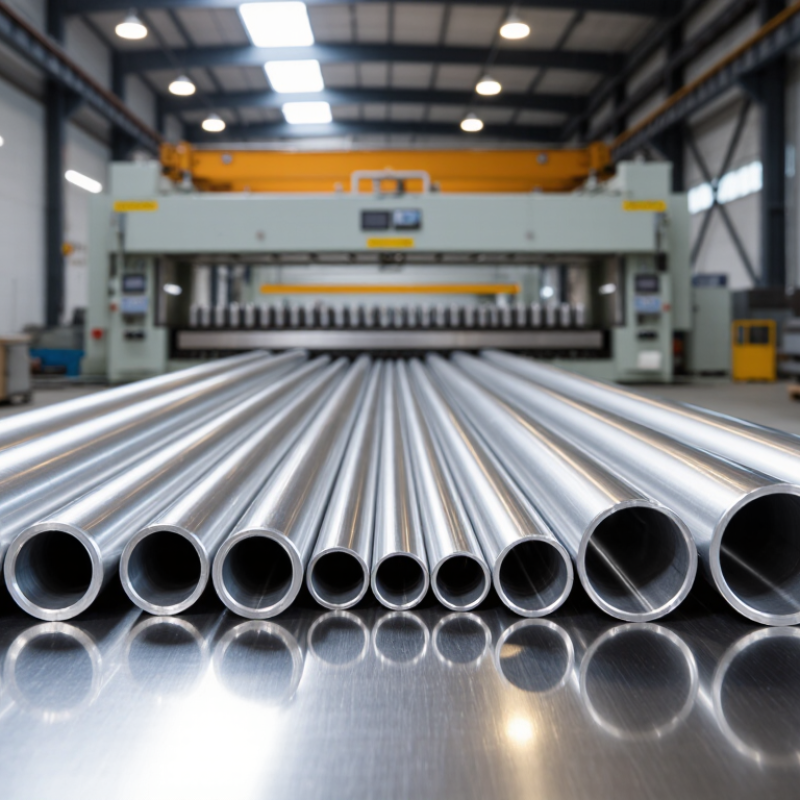
China’s Top 10 Aluminium Extrusion Tube Suppliers: Ranking Criteria
Ranking China’s top aluminium extrusion tube suppliers requires more than comparing quoted prices. Capacity matters, but it should not dominate the assessment. The International Aluminium Institute reported global primary aluminium production at about 70 million tonnes in 2023, showing the scale and competitiveness of this market. A credible ranking should examine extrusion capacity, alloy control, wall-thickness consistency, surface finish, and delivery performance. These factors directly affect whether Aluminum Extrusion Tube Profiles remain reliable during cutting, bending, and assembly.
Quality evidence deserves greater weight. Reviewers should verify ISO 9001 systems, laboratory testing, dimensional inspection records, and traceable batch documentation. EN, ASTM, or equivalent standards can support technical comparison, but certificates alone prove little. Ask for recent inspection reports and sample measurements. Real production experience matters. Look for defect rates, tooling replacement practices, response times, and export packaging quality. Short lead times help, though rushed production may increase variation.
Sustainability should also influence the ranking. The International Energy Agency identifies aluminium as an energy-intensive material, making electricity use and recycling practices important purchasing signals. Suppliers using recycled content should disclose its percentage and verification method. Audited emissions data is stronger than a promotional claim. No ranking is flawless. A smaller factory may offer better engineering support than a larger one, while public capacity figures can be difficult to verify. Scores should therefore combine documented performance, independent checks, customer references, and technical trial results. Price should remain visible, but never become the only measurement.
Supplier Profiles by Capacity, Alloys, Applications, and Export Markets
China Top 10 Aluminium Extrusion Tube Suppliers
A useful supplier ranking should compare capacity, alloys, applications, and export markets. Capacity figures often reflect installed lines, not actual annual output. This distinction matters. The International Aluminium Institute reported global primary aluminium production of about 70.6 million tonnes in 2023. Strong upstream supply supports China’s extrusion sector, but it does not guarantee consistent tube quality.
The top ten profiles should separate small, medium, and high-capacity producers. Large facilities may offer automated cutting, aging, anodizing, and powder coating. Smaller specialists can provide better flexibility for prototypes and low-volume orders. Common alloys include 6061, 6063, 6005A, and 6082. Alloy choice should match strength, corrosion resistance, weldability, and surface requirements. Applications range from heat exchangers and pneumatic systems to solar frames, furniture, and transport components. Export experience also deserves attention. Suppliers serving Europe, North America, Southeast Asia, and the Middle East usually understand packaging, documentation, and container loading better. However, export claims need verification.
Tips: Request recent production records, alloy certificates, dimensional inspection reports, and sample tubes. Confirm whether capacity is dedicated to extrusion or shared with other products. Ask for wall-thickness tolerances. A polished brochure is not evidence.
Professional buyers should compare extrusion diameter, maximum tube length, tooling capability, and monthly capacity. Reports from the International Aluminium Institute and UN Comtrade can help assess regional aluminium flows. Still, trade data may combine billets, finished tubes, and unrelated products. That limitation is easy to overlook. A practical audit should include factory video evidence, third-party inspection, and repeat sample testing before large orders.
Comparing 6063 and 6061 Aluminium Tube Performance Data
When comparing China’s aluminium extrusion tube suppliers, 6063 and 6061 deserve close attention. Their performance changes with temper, wall thickness, and extrusion quality. In typical T6 data, 6061 offers tensile strength near 310 MPa and yield strength around 276 MPa. 6063-T6 usually reaches about 241 MPa tensile strength and 214 MPa yield strength. These figures are typical ranges, not guaranteed results.
6063 extrudes more easily and produces a cleaner surface, making it suitable for architectural frames, lighting housings, and Custom Aluminum Tube projects. Its smoother finish can reduce polishing work. 6061 contains more magnesium and silicon, giving it higher structural strength. It suits brackets, transport components, and tubes exposed to repeated loads. Cutting tests often show 6061 producing slightly rougher edges. That detail matters during assembly.
In practical inspections, I would request mill certificates, hardness readings, dimensional reports, and sample sections. A neat comparison can still mislead. I have seen a strong alloy fail because its tube wall was too thin. Welded areas also need attention, since heat can reduce local strength. Check straightness, ovality, surface scratches, and the stated temper before approving production. Small deviations become visible when a tube enters a sliding frame. The supplier’s test method should match the intended service conditions.
China Top 10 Aluminium Extrusion Tube Suppliers? - Comparing 6063 and 6061 Aluminium Tube Performance Data
Technical note: Values are typical reference figures for extruded tube in the stated tempers, compiled from commonly published aluminium alloy data and engineering references. Actual results vary with tube diameter, wall thickness, extrusion ratio, heat treatment, testing method, and applicable standards such as ASTM B221 or EN 755. Request a current mill test certificate, dimensional inspection report, and surface-finish specification from each supplier before approval.
Evaluating Dimensional Tolerances Under GB/T 5237 and ISO 6362
When comparing China’s top 10 aluminium extrusion tube suppliers, dimensional control deserves more attention than catalog claims. GB/T 5237 and ISO 6362 define tolerance requirements for extruded aluminium products, but they are not interchangeable checklists. The applicable tolerance depends on alloy, temper, tube size, wall thickness, and profile geometry.
Ask each supplier for the exact standard edition and tolerance table used in production. Request inspection records for outside diameter, wall thickness, straightness, length, and twist. A calibrated micrometer can check wall thickness, while a granite table and feeler gauge help verify straightness. For complex tubes, coordinate measuring equipment gives stronger evidence. Small differences matter.
Do not accept “standard tolerance” without details. Suppliers should link measurements to batch numbers, extrusion dies, and inspection dates. In practice, thin-wall tubes may show local variation near weld lines or die transitions. This is easy to miss during visual inspection. It should not be ignored.
A reliable supplier can explain when GB/T 5237 applies and when ISO 6362 better supports an international drawing. They should also confirm whether the quotation covers normal or tighter tolerances. Some reports look complete but omit the test method. That is a weakness. I have found that independent sampling often reveals more than polished certificates, although sampling alone cannot replace process audits. Clear drawings, agreed measurement points, and retained samples make supplier comparisons more dependable.
Production Technology: Billet Quality, Die Design, and Surface Finishing
China Top 10 Aluminium Extrusion Tube Suppliers?
Production quality separates dependable suppliers from attractive catalogues. For Aluminium Extrusion Automotive applications, billet chemistry should be verified before pressing. An inconsistent billet can create streaks, tearing, or weak weld lines. The International Aluminium Institute reports that recycled aluminium can save about 95% of the energy used for primary production. However, recycled content still needs strict sorting and melt-quality control. Ask suppliers for spectrometer results, homogenization records, and tensile-test data.
Die design affects both accuracy and production stability. Engineers should review wall-thickness transitions, bearing lengths, corner radii, and material flow simulations. A poorly balanced die may produce twisting, uneven walls, or excessive correction work. ISO 6362 guidance supports dimensional and mechanical verification for wrought aluminium products. Yet paperwork is not enough. Request a trial extrusion, cross-section measurements, and samples from different billet batches. Small differences matter.
Surface finishing must match the service environment. Brushing can hide minor marks, but anodizing reveals surface defects quickly. Powder coating needs clean pretreatment and controlled film thickness. The European Aluminium industry has repeatedly linked closed-loop recycling with major energy savings, but finishing scrap can reduce those gains if it is poorly separated. This is often overlooked. I would also question perfect inspection claims. Real production has variation. Reliable suppliers explain limits, corrective actions, and reinspection procedures clearly.
China Top 10 Aluminium Extrusion Tube Suppliers?
Production Technology: Billet Quality, Die Design, and Surface Finishing
This editorial evaluation framework assigns a 100-point technology emphasis index to the production controls commonly used for aluminium extrusion tubes. The model covers billet quality, die engineering, dimensional accuracy, quenching, straightening, and surface finishing. It is a technical comparison framework rather than a ranking of named companies or a supplier performance claim.
Quality Certifications, Testing Standards, and Traceability Systems
China Top 10 Aluminium Extrusion Tube Suppliers?
A credible supplier list should reflect verified production evidence, not advertising claims. During factory assessments, I check ISO 9001 quality systems, calibrated equipment, and controlled inspection records. Certifications must match the actual facility and product scope. For structural tubes, test reports should reference standards such as EN 755, EN 12020, or ASTM B221. Tensile strength, elongation, hardness, wall thickness, and surface condition require documented results. Samples should be measured with calibrated micrometers and optical tools. Small deviations matter.
Traceability separates a dependable supplier from a convenient one. Each batch should connect the billet number, alloy, extrusion press, die, operator, heat-treatment cycle, and inspection report. A QR code or clear lot label can shorten investigations. For an Aluminium Extrusion T Slot Profile, the supplier should verify slot dimensions, straightness, corner geometry, and anodized coating thickness. I also request retained samples and records showing nonconforming material control. Paperwork is not proof by itself.
Some suppliers provide excellent reports but weak process discipline. Others maintain clean workshops yet explain certification details poorly. That inconsistency deserves attention. I would audit corrective actions, review recent complaints, and compare test results with independent laboratory data. No system is flawless. A missing furnace record or unclear batch label can expose a serious traceability gap. Reliable suppliers welcome these questions and provide evidence without hesitation.
Comparing MOQ, Lead Times, Annual Output, and Export Service Metrics
China Top 10 Aluminium Extrusion Tube Suppliers?
For this comparison, MOQ, lead time, annual output, and export support matter more than catalogue size. The International Aluminium Institute reported global primary aluminium production of about 70.6 million tonnes in 2023. That scale supports strong material availability, but it does not guarantee stable tube quality. Buyers should request alloy certificates, die capability, and recent inspection records.
Typical extrusion tube MOQs range from 500 to 2,000 kilograms. Custom dies may require separate tooling charges and longer approval cycles. Standard profiles can often ship within 15 to 25 days. Complex, anodized, or tightly toleranced tubes may require 30 to 45 days. These figures should be verified against production schedules, not promises.
Annual output is useful, but capacity alone can mislead. A factory reporting 30,000 tonnes annually may still reserve limited capacity for small export orders. The 2024 China Nonferrous Metals Industry Association review highlights continued expansion in aluminium processing capacity. Export service should therefore include English documentation, HS-code support, pallet specifications, and pre-shipment inspection. UN Comtrade trade data also shows China remains a major aluminium products exporter, yet shipment volume cannot prove supplier reliability.
My practical view is less comfortable: published capacity figures are often unaudited. Compare at least three recent orders, record actual delays, and treat unusually low MOQs as a question, not an advantage.
FAQS
Check extrusion capacity, alloy control, wall thickness, surface finish, and delivery history. Price alone misleads. Quality evidence matters more.
Request mill certificates, dimensional reports, hardness readings, and batch traceability records. Ask for recent samples, not old paperwork. Certificates prove little alone.
6063 usually extrudes more easily and offers a cleaner surface. It suits frames, lighting housings, and decorative tube projects. 6061 provides higher structural strength for brackets and repeated loads.
No. Typical 6061-T6 strength may approach 310 MPa tensile strength. Typical 6063-T6 strength may approach 241 MPa. Temper, wall thickness, and extrusion quality change actual results.
Measure wall thickness, straightness, ovality, corner radii, and cross-section dimensions. Check several tube sections from different production batches. Small deviations become obvious inside sliding frames.
Die balance controls material flow, wall consistency, twisting, and correction work. Review transitions, bearing lengths, and corner details before production. Trial extrusions reveal problems earlier.
Inspect scratches before brushing or anodizing. Check cleaning, pretreatment, and coating thickness for finished tubes. Anodizing can expose defects quickly. That detail matters.
Recycled aluminium can reduce energy use substantially, but melt quality still requires control. Ask for recycled content percentages and verification records. Poor sorting may create defects. Sustainability claims need evidence.
Yes, sometimes. A smaller factory may provide stronger engineering support and faster technical responses. Public capacity figures can be difficult to verify. I would compare trial results, references, and inspection records carefully.
Ask about defect rates, tooling replacement, lead-time pressure, packaging, and corrective actions. Rushed production may increase variation. Perfect inspection claims deserve questions. Real factories have limits.
Conclusion
This guide presents a practical comparison of China’s top Aluminium Extrusion Tube suppliers, using transparent criteria such as production capacity, alloy range, application expertise, export coverage, quality systems, and customer service. It explains how suppliers differ in their ability to produce tubes from alloys such as 6063 and 6061, supporting applications in construction, transportation, industrial equipment, energy, and custom fabrication. Key performance factors include strength, corrosion resistance, surface quality, machinability, and dimensional stability.
The article also examines production technology, including billet quality, die design, extrusion control, heat treatment, and surface finishing. It outlines how GB/T 5237 and ISO 6362 requirements influence dimensional tolerances and product consistency, while certifications, testing procedures, and traceability systems help verify reliability. Finally, buyers can compare minimum order quantities, lead times, annual output, packaging, documentation, and export support to select a supplier that matches their technical requirements, budget, and delivery schedule.