Picking out the best Aluminum tile trims suppliers in China isn’t just about flipping through catalogs or hunting for the cheapest prices. You’ve gotta look for a reliable partner who consistently delivers solid profiles, precise measurements, clean anodizing, and reliable packaging. Because honestly, these little details can sometimes only be noticed once you're on-site—like a bent trim or uneven corner, which can throw off your whole installation schedule.
This guide is here to help you understand the key factors when evaluating manufacturers and exporters for tiles, stone, bathrooms, or commercial interiors. We’re talking about material grades, surface finishes, custom lengths, corner accessories, production capacity, and quality control. Honestly, experience counts. A supplier might wow you with a nice sample, but once you see the actual production batch, there might be color inconsistencies or weak protective films—that’s something to watch out for.
Don’t forget to ask for technical drawings, alloy info, sample approvals, and inspection reports. Good suppliers will be upfront about tolerances—they won’t promise perfection but will be clear about what’s realistic. Also, they should be transparent about tooling, lead times, minimum orders, and how they handle export packaging. Some suppliers, like those based in Foshan, might have a huge range of products, while smaller factories often can do more customized stuff. Neither is automatically better—it depends on what you need.
A solid comparison includes verified customer reviews, factory inspection results, and clear terms of business. Getting an independent inspection before making big orders is never a bad idea either—that’s extra peace of mind. Keep in mind, no list of suppliers will stay perfect forever because markets, staff, and quality can all change over time. This guide is meant to be a helpful starting point, not a strict ranking. It’s designed to help you spot capable China Aluminum Tile Trims suppliers and ask smarter questions before you commit. Doing these small checks early on can save you a headache down the line and avoid costly fixes later on.
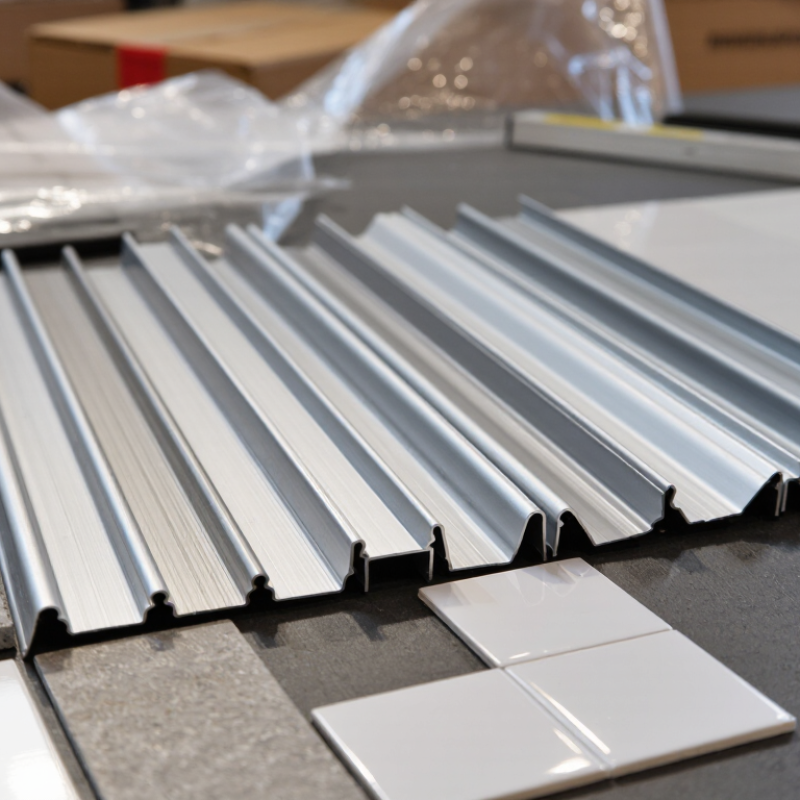
Aluminum tile trim is a narrow profile that protects exposed tile edges. It also creates a clean transition at corners, steps, and shower niches. During installation, the trim sits beneath the tile surface. Its visible face hides rough cuts and reduces impact damage. Tile Trims And Edging therefore affects both appearance and service life.
Material choice matters. The U.S. Geological Survey reported about 70 million metric tons of primary aluminum production worldwide in 2023. The International Aluminium Institute states that recycled aluminum requires roughly 5% of the energy used for primary production. These figures do not prove every trim is sustainable. They show why recycled content, alloy selection, and coating quality deserve careful review. A thin profile may look efficient, yet it can bend during transport or crack at an uneven corner.
Practical checks are simple.
Measure the tile thickness, adhesive bed, and joint before ordering. Inspect the trim for straightness, burrs, coating gaps, and inconsistent color. For wet areas, confirm corrosion resistance and drainage details. I have seen attractive profiles fail because installers selected the wrong height. That mistake is common. Supplier evaluation should include tolerance records, test documents, sample approval, and packaging protection. A supplier’s catalog is useful, but site evidence is stronger. անհրաժեշտ
Key Types of Aluminum Tile Trim for Different Installations
Choosing aluminum tile trim starts with the installation, not the supplier’s catalogue. L-shaped edge trim protects exposed tile edges on walls, backsplashes, and floor borders. Square-edge profiles create a sharp modern finish, while rounded profiles soften corners in bathrooms and kitchens. T-shaped trim joins tiles at similar heights. It is useful during renovation work.
Movement areas need different protection. Expansion-joint profiles absorb small changes between tile sections, reducing edge pressure. Stair nosing adds a visible, textured front edge for steps. For uneven transitions, wider reducer profiles help connect tile with wood, vinyl, or stone. The Tile Council of North America’s 2024 installation handbook stresses movement accommodation in large tiled areas. Ignoring it is a costly mistake.
Material quality still matters. The USGS Mineral Commodity Summaries 2025 estimated global primary aluminum production at roughly 73 million metric tons in 2024. However, volume does not guarantee suitable trim. Buyers should check alloy, wall thickness, anodizing quality, corner accuracy, and adhesive compatibility. The International Aluminium Institute reports that recycled aluminum can require up to 95% less energy than primary production. That supports recycled-content options, though coating consistency must be verified. Some projects need stronger profiles than expected. Samples should be tested beside the actual tile, grout, and cleaning chemicals. Small color differences become obvious under bright bathroom lighting.
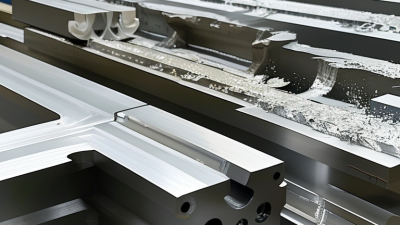
China-based aluminum tile trim suppliers usually begin with alloy selection. Common profiles use corrosion-resistant aluminum suited to wet rooms and exterior edges. Engineers convert drawings into extrusion dies, checking the nose width, wall thickness, and corner angle.
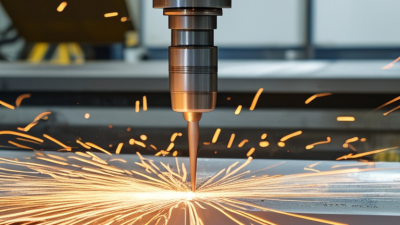
Hot aluminum billets pass through the die under controlled pressure. The emerging profile is cooled, stretched, and cut to set lengths. The details matter. Technicians measure straightness with gauges and inspect surfaces under bright lighting. Small scratches can appear during handling, so protective film is added after finishing.
Finishing may include anodizing, powder coating, or mill treatment. Each option changes the surface texture, color consistency, and resistance to moisture. External Tile Trims often require tighter visual control because exposed edges receive direct attention. Samples reveal problems. A test piece may show uneven coating or a weak corner before mass production begins. Reliable facilities record batch numbers, coating results, and dimensional checks. They also verify packing strength, since long trims can bend during transport. The process is efficient, but not flawless. Humidity, die wear, and operator adjustments can affect consistency. Experienced suppliers therefore compare production pieces with approved samples throughout the run. This hands-on review supports more dependable installation and reduces avoidable site cutting.
| Evaluation Dimension | Typical Industry Data | Manufacturing Method or Requirement | Recommended Quality Check |
|---|---|---|---|
| Base Aluminum Alloy | 6063-T5 is commonly used for decorative and architecturaL Tile Trims. | Aluminum billets are heated and pushed through a precision extrusion die, then cooled and straightened. | Request the alloy designation, mill certificate, and chemical composition report. |
| Common Trim Profiles | L-shaped, square-edge, round-edge, T-shaped, stair-nosing, transition, and tile-insert profiles. | Profile geometry is created by a dedicated extrusion die based on the required tile thickness and edge design. | Compare approved technical drawings with random profile measurements. |
| Typical Profile Height | Approximately 6–20 mm for many wall and floor tile applications. | The visible or anchoring height is selected to match the tile thickness and adhesive bed. | Measure the height with a calibrated vernier caliper against the approved drawing. |
| Typical Wall Thickness | Approximately 0.8–2.0 mm, depending on the profile, load, and application. | Die design and extrusion speed are adjusted to maintain a consistent cross-section. | Check wall thickness at several points along each production batch. |
| Standard Stock Lengths | Common commercial lengths include 2.5 m, 2.7 m, and 3.0 m; custom lengths may also be produced. | Extruded bars are cut with automatic saws after aging and surface finishing, when applicable. | Verify length tolerance, cut squareness, and burr-free ends. |
| Surface Finishes | Anodized, powder-coated, brushed, polished, mill-finished, and wood-effect finishes are widely available. | Finishing may include cleaning, chemical pretreatment, anodizing, coating, brushing, or polishing. | Inspect color consistency, scratches, pinholes, coating adhesion, and surface coverage. |
| Anodized Layer | Decorative anodized finishes are often specified around 8–15 micrometres, depending on the application. | The aluminum surface is electrolytically oxidized to create a controlled protective oxide layer. | Use a coating-thickness gauge and compare the result with the purchase specification. |
| Powder-Coating Thickness | Many architectural powder-coated applications use approximately 60–120 micrometres, subject to the coating specification. | Powder is electrostatically applied and thermally cured in an oven. | Test coating thickness, adhesion, color difference, and curing quality. |
| Perforated Anchoring Flange | Perforation patterns commonly use round or elongated openings to improve mortar or adhesive bonding. | Holes are formed by punching, stamping, or integrated extrusion geometry after profile production. | Check opening size, spacing, alignment, and absence of sharp burrs. |
| Corner and Joint Accessories | Outside corners, inside corners, connectors, end caps, and joint pieces are commonly supplied as matching accessories. | Accessories may be extruded, die-cast, stamped, injection-molded, or cut from matching profiles. | Check dimensional fit, finish matching, and compatibility with the main trim. |
| Dimensional Tolerance | Tolerance depends on the drawing, profile complexity, extrusion standard, and length; tighter tolerances require prior agreement. | Process control covers die condition, extrusion temperature, cooling, stretching, and cutting. | Approve a first-article sample before mass production and record inspection results. |
| Production Tooling | A custom extrusion die is normally required for a non-standard profile. | The die is manufactured from hardened tool steel and tested through trial extrusion before approval. | Confirm die ownership, revision control, trial samples, and maintenance responsibility. |
| Straightness and Surface Condition | Bars should be straight, free from visible dents, deep scratches, deformation, and excessive twist. | Stretching and straightening are performed after extrusion, followed by visual and dimensional inspection. | Inspect on a flat reference surface and use a defined straightness limit. |
| Quality Management | A documented inspection process should cover incoming billets, extrusion, finishing, cutting, packing, and final release. | Batch records and inspection checkpoints help maintain consistent output across repeated orders. | Request inspection reports, sampling plans, corrective-action records, and traceability information. |
| Packaging Method | Individual protective film, paper wrapping, bundled cartons, pallets, and moisture-resistant outer packaging are commonly used. | Packaging is selected to prevent abrasion, bending, moisture exposure, and mixing of different finishes. | Conduct a packing test and verify labels, quantity, batch number, and carton strength. |
| Supplier Selection Indicators | Relevant extrusion capacity, finishing capability, stable export packaging, sample approval, and documented quality control. | Integrated production or closely controlled subcontracting can reduce variation between extrusion and finishing stages. | Compare samples, technical documents, factory audit results, production records, and pre-shipment inspection findings. |
Note: The figures shown are typical industry ranges for aluminum tile trim products. Final specifications should be confirmed in the approved technical drawing, purchase order, and quality agreement.
China Top Aluminum Tile Trims Suppliers?
Reliable aluminum tile trim suppliers usually begin with alloy selection, not packaging. Common choices include 6063 aluminum for clean extrusion lines and stable profiles. For wet rooms, buyers should check corrosion resistance, wall thickness, and edge strength. A thin profile may look economical but can bend during installation. Experienced factories provide samples for corner cuts, tile fitting, and impact checks. This hands-on review matters for Bathroom Trims For Tiles used around showers, vanities, and exposed wall edges.
Finishes include anodized, powder-coated, brushed, polished, and mill-finished surfaces. Each finish changes appearance, maintenance, and scratch visibility. Ask for coating thickness records and color consistency between production batches. Standards such as EN 573 and EN 755 can help verify aluminum composition and extrusion requirements. However, standards alone do not guarantee a perfect surface. Small shade differences may appear under warm bathroom lighting. That detail is easy to miss.
Quality control should cover incoming coils, extrusion dimensions, cutting accuracy, burr removal, and final packing. A practical inspection checks profile length with calibrated tools and tests corner connectors for a tight fit. Suppliers should document inspection results, packing methods, and corrective actions. Request a trial order before approving large quantities.
No checklist is perfect. Even careful teams can overlook a sharp corner after polishing. Clear drawings, retained samples, and direct factory communication reduce that risk.
China Top Aluminum Tile Trims Suppliers?
When comparing Chinese suppliers, customization should begin with a practical drawing. Specify alloy, thickness, height, finish, and corner details. Aluminum Tile Trim can use anodized, powder-coated, brushed, or mill finishes. Include sample lengths and acceptable color variation. Small differences become obvious under bathroom lighting. Ask for a pre-production sample before approving bulk production. It saves time, though it can slow the first order.
Packaging needs equal attention. Each trim should have protective film and a foam divider. Strong cartons help prevent bent edges during container handling. Pallets should remain dry and carry clear labels. Request carton dimensions, gross weight, and packing photos before shipment. A reliable supplier should also provide inspection records, material details, and measurable tolerance data. Do not rely on attractive product photos alone.
Minimum order requirements often depend on the production method. Standard profiles may allow a lower trial quantity. Custom colors, holes, or new dies usually require a higher MOQ. Ask whether tooling fees are separate and whether they can be refunded later. A small pilot order can test finish consistency, packing strength, and actual installation performance. It may cost more per piece. That is the part buyers sometimes underestimate. Check batch records and inspect random cartons before loading. Even experienced teams miss details when schedules become tight.
Pricing, Lead Times, Certifications, and Export Services
Aluminum tile trim pricing depends on alloy, profile size, surface finish, and order quantity. Standard mill-finished profiles usually cost less than anodized or powder-coated options. A practical quotation should include tooling, packing, inspection, and delivery terms. Ask for prices by meter, not only by carton. Small details matter.
Typical samples may ship within 7–10 working days. Standard production often requires 15–25 days after approval. Custom colors, new molds, or large orders can extend lead times to 30–45 days. These ranges are not guaranteed. Confirm production capacity before paying a deposit. I have seen attractive schedules fail because color approval arrived too late.
Reliable suppliers should provide alloy specifications, dimensional inspection records, and material test reports.
ISO 9001 certification can indicate a controlled quality system, but it does not replace product inspection. Depending on the destination, buyers may request REACH, RoHS, or other compliance documents.
Export support should cover commercial invoices, packing lists, certificates of origin, HS code confirmation, and suitable pallet protection. Check Incoterms carefully. A cheap FOB quote may exclude important destination costs.
Photos of packed cartons, random inspections, and retained samples improve traceability, although they add time and expense. That trade-off deserves honest discussion.
China Top Aluminum Tile Trims Suppliers?
Selecting an aluminum tile trim supplier requires more than comparing online prices. In practical sourcing work, I check alloy information, profile dimensions, surface treatment, and production consistency. Ask whether the supplier can provide material certificates and inspection records. A reliable factory should explain its extrusion process clearly. Vague answers deserve caution.
Request physical samples before placing a large order. Check the trim against your tile thickness, corner angles, and installation tools. Measure the visible edge with a caliper. Small errors can create uneven grout lines. Inspect anodized or powder-coated surfaces under strong light. Look for scratches, color variation, and weak protective film. Photos are not enough.
Production capacity also matters. Confirm minimum order quantities, lead times, packaging methods, and replacement procedures. Ask for recent project references, but verify them independently when possible. A video call can show storage areas, testing equipment, and packing conditions. It is useful evidence, not absolute proof. I would also request a written tolerance standard for length, angle, and finish. Suppliers may promise customization, yet tooling charges and delivery delays can change the real cost. I have underestimated packaging before. That mistake taught me to test cartons through ordinary warehouse handling, not just admire a perfect sample. A careful evaluation balances technical quality, communication, documentation, and after-sales responsibility.
LED linear lighting is moving from a purely functional solution toward an integrated architectural element. Grand View Research valued the global LED lighting market at approximately USD 78.3 billion in 2023 and projects an 11.3% compound annual growth rate from 2024 to 2030. Mordor Intelligence also forecasts double-digit expansion, supported by energy-efficiency regulations, smart-building development, and growing demand for adaptable lighting in commercial and residential interiors. These trends are increasing interest in slim, continuous fixtures that provide clean illumination without visual clutter.
A U-shaped aluminum groove line light responds to these design and performance requirements. Its aluminum-alloy housing creates a durable structural channel while transferring heat away from the embedded LED strip, helping maintain stable operation and extend service life. The recessed U-shaped profile also conceals wiring and produces a refined linear appearance across ceilings, walls, wardrobes, display units, and kitchen cabinets. With opal diffusers, dimmable drivers, and selectable color temperatures, the system can support ambient, task, or accent lighting. As linear lighting increasingly prioritizes discreet installation, thermal management, and flexible integration, this profile-based solution offers a practical balance between contemporary aesthetics and reliable illumination.
6063 aluminum is commonly used for clean extrusion lines and stable profiles. Check wall thickness, edge strength, and corrosion resistance for wet rooms.
Common options include anodized, powder-coated, brushed, polished, and mill-finished surfaces. Each finish changes cleaning needs and scratch visibility.
Request coating thickness records and samples from different production batches. Warm bathroom lighting can reveal small color differences. That detail is easy to miss.
Checks should cover incoming material, extrusion dimensions, cutting accuracy, burr removal, and final packing. Use calibrated tools to measure profile length. No checklist catches everything.
Samples help test corner cuts, tile fitting, edge strength, and impact resistance. Try fitting a sample beside a tile before bulk approval. Photos are not enough.
Include alloy, thickness, height, finish, profile length, and corner details. Specify acceptable color variation in writing. This prevents avoidable arguments later.
Each piece should have protective film and a foam divider. Strong cartons and dry pallets help prevent bent edges. Packing photos are useful evidence.
Standard profiles may support smaller trial quantities. Custom colors, holes, or new dies often require higher minimum orders. Ask about tooling fees and possible later refunds.
A pilot order can reveal finish variation, weak packaging, or installation problems. It may cost more per piece. That cost is easy to underestimate.
EN 573 can help verify aluminum composition, while EN 755 relates to extrusion requirements. Standards support evaluation but do not guarantee a flawless surface.
This guide explains what Aluminum tile trims are, why they are important, and how they protect tile edges while creating clean, professional transitions between surfaces. It reviews key types for floors, walls, corners, stairs, and curved installations, helping buyers match trim profiles with different project requirements. The article also describes how China-based suppliers manufacture these products, including material selection, forming, cutting, surface finishing, and quality inspection.
It further covers available finishes, technical standards, customization choices, packaging methods, minimum order quantities, pricing factors, lead times, certifications, and export support. To select the right supplier, buyers should evaluate product consistency, manufacturing capacity, customization flexibility, quality-control procedures, communication, delivery reliability, and overall value. A careful comparison of samples, specifications, documentation, and service capabilities can help ensure that the chosen supplier provides durable Aluminum tile trims suited to both residential and commercial installations.