Leave a Message
Picking the right Aluminum tile trims from China isn’t just about hunting down the lowest price or glancing at some shiny product photos. Honestly, a trim that looks perfect online might still hide differences—you know, in alloy quality, coating thickness, edge precision, or how it’s packed. And those differences tend to show up once you see how they perform in real life—like at a wet-room corner, a kitchen backsplash, or a busy commercial corridor.
In this guide, we’re gonna look at how seasoned buyers evaluate Chinese manufacturers and the products they offer. Things like aluminum grade, surface treatments, profile shapes, tile thickness, drainage needs, and how and where you’ll be installing matter a lot. Practical checks are key—don’t skip asking for samples! Little details like sharp edges, uneven anodizing, weak protective films, or mismatched colors can easily become a headache. Experience with the supplier is also a big plus, especially if you need custom lengths, corner pieces, or special finishes.
Basically, don’t overlook the small stuff.
Trustworthy manufacturers should give you clear specs, consistent samples, photos from production lines, and realistic timelines for delivery. Independent test reports can back up their claims, but they should really match the actual product you receive. Also, pay attention to customer reviews, how responsive the factory is, and their quality-control records—they often tell you more than a glossy catalog. Remember, a cheap quote isn’t always a sign of a good deal. Hidden costs can pop up, like damaged boxes, incorrect sizes, or installation headaches.
No single shortlist is perfect. Even the most careful buyers might miss certain local conditions or notice quality differences between batches. That’s why the safest approach is a mix of technical comparisons, sampling, verifying the supplier’s credibility, and getting feedback from installers. Because, at the end of the day, your Aluminum Tile Trims should really do their job—protect those edges, give you a neat finish, and stay reliable from start to finish.
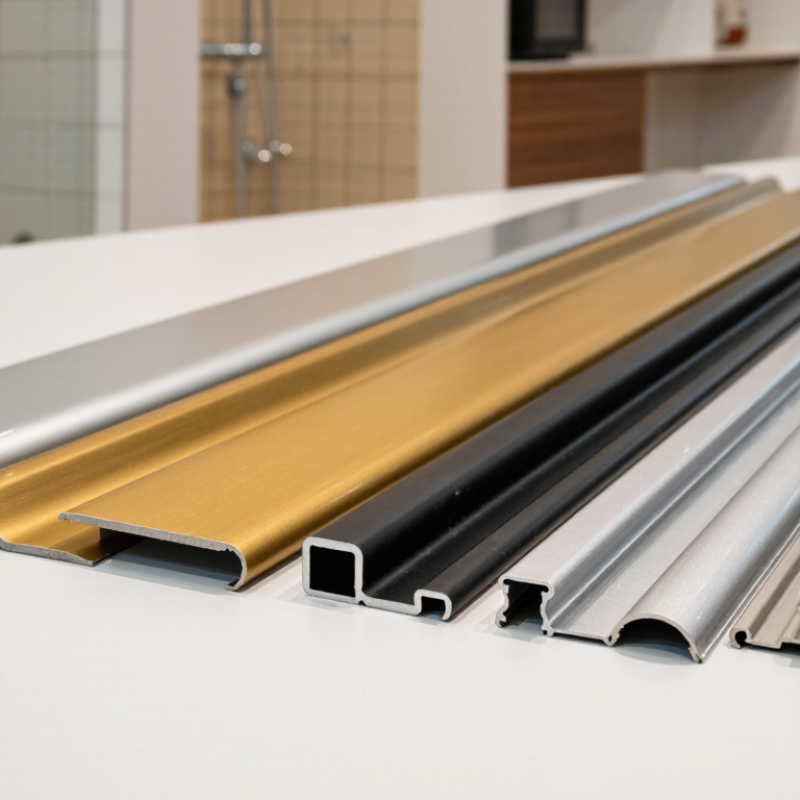
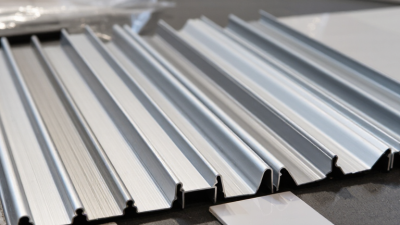
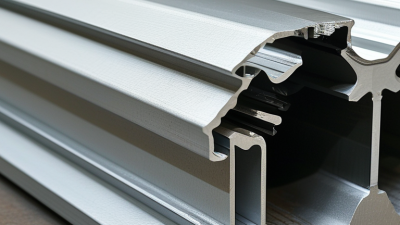
Choosing the best aluminum tile trim starts with understanding its profile, not its appearance alone. L-shaped trims protect exposed tile edges on walls and floors. Rounded profiles suit bathrooms and kitchens, where softened corners reduce impact risks. Square-edge trims create a sharper architectural line. T-shaped profiles can cover transitions between tile and another finished surface.
Application changes the specification. For shower walls, select corrosion-resistant aluminum with a stable anodized or powder-coated finish. For floors, check the profile height against the tile thickness before ordering. A 10 mm tile usually needs a closely matched trim, allowing a small adhesive bed without creating a raised edge. Stair nosings require stronger geometry and a secure, slip-resistant insert. They are not interchangeable.
The USGS Mineral Commodity Summaries 2024 reported global aluminum production at roughly 70 million metric tons in 2023, supporting aluminum’s broad industrial availability. However, availability does not guarantee suitability. ASTM C920 and tile installation guidance emphasize movement accommodation and proper sealant selection around wet areas; rigid trim cannot replace a movement joint. I have seen attractive trims fail because installers ignored substrate movement. A sample test helps. Check the actual tile, grout, adhesive, and lighting together. Color can change noticeably.
For China-sourced trims, request alloy information, coating specifications, dimensional tolerances, and salt-spray or adhesion test results. Supplier claims need evidence. That part is often overlooked.
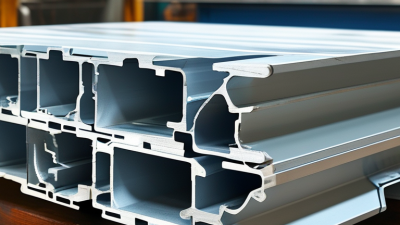
Air Deflector Aluminum Profiles are designed to improve airflow control in central air-conditioning systems, fresh air units, fans, cabinet cooling equipment, and purification air conditioners. As a U-shaped groove structural component, the profile helps guide air, shield unwanted drafts, separate air passages, and adjust the direction of air outlets. By supporting more even air distribution, it can enhance indoor comfort, reduce airflow disturbance, and help ventilation and cooling systems operate more efficiently.
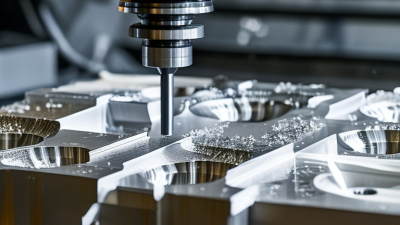
Manufactured from 6063 industrial aluminum alloy, the profile combines a lightweight structure with reliable strength and corrosion resistance. CNC drilling, tapping, bending, sandblasting, and anodizing provide accurate dimensions, a refined surface, and convenient installation for different system layouts. It can be used as an air-conditioner air guide aluminum channel or an air duct diversion aluminum housing, adapting to customized air outlet designs and compact equipment spaces. Properly positioned air deflector profiles can help minimize direct drafts, improve the coverage of conditioned air, and support more balanced temperature control while reducing unnecessary energy loss.
L-shaped trim protects exposed wall and floor edges. Rounded profiles soften corners in bathrooms and kitchens. Square edges create sharper lines.
Use T-shaped trim between tile and another finished surface. It covers the transition neatly. Measure both surfaces first.
Choose corrosion-resistant aluminum with a stable anodized or powder-coated finish. Wet areas also need suitable sealant. Rigid trim cannot replace a movement joint.
Check the profile height before ordering. A 10 mm tile usually needs closely matched trim. Leave a small adhesive bed without creating a raised edge.
No. Stair nosings need stronger geometry and a secure, slip-resistant insert. They are not interchangeable.
Request straight sections, corner pieces, and finish samples from one production batch. Check color, smooth edges, protective film, and fitting accuracy.
Bathroom lighting can change how finishes appear. Photos may hide slight dullness or color differences. Photos can mislead.
Ask for alloy details, coating specifications, dimensional tolerances, and test results. Request evidence for salt resistance and coating adhesion.
It may exclude tooling, sample charges, export cartons, inland transport, taxes, or payment milestones. Keep every term written.
Look for inner sleeves, corner protection, moisture-resistant wrapping, and strong outer cartons. Confirm production time separately from shipping time. Add a practical schedule buffer.
Choosing the right Aluminum tile trims requires more than comparing appearance and price. Start by identifying the trim type and matching its profile to the tile layout, such as straight edges, external corners, internal corners, transitions, or curved designs. Consider the aluminum grade, surface finish, corrosion resistance, and protective coating to ensure the trim suits the installation environment. Dimensions are equally important: check tile thickness, edge coverage, profile depth, and the fit between the trim and adhesive or grout.
When comparing Chinese manufacturers, review production experience, quality certifications, customization capabilities, and consistency between samples and bulk orders. Request samples to evaluate color, finish, strength, and installation compatibility before purchasing. Also examine pricing in relation to material quality, packaging standards, minimum order quantities, lead times, shipping arrangements, and after-sales communication. A reliable supplier should provide clear specifications and flexible options while helping you select Aluminum tile trims that deliver a neat appearance, durable protection, and efficient installation.