Leave a Message
Picking the right industrial aluminium profile supplier in 2026 isn’t just about who gives you the lowest price. Sure, price matters, but a dependable partner also has to show real technical know-how, stable production, material traceability, and communication that doesn’t disappear after the quote. Don’t just trust a slick website. Ask for alloy certificates, extrusion tolerances, surface-treatment samples, and recent inspection records. A supplier worth taking seriously should be able to explain how billets are tested, how dies are maintained, and what happens when defects show up before shipment.
John M. Campbell, a well-known aluminum extrusion consultant, once said, 'A profile is only as reliable as the process behind it.' That’s worth keeping in mind. The factory might look modern, but weak die control can still leave scratches, twisting, or uneven anodizing on the finished profile. So ask for a sample that’s close to your actual design—not some convenient showroom piece. Check wall thickness with calipers. Look at corner edges under clear light. And don’t skip packaging; damaged bundles can create costs you never see coming.
The best Industrial Aluminium Profile supplier also gets your application. Construction frames, solar mounting systems, machine guards, and transport components all have different design priorities. Ask if they offer die development, CNC machining, powder coating, and assembly support. A lower quotation may leave out testing, tooling, or export packaging. It’s an easy mistake to make.
Trust, honestly, is earned step by step. Start with a technical consultation and a pilot order. Then measure delivery accuracy, dimensional consistency, and how fast they respond. Even experienced buyers can miss small details. That’s worth remembering.
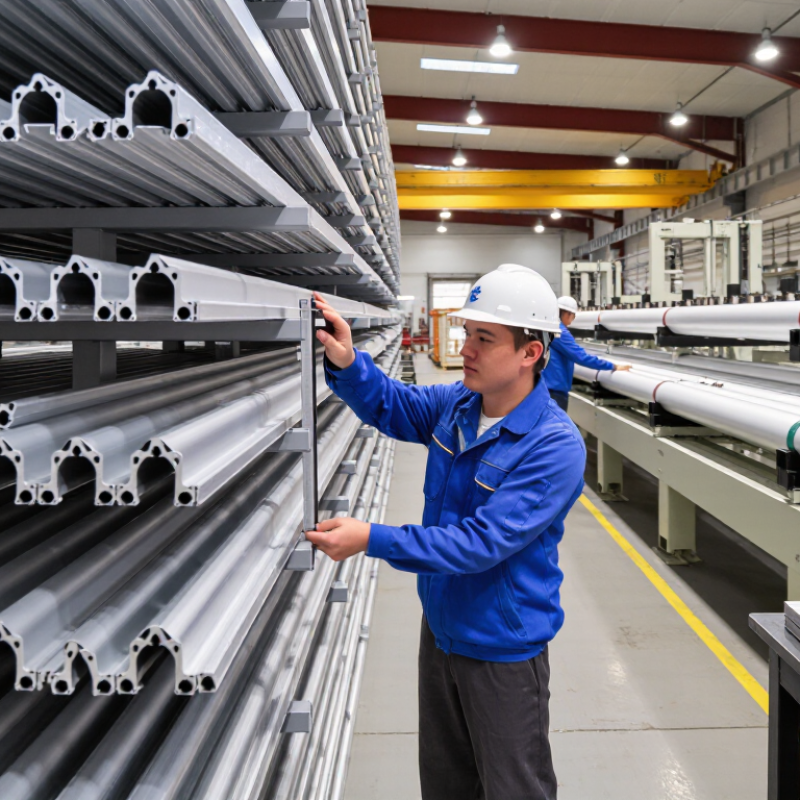
Choosing an aluminium profile supplier in 2026 should begin with the load, not the catalogue. Start with the load. In factory builds, I have seen a light guard frame twist because vibration was treated as an afterthought. Define static, impact, bending, and cyclic loads in measurable terms. Include span, support points, safety factors, and operating temperature. A reliable supplier should calculate deflection and joint strength, then explain every assumption clearly. Ask for engineering records, not confident promises.
Geometry controls more than appearance. Specify profile width, wall thickness, slot size, cut length, straightness, and permitted tolerances. Tell the supplier how profiles will be joined. Threaded fasteners, brackets, and internal connectors distribute force differently. A clean drawing may still hide assembly problems. Review corner access, tool clearance, drainage, and replacement needs. Request a sample assembly before ordering in volume. It costs time. It can expose a poor fit early.
Alloy selection should match load, corrosion exposure, machining, and budget. Higher strength is not always better. Some alloys machine poorly or complicate joining. Confirm mechanical data, temper condition, and batch traceability. For the finish, specify anodizing thickness or coating performance, color tolerance, edge preparation, and test methods. Inspect cut ends and concealed faces too. They often receive less attention. Ask for inspection reports and written responses to nonconformities. Suppliers are not infallible. Neither is the specification. Leave room for technical review when field conditions differ from the original plan.
| Application Scenario | Load and Service Conditions | Required Geometry | Suitable Aluminium Alloy and Temper | Indicative Material Properties | Recommended Surface Finish | Supplier Qualification Data to Request |
|---|---|---|---|---|---|---|
| Application-Based Aluminium Profile Selection Matrix | ||||||
| Light-duty machine guard or enclosure frame Typical use: protective panels, access doors, partitions, and non-load-bearing covers. | Static frame load generally below 1.0 kN per joint. Allow for panel weight, door impact, vibration, and a minimum design safety factor of approximately 2 for non-structural framing. | 20 × 20 mm 30 × 30 mm 40 × 40 mm Select a slot compatible with the intended fasteners and panel thickness, commonly 5 to 10 mm. | EN AW-6063-T5 Well suited to extrusion, good surface quality, and moderate strength. | Typical minimum values for T5 profile material may include: Tensile strength: approximately 160 MPa Yield strength: approximately 110 MPa Elastic modulus: approximately 69 GPa | Clear or black anodizing, typically 10–15 μm for indoor use. Mill finish may be acceptable where appearance and corrosion exposure are not critical. | Request extrusion dimensional tolerances, corner squareness, straightness, slot dimensions, alloy and temper certificate, and sample assembly checks. |
| Workstation, conveyor, or modular production frame Typical use: benches, material-handling frames, tooling supports, and modular automation structures. | Distributed working load of approximately 1–3 kN per frame bay. Consider repeated loading, caster loads, bolted-joint slip, and deflection limits such as span/300 to span/500. | 40 × 40 mm 45 × 45 mm 40 × 80 mm Use larger section depth when bending stiffness is more important than ultimate strength. | EN AW-6063-T6 or EN AW-6005A-T6 6005A-T6 is appropriate when higher structural strength is required. | Indicative values for 6005A-T6 profile material: Tensile strength: approximately 260 MPa Yield strength: approximately 215 MPa Elastic modulus: approximately 69 GPa | Natural anodizing for wear and appearance, or powder coating for color coding and enhanced decorative protection. Use a textured finish where grip or scratch concealment is needed. | Request load-test results for representative spans, profile moment of inertia, joint pull-out data, deflection calculations, and fastener compatibility information. |
| Machine base, robotic cell, or heavy automation structure Typical use: equipment bases, guarding structures with mounted components, and precision automation frames. | Static and dynamic loads may range from 3–10 kN per support. Include motor vibration, acceleration forces, emergency-stop loads, seismic or impact effects where applicable. | 80 × 80 mm 90 × 90 mm 40 × 120 mm Prefer closed or deep sections for high bending stiffness and use gussets at concentrated-load joints. | EN AW-6005A-T6 or EN AW-6082-T6 Select 6082-T6 when higher strength is justified by the structural calculation. | Indicative values for 6082-T6 profile material: Tensile strength: approximately 310 MPa Yield strength: approximately 260 MPa Elastic modulus: approximately 69 GPa | Hard anodizing may be considered for wear-prone surfaces. For general industrial environments, powder coating or standard anodizing is normally sufficient. | Request finite-element or beam calculations, extrusion press capability, straightness records, hardness data, batch traceability, weldability guidance, and proof-load results. |
| Long-span linear guide or precision support beam Typical use: linear motion rails, inspection equipment, optical supports, and measuring-machine structures. | Point or moving loads commonly range from 0.5–5 kN. Deflection and vibration limits may control the design; precision systems may require deflection below 0.1–0.5 mm, depending on span and accuracy. | Deep box section T-slot beam Integrated rail seat Specify straightness, twist, rail-seat flatness, datum surfaces, and machining allowances. | EN AW-6061-T6 or EN AW-6082-T6 These alloys provide higher strength than typical 6063 architectural grades. | Indicative values for 6061-T6 material: Tensile strength: approximately 260 MPa Yield strength: approximately 240 MPa Elastic modulus: approximately 69 GPa | Fine anodizing after machining, or an uncoated precision surface where dimensional control is more important than appearance. Mask bearing and datum surfaces when required. | Request straightness and twist measurement methods, surface-flatness results, profile runout data, machining capability, and inspection reports for critical datum surfaces. |
| Outdoor architectural, solar, or service-access structure Typical use: equipment supports, solar mounting subframes, walkways, and exposed architectural framing. | Design for dead load, wind pressure, snow load, thermal movement, and possible maintenance loads. Wind actions can exceed 1 kPa depending on location, height, exposure, and local building-code requirements. | 50 × 50 mm 60 × 60 mm Custom hollow section Define drainage paths, thermal expansion gaps, isolation washers, and allowable joint movement. | EN AW-6063-T6, EN AW-6005A-T6, or EN AW-6061-T6 Final alloy choice should be based on structural calculation and corrosion exposure. | Strength and stiffness must be checked at the project design temperature. Account for the lower strength of aluminium compared with structural steel and for thermal expansion of approximately 23 × 10⁻⁶/K. | Exterior anodizing commonly specified at approximately 15–25 μm, or qualified exterior-grade powder coating. Include color, gloss, coating adhesion, and weathering requirements. | Request corrosion-resistance documentation, coating or anodizing test results, color tolerances, drainage details, thermal-expansion provisions, and compliance with applicable local structural codes. |
| Food, cleanroom, or hygiene-sensitive equipment frame Typical use: washdown areas, packaging equipment, laboratory frames, and controlled environments. | Usually moderate static loads, often below 2 kN per support, but frequent cleaning and chemical exposure can govern material selection. Consider impact, vibration, crevice formation, and cleanability. | Rounded external corners Closed profiles Minimal crevices Specify smooth transitions, accessible cleaning zones, sealed fasteners, and appropriate drainage. | EN AW-6063-T5/T6 for general framing. Use a higher-strength alloy only when required by the structural design and chemical compatibility review. | Aluminium has good strength-to-weight ratio, but galvanic contact with stainless steel, copper, or carbon steel must be controlled using suitable isolation materials. | Smooth anodizing or a qualified powder coating compatible with cleaning chemicals. Avoid damaged coatings, exposed sharp edges, and finishes that trap residues. | Request chemical-resistance data, surface-roughness information where relevant, cleanability details, joint-sealing recommendations, and documentation for coating contact with the operating environment. |
| Minimum Supplier Data Package for Comparison | ||||||
| Load definition | Ask the supplier to review applied forces, load locations, span lengths, support conditions, dynamic factors, allowable deflection, fatigue cycles, and required safety factors. | Geometry control | Confirm profile dimensions, wall thickness, slot size, section properties, straightness, twist, corner radius, cut-length tolerance, machining datum, and joint-access requirements. | |||
| Alloy and temper verification | Require the declared alloy and temper, applicable standard, heat or batch traceability, mechanical-property certificate, and confirmation that properties apply to the actual profile thickness. | Finish verification | Define finish type, coating or anodizing thickness, color tolerance, gloss level, adhesion, surface preparation, masking zones, packaging protection, and acceptance criteria for scratches or dents. | |||
| Commercial and technical checks | Compare minimum order quantity, die cost, sample approval process, production lead time, cut and machining capability, inspection frequency, packaging method, nonconformance procedure, and change-control policy. All strength and finish values shown above are representative engineering values; final design values must be confirmed against the applicable material, extrusion, coating, and structural standards. | |||||
A polished catalog proves little. Review press records, maintenance logs, and recent samples before trusting capacity claims.
Match tonnage with profile complexity, wall thickness, and cross-sectional area. Wide hollow sections usually need greater stability.
Ask about machine age, condition, alloy range, die opening, billet length, extrusion speed, and cooling method.
Standard samples may hide problems. Request similar dimensions, then measure wall thickness, bow, twist, and corner radius.
Request separate MOQs for trials, custom dies, surface treatment, and repeat production. Low MOQ can hide setup costs.
Check the certificate scope, audit date, and nonconformity records. The scope should cover your exact production process.
Request limits for alloy composition, strength, hardness, dimensions, surface finish, and corrosion performance when relevant.
Records should link each billet, die, batch, and inspection result. Ask staff to retrieve one batch record quickly.
Request environmental certificates, energy data, recycled content, scrap origin, and calculation methods. Certificates alone may be insufficient.
Yes, usually. Inspect first-article samples independently. I once trusted a capacity claim and discovered tearing and uneven corners.
Choosing the right Aluminium Profile Industrial supplier in 2026 requires more than comparing prices. Start by defining the application’s loads, profile geometry, alloy, surface finish, and operating environment. For demanding structural uses, verify alloy performance carefully; for example, 6063-T5 should meet a tensile strength of at least 160 MPa. Compare dimensional tolerances against EN 755-9 and ASTM B221 to ensure consistent fit, assembly, and performance.
A reliable supplier should also demonstrate suitable press tonnage, profile-size capability, production capacity, and realistic minimum order quantities. Review the quality system through ISO 9001 certification, material testing, inspection records, and full batch traceability. Sustainability is equally important, so assess ISO 14001 practices, energy management, waste reduction, and the percentage of recycled aluminium used. A balanced evaluation of technical capability, quality control, capacity, compliance, and environmental responsibility will help identify a dependable long-term partner.