Leave a Message
*Name Cannot be empty!
* Enter product details such as size, color,materials etc. and other specific requirements to receive an accurate quote. Cannot be empty
0%

When you're picking an aluminium profile for your CNC setup in 2026, it's not just about which one's cheaper or fits the same slot size. You've got to think about the cutting forces, the moving mass, the weight of the workpiece, and how accurate you want the final cuts to be. Sure, a lighter frame might seem like a good idea—less weight, less inertia, right? But under vibration? That thing can start oscillating like a tuning fork, and trust me, that's a lesson you don't want to learn the hard way.

Michael Turner—he's a CNC structural design engineer over at Precision Frame Solutions—put it well when he said, 'A good profile isn't the biggest one, it's the one that keeps deflection predictable.' That's the mindset you've got to have when picking anything. You don't just grab the beefiest profile you can find; you think about what you're building. Start by asking: what span do I need? How heavy is the gantry? What spindle power am I using? And what material am I cutting? Then, when you're looking at aluminium, 6061-T6 is great if you've got a heavy load to bear—it's strong and reliable. But 6063-T5? That one often gives you nicer extrusions and a better surface finish. However, and this is key, neither alloy is going to fix a poorly designed frame. You can't just throw good material at bad engineering and expect it to work.

Alright, so when you're picking an aluminium profile for a CNC router, you've got to look at a few key things. First, check the wall thickness and the cross-section shape—make sure it's not too flimsy. Also, pay attention to how the joints are put together and how far apart the supports are. Then, you'll want to see if the T-slots actually work with the nuts, brackets, and other parts you plan to attach, like linear rails or cable channels. And don't forget to ask the supplier for the technical specs—like dimensional tolerances, alloy certificates, and load data. That'll give you peace of mind. Okay, so a clean anodized surface? It's nice for protecting the frame, sure. But don't think for a second that it ensures rigidity. That's a mistake I see a ton. So my advice: measure twice, then calculate deflection.

When you're designing for 2026, you gotta think about a few more things—modular upgrades, enclosure panels, dust extraction, and maybe even swapping out the spindle down the line. Personally, I tend to lean towards conservative sizing, even though it might bump up the cost and add some assembly time. But that trade-off is worth looking at. Sometimes you don't actually need a beefier profile, but other times that cheaper option ends up causing alignment headaches that cost more in the long run. The real way to decide? It's a mix of doing the math, having hands-on workshop experience, and getting solid proof from suppliers.
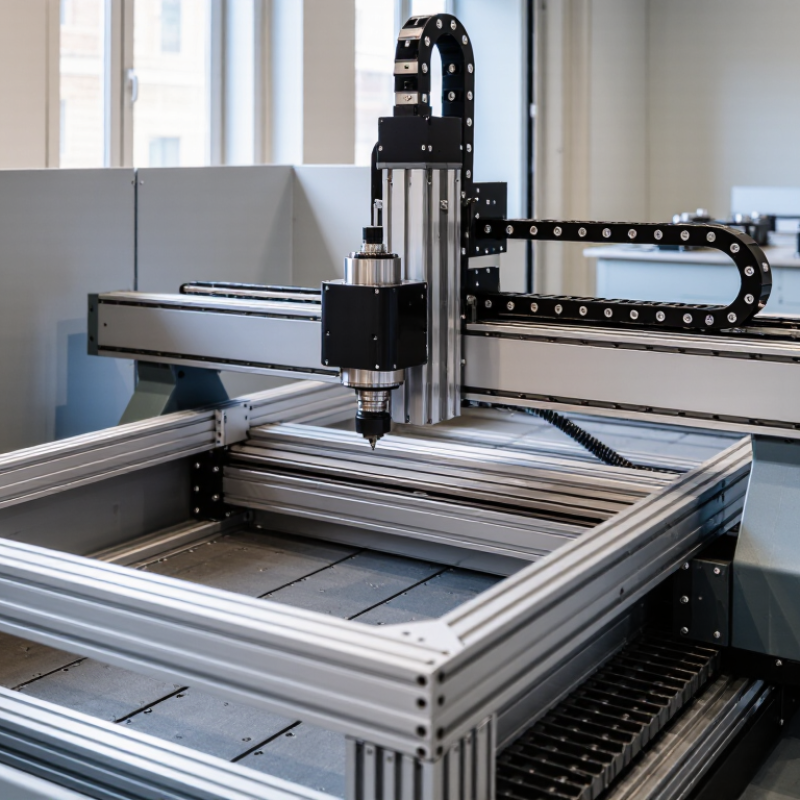
How to Choose Aluminium Profile for CNC in 2026?

Understanding Aluminium Profile Types for CNC Applications

How to Choose Aluminium Profile for CNC in 2026?

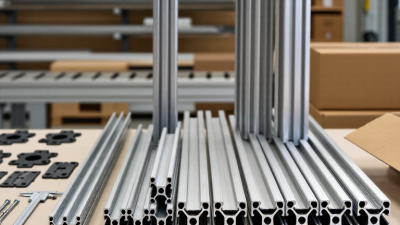
Understanding aluminium profile types is critical before designing a CNC frame, gantry, or enclosure. T-slot profiles suit modular machines because nuts slide inside the channels. Square and rectangular hollow profiles offer cleaner surfaces and better torsional stiffness. Plate-like extrusions work well for brackets and mounting rails. However, a thicker wall does not always create a better machine. Poorly supported channels can still vibrate during cutting.

For common CNC structures, 6063 aluminium provides smooth extrusion surfaces and easy machining. 6061 offers higher strength for gantries, supports, and load-bearing joints. 6082 can be considered where greater structural capacity is needed. The Aluminum Association’s 2024 Aluminum Standards and Data remains a useful reference for alloy designations and mechanical properties. ASTM B221 also defines requirements for aluminium extruded bars, profiles, and tubes. Check the actual mill certificate, not only the catalogue description.

The International Aluminium Institute reported global primary aluminium production above 70 million metric tonnes in 2023. That large supply base supports wider profile availability, but consistency still varies between suppliers. Measure straightness, wall thickness, and slot alignment before assembly. A dial indicator can reveal small bends along a 1,000-millimetre rail. I have found that lightweight profiles are attractive during planning, yet they may demand extra bracing later. This choice is rarely perfect. Recheck vibration, machining loads, and thermal movement before finalizing the section.

Matching Profile Dimensions to Machine Size and Load Requirements

How to Choose Aluminium Profile for CNC in 2026?

Match the aluminium profile to the machine’s span, moving mass, and cutting forces. A compact desktop CNC may need 40 × 40 mm profiles, while a 1,200 mm gantry often needs deeper sections. Longer spans bend quickly. The Aluminum Association’s Aluminum Standards and Data, 2023 edition, lists aluminium’s elastic modulus near 69 GPa and density near 2.70 g/cm³. These figures help estimate stiffness and weight before assembly. However, a strong alloy cannot correct a weak frame layout.

Calculate deflection using the profile’s moment of inertia, not only its outside dimensions. A 40 × 80 mm section can resist bending better than a 40 × 40 mm section, especially when the 80 mm side faces the load. Include the spindle, Z-axis, workholding, and acceleration forces.

Long unsupported rails can also amplify vibration. I have seen frames that looked rigid but produced visible tool chatter. That shortcut can backfire. Use a safety factor of at least two for static loading, then review torsion and joint movement.

Tips: Keep the profile depth aligned with the main cutting force. Support spans with cross-members when practical. Check the supplier’s Ix and Iy values. Tighten fasteners after a test cut, because joints may settle. A simple dial indicator test can reveal more than visual inspection. If deflection exceeds your tolerance, increase section depth before adding decorative braces.

Evaluating Alloy Grades, Strength, and Machinability

How to Choose Aluminium Profile For Cnc in 2026?

Choosing an Aluminium Profile For Cnc starts with alloy selection, not appearance. The alloy controls strength, cutting behavior, surface quality, and dimensional stability. For general brackets, frames, and machine plates, 6061-T6 offers a practical balance. It machines cleanly and resists corrosion reasonably well. 6082-T6 can provide higher strength, especially in load-bearing structures. However, it may demand sharper tools and more careful chip evacuation. 6063 is excellent for complex extrusions, but its lower strength limits demanding applications.

Strength figures alone can mislead. Check tensile strength, yield strength, hardness, and the actual temper. A thick profile may feel rigid, yet thin walls can vibrate during milling. Clamping pressure matters too. Excessive force may distort the profile and create inaccurate holes. Keep the setup rigid. Support hollow sections near the cutting zone.

Machinability deserves equal attention. Softer aluminium can smear across the cutter when feeds, speed, or lubrication are poorly matched. Use sharp carbide tools, controlled chip loads, and suitable coolant or mist. Avoid removing too much material from one side at once. Uneven stress release can bend the part after machining. This detail is often missed.

A common mistake is choosing 7075-T6 only because it is stronger. It offers impressive strength, but costs more and may need better corrosion protection. In practical production, 6061-T6 may produce a more reliable result. Still, no alloy is perfect. Test one sample, measure the finished part, and question assumptions before approving a full run.

Selecting the Right Profile Structure for Rigidity and Stability

How to Choose Aluminium Profile for CNC in 2026?

Selecting the right profile structure starts with rigidity, not appearance. A CNC frame may look solid but still vibrate under cutting loads. The Aluminum Association’s 2024 Aluminum Standards and Data lists aluminium’s elastic modulus near 69 GPa. This value is far lower than steel. Therefore, geometry matters more than simply adding material. A deeper rectangular profile usually resists bending better than a shallow square profile with similar weight. Small details matter.

For Cnc Profile Aluminium, check the second moment of area, unsupported span, and joint design. A 1000 mm rail supported only at both ends can deflect noticeably during rapid tool changes. Use wider profiles around the gantry and shorter spans under the cutting table. Internal ribs can improve stability, but they do not replace proper bracing. I have seen frames with thick profiles still flex because their corner plates were too small. That mistake is easy to miss.

The same 2024 data places typical 6061-T6 yield strength near 241 MPa, but static strength alone does not guarantee machining accuracy. Preload the joints, use hardened fastening surfaces, and inspect squareness after assembly. Vibration tests should include the spindle’s operating speed and the workpiece mass. A heavier frame may help, yet excessive mass can slow acceleration and expose weak connections. My early designs often prioritized weight reduction too much. That choice deserves another review.

Checking Surface Finish, Tolerances, and Manufacturing Accuracy

How to Choose Aluminium Profile for CNC in 2026?

When selecting a Cnc Aluminium Profile, inspect the surface before checking the catalogue price. Extrusion lines, die marks, scratches, and oxide patches can affect sealing and appearance. ISO 21920-1:2021 defines surface-texture measurement methods, but visual inspection remains necessary. A shiny surface can still hide uneven machining behavior. For visible parts, request a measured roughness value, such as Ra, instead of accepting “smooth” as a description. The International Aluminium Institute reports that recycled aluminium can require up to 95% less energy than primary aluminium, but recycled content may increase batch-to-batch variation. That trade-off deserves discussion.

Tolerance selection should match the assembly, not the seller’s standard promise. EN 755-9 provides dimensional tolerances for aluminium extrusion profiles, while ISO 2768-1 supports general machining tolerances. A 0.05 mm requirement may be reasonable for a locating surface, yet wasteful for a protective frame. Check straightness, wall thickness, squareness, and hole position separately. Ask for inspection records from a coordinate measuring machine. One unchecked assumption can damage an entire production run.

Tips: Cut a short sample first. Measure it after deburring and cooling. Record Ra, profile width, and hole position at three points. If the sample passes only under ideal lighting, reconsider the specification. I have seen attractive profiles fail after anodising because the original surface defects became more visible. That was preventable.

Comparing Cost, Availability, and Long-Term Maintenance Needs

How to Choose Aluminium Profile for CNC in 2026?

When selecting a Cnc Machining Aluminum Profile, purchase price is only one part of the calculation. A cheaper section may require more cutting, larger fixtures, or slower feeds. Those hidden costs appear quickly on a busy production floor. I check profile weight, straightness, wall thickness, and cutting waste before approving a quotation. Small details matter.

Availability also affects real project cost. Common dimensions usually arrive faster and allow easier replacement during repairs. Custom sections can create delays, especially when one damaged rail stops an entire assembly. Ask suppliers about batch consistency, minimum order quantities, and packaging quality. Bent profiles are expensive lessons.

Long-term maintenance deserves practical attention. A profile with open channels can collect chips and coolant near moving components. Cleaning becomes harder. Smooth surfaces and accessible fasteners reduce service time, while suitable surface treatment helps resist oxidation in humid workshops. Inspect the frame after the first month, then record loosened bolts, vibration marks, and alignment changes. I once underestimated thermal expansion on a long frame; the machine still worked, but precision suffered during temperature changes. That mistake changed my evaluation process. Choose a section that technicians can clean, measure, and replace without dismantling half the machine.

How to Choose Aluminium Profile for CNC in 2026?

Comparing cost, availability, and long-term maintenance needs

How to read the chart: The scores use a 1–5 planning scale. Cost and maintenance are rated from low to high, while availability is rated from limited to widely available. 6063-T5 is usually the most economical and easiest to source for standard CNC frames. 6061-T6 offers higher strength and better resistance to repeated loading, while 6082-T6 and 7075-T6 are typically selected only when higher mechanical performance justifies higher material cost and more demanding machining.
The comparison reflects common industrial aluminium-alloy characteristics and typical procurement considerations; exact pricing and lead times vary by section size, temper, region, quantity, and supplier.

FAQS

Which aluminium profile type suits a modular CNC frame?

T-slot profiles work well for modular frames. Their internal channels accept sliding nuts and adjustable fasteners. Assembly is convenient. However, unsupported channels may vibrate during cutting.

When should rectangular hollow profiles be considered?

Rectangular hollow profiles provide clean outer surfaces and useful torsional stiffness. Deeper sections usually resist bending better than shallow square sections. Geometry matters more than thickness alone.

Which aluminium alloy is suitable for CNC structures?

6063 offers smooth extrusion surfaces and easy machining. 6061 is stronger for gantries, supports, and load-bearing joints. 6082 may suit structures needing higher capacity.

Does a thicker aluminium wall always improve CNC accuracy?

Not necessarily. A thick wall cannot fix weak bracing or poor joints. Small corner plates may still allow a heavy frame to flex. This is easy to overlook.

How can profile rigidity be checked before assembly?

Review the unsupported span and second moment of area. Use wider profiles near the gantry. Keep cutting-table supports closer together. Shorter spans usually reduce deflection.

What measurements should be taken before installing aluminium profiles?

Check straightness, wall thickness, and slot alignment. A dial indicator can detect bends along a 1,000-millimetre rail. Measure actual material, not only catalogue claims.

How should CNC joints be designed for stability?

Preload the fasteners and use hardened contact surfaces. Inspect frame squareness after assembly. Joint design matters. Strong profiles cannot compensate for weak connections.

Can a heavier aluminium frame solve vibration problems?

Extra mass may reduce movement, but it can slow acceleration. It may also expose weak connections. Test vibration at operating speed with the real workpiece installed.

What should be reviewed before choosing the final profile?

Recheck cutting loads, vibration, thermal movement, and expected accuracy. Lightweight profiles looked attractive in my early designs. I reduced weight too aggressively. That decision needed another review.

Conclusion

Choosing the right Aluminium Profile For Cnc is essential for building a machine that delivers accurate, stable, and reliable performance. Start by identifying the profile type and dimensions that match the machine’s working area, expected cutting forces, and overall load. Larger or heavier systems generally require wider, thicker profiles with stronger structural support. Alloy selection is equally important, as different grades offer varying levels of strength, stiffness, corrosion resistance, and machinability.

A suitable profile structure should minimize vibration and deflection while maintaining easy assembly and adjustment. When comparing options, examine surface finish, dimensional tolerances, straightness, and manufacturing accuracy, since these factors directly influence machining quality. Cost should also be evaluated beyond the initial purchase price by considering availability, accessories, maintenance, and replacement needs. A well-planned selection balances rigidity, precision, budget, and long-term serviceability, helping ensure the CNC machine remains dependable and efficient over extended use.