Leave a Message
*Name Cannot be empty!
* Enter product details such as size, color,materials etc. and other specific requirements to receive an accurate quote. Cannot be empty
0%

Picking out the best aluminum extrusion heatsink isn’t just about comparing sizes or surface finishes from a catalog. It really depends on a bunch of factors like how much heat you need to dissipate, airflow conditions, available space for mounting, the material itself, and the operating temperature. What might work perfectly in a lab setup may not perform so well inside a sealed control cabinet — big difference there.

Dr. Michael Ohadi, a well-known expert in thermal management, often reminds folks, “Thermal management needs to be considered from the start, not tacked on after everything else is done.” This is such an important point because it guides how you actually pick your heatsink. You really should do the math to figure out the thermal resistance you need, take a close look at the extrusion profile, and ensure there's good contact between the heatsink and whatever heat source you're working with. Even tiny gaps or air pockets can throw off your entire cooling efficiency, and don't forget—thermal interface material (TIM) really matters here.

Start by focusing on your actual application.

A good aluminum extrusion heatsink should match the real heat output of your component — and not just a generous estimate. Think about the alloy type, fin height, how close the fins are, the airflow direction in your setup, surface treatments, and how you plan to mount everything. For instance, narrow fins might work great if you’re forcing air through them, but if you're relying solely on natural convection, they might fall short. Also, a heatsink with super dense fins might look effective but can trap dust over time, eventually reducing cooling performance.

Brands like Boyd, Aavid Thermalloy, and Wakefield-Vette offer useful data to help guide your choice, but honestly, doing real-world testing is key. You should measure the temperature rise at the actual power levels you’ll be running. Ideally, test everything inside the actual enclosure to see how it performs after everything’s mounted up. Check both the base temperature of the heatsink and the temperature of the device itself.

There’s no one-size-fits-all answer here. Early calculations can sometimes overlook stuff like vibration, dust buildup, aging fans, or uneven mounting pressure. That’s why good engineers don’t just rely on calculations—they combine thermal simulations, prototype testing, and supplier info to make a solid decision. It’s about finding the right balance between cooling efficiency, weight, cost, machining, and, of course, a reliable service life.
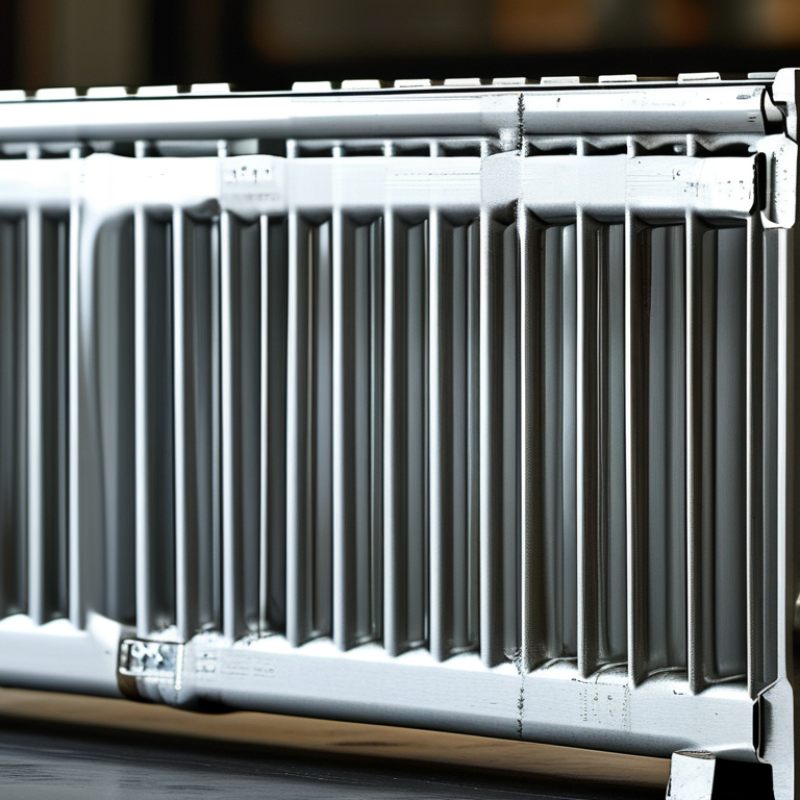
How to Choose the Best China Aluminum Extrusion Heatsink?

What Is a China Aluminum Extrusion Heatsink?

A China aluminum extrusion heatsink is a thermal component made from aluminum profiles through an extrusion process. Heated aluminum billets pass through a shaped die. This creates long fins, channels, or mounting rails in one continuous piece.

The heatsink absorbs heat from electronic parts, then releases it into surrounding air. Aluminum offers low weight, good thermal conductivity, and practical machining options. Extruded fins often provide more surface area without adding much material. In real applications, I check the base thickness, fin spacing, airflow direction, and contact surface. Small gaps can reduce performance. Surprisingly, a larger heatsink is not always better.

Tips: Choose a profile that matches the actual heat load. Confirm the aluminum alloy and surface treatment. Ask for thermal test data under realistic airflow conditions. Natural cooling needs wider fin spacing, while forced air can support denser fins.

Reliable suppliers should explain extrusion tolerances, cutting accuracy, flatness, and inspection methods. They should also provide drawings or test reports before production. I have found that installation pressure matters more than many buyers expect. Uneven contact leaves tiny air pockets between the component and heatsink. Thermal paste helps, but it cannot fix a poorly machined base. One detail is easy to miss: the chosen profile must fit the enclosure, screws, cables, and maintenance space.

Which Cooling Requirements Should the Heatsink Meet?

Choosing the best China aluminum extrusion heatsink starts with the required cooling result, not the profile shape. Define the component’s heat load, maximum case temperature, ambient temperature, and available airflow. ASHRAE TC 9.9 recommends 18–27°C for many air-cooled information technology environments. However, industrial cabinets may operate far above that range. A heatsink rated at room temperature can underperform inside a sealed enclosure.

Select an Industry Aluminum Heatsink with sufficient thermal capacity and practical airflow access. Aluminum 6063 typically offers thermal conductivity near 200 W/m·K at room temperature, according to data published by the Aluminum Association. Fins need enough spacing for dust, fan pressure, and natural convection. Narrow fins may provide more surface area, but they can sharply increase pressure drop. Measure it. Do not guess. The IEA’s Electricity 2024 report estimates global data-center electricity use could exceed 1,000 TWh by 2026. That growth makes efficient thermal paths more important.

Check the complete thermal resistance chain: junction-to-case, interface material, heatsink, and surrounding air. A thin interface pad can add meaningful resistance when mounting pressure is uneven. Request thermal test conditions, airflow rate, pressure-drop curves, alloy details, and dimensional tolerances from the extrusion supplier. Also inspect flatness and mounting-hole accuracy. I would recheck the design under dust buildup and fan aging. Perfect laboratory airflow rarely survives production. A small safety margin is wiser than a beautiful profile.

How to Choose the Best China Aluminum Extrusion Heatsink?

Which Cooling Requirements Should the Heatsink Meet?

Cooling Requirement Recommended Target Typical Aluminum Extrusion Data Why It Matters Selection Guidance Status
Thermal Resistance Select the lowest practical value Approximately 2.0–10.0 °C/W for many natural-convection designs; lower values generally require greater surface area or forced airflow. Thermal resistance indicates how much the heatsink temperature rises above ambient for each watt of heat dissipated. Estimate the required value using: Rθ = (Tmax − Tambient) ÷ heat load. Confirm the result through testing or thermal simulation. Critical
Heat Load Match the continuous and peak wattage Common extruded profiles are used for loads from a few watts to several hundred watts, depending on size, airflow, orientation, and allowable temperature. A heatsink that is adequate for continuous power may overheat during short-term peak operation. Specify continuous power, peak power, operating duration, duty cycle, and the number of heat sources mounted on the profile. Critical
Ambient Temperature Design for the highest actual ambient condition Typical industrial environments may range from 25 °C to 50 °C ambient; sealed enclosures can create higher internal temperatures. Higher ambient temperature reduces the available temperature difference for cooling. Use the maximum expected ambient temperature, not the average room temperature, in thermal calculations. Critical
Allowable Component Temperature Keep the component below its rated limit The allowable case or junction temperature depends on the electronic component and its thermal interface design. Excessive temperature can reduce reliability, increase electrical drift, and shorten service life. Include junction-to-case, interface, and heatsink-to-ambient thermal resistance in the complete thermal path. Critical
Cooling Method Choose natural or forced convection correctly Natural convection relies on buoyancy; forced convection uses fans or external airflow to increase heat transfer. Forced airflow can significantly improve cooling but adds noise, power consumption, and a possible maintenance point. Use taller or denser fins for airflow only when the fan can deliver sufficient air volume through the fin channels. Required
Fin Geometry Balance fin height, thickness, spacing, and airflow Fin spacing commonly falls within approximately 3–12 mm, while fin height and thickness vary according to extrusion capability and thermal demand. More surface area can improve heat dissipation, but overly narrow channels may restrict natural airflow or collect dust. For natural convection, allow adequate vertical channels. For forced airflow, match fin spacing to fan pressure and airflow direction. Important
Aluminum Alloy Use a thermally conductive, extrusion-suitable alloy Common heatsink alloys include 6063 and 6061; 6063 is widely used for complex extrusion profiles, while 6061 offers higher mechanical strength. Alloy choice affects thermal conductivity, strength, surface finish, machinability, and extrusion complexity. Select the alloy according to thermal performance, structural requirements, corrosion conditions, and required profile detail. Important
Thermal Conductivity Use adequate conductivity throughout the heat path Typical aluminum heatsink alloys provide thermal conductivity in the approximate range of 160–235 W/m·K, depending on alloy and temper. Higher conductivity helps spread heat from the mounting area to the fins, especially when the heat source is concentrated. Do not evaluate conductivity alone; fin area, profile dimensions, interface quality, airflow, and mounting orientation are equally important. Important
Thermal Interface Minimize contact resistance Interfaces may use thermal grease, phase-change materials, thermal pads, or direct metal contact where permitted. A poor interface can negate the benefits of a high-performance aluminum profile. Specify flatness, surface roughness, mounting pressure, fastener pattern, and the thermal interface material thickness. Critical
Mounting Orientation Keep fins aligned with the intended airflow Vertical fin orientation generally supports natural convection better than horizontal or obstructed orientations. Orientation affects buoyancy-driven airflow and can change the actual thermal resistance of the same profile. Test the heatsink in its installed orientation, including nearby walls, covers, cables, and other heat-producing components. Required
Size and Weight Fit the enclosure and structural limit Extruded heatsinks can be cut to length and designed with mounting features, but increased surface area usually increases material use and weight. A thermally suitable heatsink may still be unsuitable if it exceeds the available space or mounting load. Reserve clearance for airflow, assembly tools, electrical insulation, fasteners, and possible thermal expansion. Required
Surface Treatment Select finishing according to environment and contact needs Common options include mill finish, anodizing, painting, and powder coating; coatings can affect electrical contact and thermal interfaces. Finishing can improve corrosion resistance and appearance but may alter emissivity, dimensional fit, or contact resistance. Mask grounding and thermal contact areas when necessary, and confirm coating thickness tolerances before production. Application-Based
Manufacturing Tolerance Specify dimensions that support reliable assembly Tolerances depend on profile size, geometry, alloy, temper, cutting method, and applicable extrusion standards. Uncontrolled tolerances can cause poor contact, misalignment, assembly interference, or inconsistent thermal performance. Define critical dimensions separately, especially base flatness, mounting holes, fin spacing, cut length, and interface surfaces. Required
Environmental Conditions Withstand humidity, dust, vibration, and corrosion exposure Outdoor, marine, industrial, and dusty applications may require protective finishing, sealed interfaces, or a maintenance plan. Dust accumulation reduces effective fin area and airflow, while corrosion can degrade both appearance and performance. Evaluate ingress protection, cleaning access, vibration loading, chemical exposure, and expected service life. Application-Based
Validation Testing Verify performance under worst-case conditions Testing may include thermal soak, temperature mapping, airflow verification, vibration testing, and dimensional inspection. Calculated results may differ from real performance because of contact resistance, installation effects, and enclosure restrictions. Test the production-intent heatsink with the actual heat source, interface material, enclosure, airflow, and mounting method. Recommended

Note: Thermal performance depends on the complete system, including heat load, ambient temperature, mounting orientation, interface resistance, enclosure design, airflow, and surface contamination. The values shown are general engineering ranges for preliminary selection and should be confirmed through application-specific calculations and testing.

How Do Aluminum Alloy and Thermal Design Affect Performance?

Choosing the best China aluminum extrusion heatsink requires more than comparing price and weight. Alloy selection directly affects heat transfer. Technical data from ASM Handbook, Volume 2, places 6063 aluminum near 201 W/m·K, while 6061 is closer to 167 W/m·K. This difference matters when a compact extrusion must remove heat continuously. The higher-conductivity alloy can spread heat faster across thin fins. However, stronger alloys may support deeper fins and tighter mounting features. That trade-off is easy to overlook.

Thermal design often matters more than alloy grade. Large Aluminum Extrusion Profiles need enough fin spacing for airflow, not simply more fins. In practical testing, narrow gaps can trap warm air around a power module. A 0.5-millimeter machining error can also increase contact resistance. Flatness matters. The U.S. Department of Energy’s data on electronics thermal management repeatedly identifies airflow, interface resistance, and surface area as major design variables. A thicker base usually improves spreading, but excessive material adds cost and slows extrusion production.

I once assumed a denser fin layout would always improve cooling. It did not. Testing showed weaker airflow and a hotter center zone. The International Aluminium Institute reports that recycled aluminum uses about 95% less energy than primary aluminum, which supports responsible material selection. Still, recycled content can affect consistency if process control is weak. Request alloy certificates, thermal data, dimensional tolerances, and airflow test results before approval. Datasheets alone are not enough.

How to Select the Right Extrusion Profile and Size?

Selecting the right extrusion profile and size starts with heat, not appearance. Calculate the component’s heat load, allowable surface temperature, and available airflow. The ASHRAE Handbook recommends evaluating thermal resistance across the full path, from the heat source to the surrounding air. Aluminum commonly offers thermal conductivity near 205 W/m·K, according to ASM technical data. However, thicker metal does not automatically deliver better cooling.

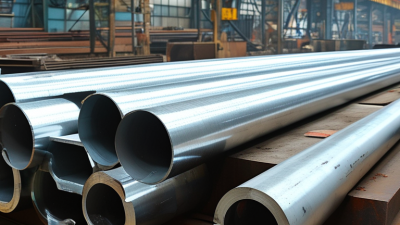
For compact devices, Aluminum Extrusion Tube Profiles can provide a practical balance between strength, airflow, and weight. Choose a tube diameter that fits the mounting area without blocking ventilation. Fins should face the airflow, with enough spacing to reduce dust buildup and resistance. A 2 mm wall may suit a light enclosure, while heavier loads need a stronger section. Confirm this through thermal simulation or a physical test. I once oversized a profile; cooling improved slightly, but the assembly became unnecessarily heavy. That decision needed reconsideration.

Tips: Start with the smallest profile that meets the temperature target. Test it at the highest expected ambient temperature. Check the supplier’s extrusion tolerances, straightness, and surface condition. The International Aluminium Institute reports that recycled aluminum uses about 5% of the energy required for primary production, so recycled content can support a lower-impact design. Still, verify its alloy and temper. Material assumptions can fail.

Which Manufacturing and Quality Standards Should Be Checked?

How to Choose the Best China Aluminum Extrusion Heatsink?

A reliable supplier should show more than polished product photos. Ask for its quality management certificate, such as ISO 9001, and verify its current scope. ISO 14001 can indicate controlled environmental practices, but it does not prove heatsink performance. Request production records for alloy grade, temper, extrusion speed, aging temperature, and batch traceability. For common 6063-T5 or 6063-T6 profiles, the mill certificate should match the actual shipment.

Manufacturing standards need practical checking.

Compare the drawing with recognized extrusion requirements, such as ASTM B221, EN 755, or applicable Chinese standards. Confirm dimensional tolerance, wall thickness, straightness, and surface condition. A competent factory should explain die maintenance and sampling frequency. Ask how anodizing thickness is measured. Ask whether powder coating adhesion and salt-spray results are recorded. Vague answers are warning signs.

Quality inspection should include hardness, tensile properties, electrical conductivity, and visual defects.

Thermal testing requires fixed airflow, power input, interface material, and ambient temperature. Otherwise, a claimed thermal resistance number means little. Request inspection reports with instruments, calibration dates, and test conditions. An independent inspection can check random cartons before shipment. It costs more. It may prevent costly rework.

I have seen excellent prototypes fail during volume production.

That risk deserves attention. A supplier may pass ISO audits yet miss burrs inside narrow fins. Therefore, approve a pilot batch and inspect cut sections, mounting flatness, and fin spacing. Keep one sealed reference sample for later comparison. Specifications can be incomplete. Your questions should expose that weakness.

How to Compare Suppliers, Costs, and Customization Options?

How to Choose the Best China Aluminum Extrusion Heatsink?

Comparing suppliers requires more than checking the lowest quotation. Ask for alloy certificates, extrusion tolerances, thermal test results, and recent production samples. A reliable supplier should explain fin thickness, base flatness, surface treatment, and packaging risks clearly. Request a sample with the same profile shape and length as your intended Industrial Aluminum Extrusion project. Tiny gaps between the heatsink and device can reduce cooling performance.

Cost comparisons should separate tooling, material, machining, anodizing, testing, and freight. The World Bank Commodity Markets Outlook shows that aluminum prices can change significantly across market cycles. Therefore, a fixed quotation needs a clear validity period. The International Aluminium Institute reports that recycled aluminum requires about 5% of the energy used for primary aluminum. Ask whether recycled content is available, but verify its mechanical and thermal consistency. Cheap material is not always efficient.

Customization also affects lead time. More fins increase surface area, yet overly narrow fins may deform during extrusion or collect dust. A supplier offering many options may still lack process control. Compare minimum order quantities, die ownership, inspection frequency, and replacement policies. No comparison sheet is perfect. Leave room for failed samples, delayed tooling, and revised drawings. A 0.2-millimeter tolerance may look minor, but it can affect assembly pressure and thermal contact.

FAQS

: How should I choose an extrusion profile?

: Start with heat load, allowable temperature, and available airflow. Appearance comes later. Choose the smallest profile meeting the temperature target. Test it under the highest expected ambient temperature.

Does thicker aluminum always cool better?

No. Thicker metal may add weight without improving cooling significantly. Fin direction, spacing, airflow, and contact quality often matter more. I once oversized a profile and gained little cooling.

What profile suits a compact enclosure?

A tube profile can balance strength, airflow, and weight. Select a diameter that fits the mounting area without blocking vents. Leave enough fin spacing for airflow and dust control.

How can I confirm the wall thickness?

A 2-millimeter wall may suit a light enclosure. Heavier loads require a stronger section. Confirm the choice with simulation or a physical test. Material assumptions can fail.

Which supplier quality documents should I request?

Request alloy certificates, temper details, batch records, and dimensional inspection reports. Check extrusion tolerances, wall thickness, straightness, and surface condition. Ask for calibration dates on testing equipment.

How should thermal performance be tested?

Fix the airflow, power input, interface material, and ambient temperature. Without controlled conditions, thermal resistance figures mean little. Record the test setup clearly.

Should I approve a pilot batch?

Yes. Inspect fin spacing, mounting flatness, burrs, and cut sections. Keep one sealed reference sample. It helps reveal production changes later.

How should I compare supplier quotations?

Separate tooling, material, machining, coating, testing, packaging, and freight costs. Ask about quotation validity because aluminum prices can change. The cheapest offer may create expensive rework.

What customization details deserve attention?

Compare minimum order quantities, die ownership, lead time, and replacement policies. More fins increase surface area, but narrow fins may deform or collect dust. A 0.2-millimeter tolerance can affect assembly pressure.

Conclusion

Choosing the best China Aluminum Extrusion Heatsink requires balancing thermal performance, mechanical design, manufacturing quality, and total cost. An Aluminum Extrusion Heatsink should match the equipment’s heat output, available airflow, operating temperature, and installation space. Important considerations include the aluminum alloy, fin structure, surface area, thermal resistance, and contact quality between the heatsink and heat source. A well-designed profile can improve heat dissipation while reducing weight and material usage.

The correct extrusion profile and size should be selected according to load requirements, airflow direction, mounting method, and space limitations. Buyers should also check dimensional accuracy, surface treatment, material certificates, quality-control procedures, and consistency between production batches. When comparing suppliers, evaluate tooling costs, minimum order quantities, lead times, customization capabilities, packaging, and long-term communication. A reliable supplier should provide practical design support and clear testing information, helping ensure that the final heatsink delivers stable cooling performance and good value.