Leave a Message
*Name Cannot be empty!
* Enter product details such as size, color,materials etc. and other specific requirements to receive an accurate quote. Cannot be empty
0%

Picking an Aluminum Profile Machining Center isn't just about spindle speed or how much it costs. Honestly, it's a production decision—one that can impact accuracy, cycle time, operator safety, and how much maintenance you'll deal with down the road. The right center? It should fit your profile lengths, alloy types, cutting methods, and the amount of work you run each day. Take a six-meter aluminum extrusion, for instance. It needs solid support, dependable clamping, and a clear path for chips to get out. And if you're working with thin-walled profiles, fixture design deserves some extra thought—too much pressure and you can end up with visible marks. So yeah, don't just go by the brochure.

If you're an experienced buyer, don't just glance at the basics—dig into spindle power, tool capacity, axis travel, positioning accuracy, and how easy the control system is to use. And here's a big one: have the supplier run your actual profiles, not just some standard test piece. After several cycles, check hole locations, cutting edges, surface finish, and repeatability. Also ask for documented inspection results and service terms that are actually clear. A manufacturer you can trust should be upfront about maintenance intervals, spare-parts availability, training, and how quickly they respond. Honestly? It's the little details like these that usually end up mattering more than a fancy spec sheet.

Honestly, software deserves just as much attention. Even simple programming can cut down on setup mistakes and make operator training shorter. Features like automatic tool measurement, barcode support, and probing can help keep things consistent in a busy shop. That said, advanced functions aren't always worth it. If your production stays pretty simple, they can just add cost and complexity. It's an easy thing to overlook. Even experienced buyers sometimes overestimate how much capacity they'll need later—and underestimate what installation actually takes. Before you sign off on an order, take a good look at things like floor space, power supply, compressed air, extraction, and how easily operators can get to the machine. And honestly? The best Aluminum Profile Machining Center isn't always the fastest one out there. It's the machine that keeps giving you repeatable results, offers support you can actually use, and delivers real, measurable value for the conditions you're actually running in.
How to Choose an Aluminum Profile Machining Center?

Understanding Aluminum Profile Machining Center Functions and Applications

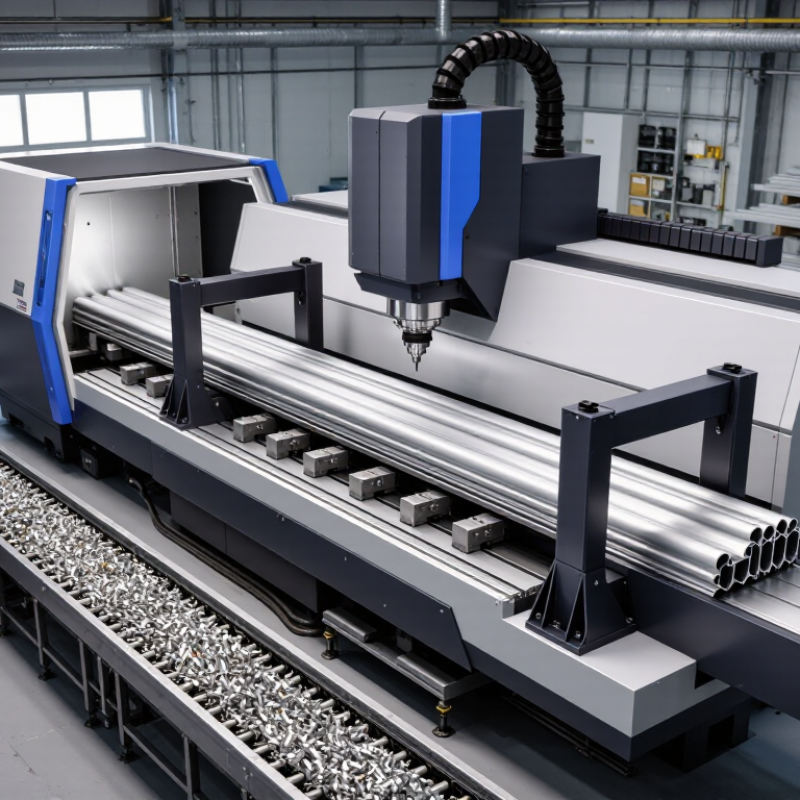
An aluminum profile machining center combines sawing, drilling, tapping, milling, and slotting in one controlled workflow. Its main value is repeatability. Operators can load a long extrusion, secure it with pneumatic clamps, and machine several faces without repeated repositioning. This matters for window frames, solar structures, electric-vehicle components, and industrial enclosures.

The function should match the profile, not only the catalog specification. Three-axis systems suit straight holes and basic pockets. Five-axis machines handle angled surfaces and complex joints with fewer setups. Automatic tool changers reduce idle time, while high-speed spindles help limit burrs on thin walls. Vacuum extraction is also important; aluminum chips can damage guides and contaminate coolant.

According to Grand View Research’s Aluminum Extrusion Market report, the global market was valued at about USD 77.8 billion in 2022 and is expected to grow through 2030. That growth increases pressure for faster, more consistent profile processing.

Application testing should include the actual alloy, wall thickness, cutting tools, and clamping method. The International Aluminium Institute reports that transport remains a major aluminum-use sector, where weight reduction supports efficiency targets. Yet lighter parts can be less rigid during machining. This is often underestimated.

Ask for sample cutting data, dimensional results, chip-control evidence, and cycle-time records. A machine may appear powerful on paper but perform poorly with vibration, long profiles, or changing batch sizes. I would also inspect software recovery features, because one interrupted program can waste expensive material. Fancy specifications are not enough.

Assessing Material Size, Shape, and Machining Requirements

Choosing a Cnc Aluminum Profile Machining Center starts with the workpiece, not the machine catalogue.

The International Aluminium Institute projects global aluminum demand could reach about 119 million tonnes by 2030. That growth increases pressure for flexible, repeatable profile production. Measure the longest profile, finished width, height, and clamping clearance. Then add space for tool access and chip evacuation. A 3,000 mm profile may require a longer working stroke than expected.

Shape changes the decision.

Hollow sections need stable support without crushing thin walls. Curved or twisted profiles may require rotary positioning, probing, or custom fixtures. For window frames, rails, and structural sections, review the number of faces machined in one setup. Fewer setups usually reduce alignment errors. Usually. Complex geometries can still demand slower feeds and extra inspection.

Cutting data matters too.

The USGS Mineral Commodity Summaries 2024 estimated global primary aluminum production at approximately 70 million tonnes in 2023. High volume does not justify choosing maximum spindle power blindly. Check alloy grade, wall thickness, hole diameter, thread requirements, and target tolerances. ISO 230-2 testing can help verify positioning accuracy, but shop-floor results also depend on temperature, fixturing, and operator practice. Inspect a sample profile after thermal stabilization. Small errors become visible at the far end. A wider bed may improve support, yet it can increase footprint and cost. That trade-off is easy to overlook.

Comparing Machine Types, Configurations, and Axis Options

Choosing an Aluminium Profile Machining Center starts with the part, not the catalog. The International Aluminium Institute reported approximately 70.6 million tonnes of primary aluminium production in 2023. That scale reflects strong demand, but every workshop still faces different profiles, tolerances, and cycle-time targets.

A three-axis vertical center suits drilling, slotting, and end milling on fixed workpieces. It usually costs less and simplifies programming. However, long profiles may need repeated clamping, which can reduce positional accuracy. A four-axis configuration adds rotation, allowing access to several faces without manual repositioning. It is useful for curtain-wall components and frames with repeated side holes. A five-axis center reaches angled surfaces in one setup. That can reduce handling marks, although programming and collision control become more demanding.

Configuration matters as much as axis count. Compare gantry and moving-column designs by checking working length, spindle clearance, chip evacuation, and support beneath the profile. The U.S. Department of Energy’s Better Plants resources emphasize reducing setup losses and improving process consistency in machining operations. In practice, automatic probing can verify the first piece before a full batch runs. Useful detail. Ask for measured results, not only brochure accuracy.

Spindle speed should match alloy, cutter diameter, and wall thickness. Excessive speed can leave a bright but overheated edge. Coolant management also matters, especially when chips collect inside narrow channels. I would test the center with your longest profile and most awkward fixture. The “best” axis option may still be wrong for your real work.

How to Choose an Aluminum Profile Machining Center?

Comparing common machine types, configurations, and axis options for aluminum profile processing. More simultaneous axes can reduce repositioning when machining angled features, multiple faces, or complex contours.

The values show common configuration characteristics: a 3-axis center controls X, Y, and Z; a 4-axis center adds a rotary axis; and a 5-axis center adds two rotary or tilting axes. Actual capabilities depend on machine design, workholding, tooling, and CNC configuration.

Evaluating Spindle Performance, Accuracy, and Production Speed

Choosing an Aluminum Machining Center starts with the spindle, not the brochure’s maximum rpm. For aluminum, high speed matters, but torque stability matters more during slotting and pocketing. Ask for a spindle map showing torque across the usable range. A 24,000 rpm rating means little if power collapses above 16,000 rpm. In a shop-floor trial, listen for chatter and inspect chip shape. Small clues matter. Use cutting data from the intended alloy, tool diameter, and wall thickness.

Accuracy should be verified under realistic thermal conditions. ISO 230-2 defines methods for testing positioning accuracy and repeatability. Request the complete test conditions, axis length, temperature, and measurement uncertainty. A quoted ±0.01 mm may describe a short, cool test, not a warm eight-hour shift. That distinction changes scrap risk. Check circular interpolation, tool-change repeatability, and workholding distortion. I would also measure a thin rib twice after spindle warm-up. The second result may be less flattering.

Production speed is cycle time, not spindle rpm alone. Track rapid motion, acceleration, tool changes, probing, chip evacuation, and loading time. Grand View Research’s 2024 CNC machine market analysis projects approximately 8.5% annual growth through 2030. This trend increases pressure to justify equipment purchases. Still, a faster machine can lose money when operators wait for chips to clear. Compare three identical parts, including setup and inspection. Record actual minutes. Then review the result with the operator; spreadsheets often miss awkward access and cleanup.

Checking Automation, Software, Safety, and Maintenance Features

Choosing an aluminum profile machining center requires more than comparing spindle speed. For Cnc Machining Aluminum Profile work, inspect loading, clamping, tool changes, and chip removal. Automatic probing can reduce setup errors when profile lengths vary. However, automation is not always better. A poorly tuned cycle wastes time. Ask for a trial using your actual profiles, drawings, and cutting conditions. Software should import common CAD/CAM files and display toolpaths clearly. Look for collision warnings, editable machining parameters, and stored job records. Operators should understand the interface without guessing.

Safety features need hands-on checking. Guard doors should lock during cutting, and emergency stops must remain reachable. The control system should show clear alarms instead of vague error codes. Maintenance access also matters. Check lubrication points, filter locations, cabinet cooling, and access around the spindle. Ask for maintenance intervals and realistic replacement procedures. One overlooked sensor can stop production for hours. In practice, no checklist catches every weakness. A machine may look excellent during a short demonstration, then reveal awkward access during daily cleaning.

Tips: Bring a real workpiece to the evaluation. Measure setup time, noise, chip control, and operator movement. Request sample programs and alarm records. Test recovery after a tool break or power interruption. Leave room for judgment; specifications rarely show every practical inconvenience.

Balancing Machine Quality, Cost, Support, and Long-Term Value

Choosing an aluminum profile machining center is rarely about spindle speed alone. In daily production, rigidity, repeatable accuracy, and chip evacuation shape the real buying decision. A fast machine can still waste material if fixtures shift or cuts leave rough edges. Check the frame, guide systems, spindle power, and control interface during a live cutting test. Ask operators to machine your actual profiles, not a polished sample. That detail matters. Observe vibration, clamping marks, tool changes, and measurement results.

The purchase price is only one part of cost. Energy use, tooling, coolant, maintenance, training, and downtime can quietly exceed the original saving. Request a clear service schedule and realistic response times. Confirm spare-part availability and remote diagnostic procedures before signing. A lower-priced center may suit a small workshop, while a rigid system supports continuous production. The best fit depends on workload, tolerances, profile length, and staffing. Some upgrades disappoint.

Evaluate training quality and documentation as carefully as hardware. Clear manuals, maintenance logs, and accessible technicians reduce avoidable mistakes. Speak with users running similar alloys and production volumes. Their experience often reveals weaknesses sales brochures omit. I have underestimated tooling costs before, especially when tight tolerances required more frequent replacement. Leave room in the budget for inspection equipment. A practical choice may look ordinary on paper, yet produce stable parts month after month. Track actual cycle time, rejection rates, service delays, and energy use after installation.

How to Choose an Aluminum Profile Machining Center? - Balancing Machine Quality, Cost, Support, and Long-Term Value
Practical evaluation framework for comparing aluminum profile machining centers. The benchmark figures below are typical purchasing reference ranges and should be verified against the machine configuration, workpiece dimensions, tooling, and local operating conditions.
Evaluation Dimension Key Specification or Cost Driver Typical Practical Benchmark Why It Matters for Aluminum Profiles Recommended Verification Method Weight Target Score
Machine Quality Positioning accuracy Approximately ±0.01–0.03 mm for a properly installed industrial machine Controls hole locations, cutting dimensions, assembly fit, and repeatability across long profiles. Request a documented laser interferometer or acceptance test report based on ISO 230-2 or an equivalent standard. 15% 5 / 5
Machine Quality Repeatability Approximately ±0.005–0.01 mm under stable operating conditions High repeatability reduces rework when producing repeated window, door, façade, and industrial components. Run repeated positioning tests at several points along the working area using calibrated measuring equipment. 10% 5 / 5
Machine Quality Spindle speed and power 12,000–24,000 rpm; roughly 5.5–12 kW for common profile work High speed supports efficient cutting of aluminum, while adequate power helps maintain feed rate during slotting and drilling. Check continuous power, rated torque, tool-holder standard, cooling method, and compatibility with the intended cutter sizes. 10% 4 / 5
Machine Quality Working envelope and profile capacity Common working lengths of 3–7 m; select a capacity at least 10–15% above the longest regular profile Insufficient travel can require repositioning, increasing setup time and dimensional error. Compare X/Y/Z travel, maximum profile length, profile height, clamping zones, and clearance around the spindle. 10% 5 / 5
Machine Quality Structural rigidity and vibration control Rigid welded or cast structure with stress relief, supported linear guides, and stable clamping Reduces chatter, burrs, tool wear, and surface defects when machining thin-wall aluminum profiles. Inspect the machine base, guide support, gantry construction, clamping layout, and sample-cut surface quality. 10% 5 / 5
Machine Quality Automation and production features Automatic tool changer, profile probing or length measurement, chip management, and programmable clamping Automation can reduce setup time and operator-dependent errors in high-mix or repeat production. Measure tool-change time, loading procedure, clamping cycle, probing accuracy, and compatibility with production software. 8% 4 / 5
Total Cost Initial machine investment Approximately USD 40,000–180,000 for many 3–5-axis configurations, excluding special automation A lower purchase price may be offset by weaker accuracy, limited capacity, slower production, or higher maintenance costs. Compare equivalent specifications, included tooling, commissioning, training, freight, installation, and taxes—not only the machine price. 10% 4 / 5
Total Cost Operating and energy cost Typical connected load of approximately 15–35 kW; actual consumption depends on spindle load and duty cycle Energy, compressed air, coolant, extraction, and consumables affect the cost per finished profile. Request connected-load data and calculate annual cost using local electricity rates, operating hours, and utilization. 7% 4 / 5
Service Support Installation and operator training Commissioning, safety training, basic programming, maintenance training, and documented setup procedures Proper installation and training shorten the learning curve and help protect accuracy from the first production run. Confirm training hours, travel coverage, training language, startup checklist, and availability of operating manuals. 6% 4 / 5
Service Support Response time and spare-parts availability Remote response within 1 business day; commonly needed parts available within 3–10 business days Fast technical assistance reduces production downtime and protects delivery schedules. Review the service-level agreement, escalation process, spare-parts list, remote diagnostics, and local technician coverage. 7% 5 / 5
Long-Term Value Expected useful service life Approximately 10–15 years with scheduled maintenance and timely replacement of wear components A durable machine spreads the initial investment over more production years and helps maintain predictable output. Check maintenance intervals, guide and screw protection, lubrication system, structural warranty, and service history of comparable installations. 4% 5 / 5
Long-Term Value Software, controls, and upgradeability Open file formats, reliable controller support, software updates, remote diagnostics, and expansion options Upgradeable controls and software can extend machine relevance as product designs and production requirements change. Verify CAD/CAM compatibility, post-processor support, data backup, license terms, cybersecurity controls, and upgrade costs. 3% 4 / 5
Suggested decision rule: prioritize dimensional accuracy, rigidity, profile capacity, and service response before choosing the lowest purchase price. A basic total-cost calculation should include purchase price, installation, tooling, energy, maintenance, downtime, labor, and expected resale value over the planned ownership period.

LED Linear Light Troughs: Design Benefits and Applications of Aluminum U-Shaped Line Lights

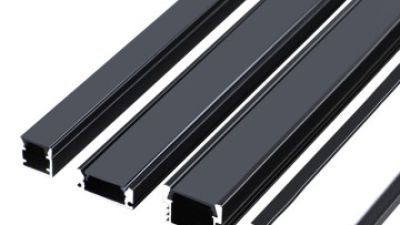
LED linear light troughs offer a clean and practical solution for modern architectural lighting. An aluminum U-shaped line light uses a durable aluminum alloy profile as its housing, with an LED strip recessed inside the channel. This structure creates a slim, continuous appearance while helping conceal wiring and light components. The aluminum body also transfers heat away from the LEDs efficiently, supporting stable operation and extending the service life of the lighting system.

The U-shaped design is adaptable to many interior applications. Installed along ceilings, walls, shelves, cabinets, counters, or display areas, it can provide soft ambient illumination, focused task lighting, or visual accents for architectural features. Its recessed form reduces visual clutter and helps produce a more even lighting effect, especially when paired with a suitable diffuser. The profile can be integrated into linear grooves or mounted along edges, making it useful for residential interiors, retail spaces, offices, hospitality environments, and custom furniture. Different lengths, color temperatures, and control options allow the lighting to match varied design requirements.

FAQS

How should I choose the number of machining axes?

Start with your profiles and required operations. Three axes suit drilling, slotting, and end milling on fixed workpieces. Four axes rotate the profile for access to several faces. Five axes reach angled surfaces in one setup. More axes are not always better.

When is a three-axis machine a practical choice?

Choose three axes for simple parts and fixed workholding. They usually reduce cost and simplify programming. Long profiles may need repeated clamping. That can reduce positional accuracy. Test your longest profile first.

What benefits does a four-axis configuration provide?

A fourth axis rotates the workpiece during machining. It can reach side holes without manual repositioning. This suits frames and repeated structural components. It may reduce handling marks. But fixture access still matters.

When is five-axis machining worth considering?

Five axes can machine angled surfaces in one setup. This may reduce handling errors and surface marks. Programming becomes harder. Collision control also requires attention. The extra capability may remain unused on flat parts.

How should I compare gantry and moving-column designs?

Compare working length, spindle clearance, and profile support. Check how chips leave the cutting area. Inspect support beneath long or thin profiles. A machine may look rigid but flex under awkward loading. Measure the actual part.

What spindle information should I request?

Ask for torque across the usable speed range. Maximum rpm alone proves very little. A spindle rated at 24,000 rpm may lose power earlier. Match speed with alloy, cutter diameter, and wall thickness. Listen for chatter during slotting.

How can machining accuracy be verified realistically?

Request test conditions, axis length, temperature, and measurement uncertainty. Check positioning accuracy and repeatability under realistic conditions. Measure circular interpolation and tool-change repeatability. Inspect workholding distortion too. A short, cool test may flatter the machine.

How should I evaluate production speed?

Measure complete cycle time, not spindle speed alone. Include loading, probing, tool changes, rapid motion, and inspection. Record three identical parts. Include chip removal and cleanup. Spreadsheets often miss awkward access. The operator may notice more.

Conclusion

Choosing the right Aluminum Profile Machining Center requires a clear understanding of your production goals, material characteristics, and machining demands. Begin by considering the size, length, shape, wall thickness, and complexity of the aluminum profiles you process, along with the required cutting, drilling, tapping, milling, and contouring operations. Compare suitable machine types, working configurations, and axis options to ensure sufficient flexibility and workspace. Spindle power, rotational speed, positioning accuracy, rigidity, and production efficiency should also match your workload and quality expectations.

A reliable machine should include practical automation, intuitive software, effective safety systems, and convenient maintenance features. Consider options such as automatic tool changing, profile positioning, chip removal, and process monitoring to improve consistency and reduce labor. Finally, evaluate construction quality, purchase and operating costs, technical support, spare parts availability, and expected service life. The best choice is not always the least expensive machine, but the one that provides balanced performance, dependable operation, manageable maintenance, and strong long-term value for your specific applications.