Picking the right aluminum construction profiles in 2026 isn’t just about glancing at surface finishes or scanning through catalog prices. Honestly, you’ve got to consider how they perform in real-world conditions—think loads, temperature swings, moisture, and the inevitable repeated assembly and disassembly. Sure, a slim profile might look sleek and elegant, but it could also twist, vibrate, or even fail during installation—that’s the kind of risk worth paying attention to.
John Weritz, who’s the VP of Standards and Technology at The Aluminum Association, hits the nail on the head when he says, “You should start with performance, not appearance,” and I totally agree. When you’re specifying these profiles, it’s important for engineers to look at the alloy, the temper, the wall thickness, tolerances, and the connection details all together. For example, 6061-T6 is known for strength, while 6063-T5 tends to give better finishes for architectural stuff—but neither alloy is automatically the best choice in every situation.
Honestly, the devil’s in the details. Besides strength, you also gotta think about corrosion resistance, how well it handles thermal movement, ease of machining, and whether it’s recycled or not. Companies like Hydro and Schüco put out loads of technical data, which is super helpful—but you still need to double-check all that info independently. Don’t hesitate to ask for mill certificates, test reports, coating specs, and traceability info. Then, compare all that documentation with what your project actually needs and the environment it’ll be in.
Take coastal projects, for instance—salt exposure totally changes what you should pick. For big curtain walls, sometimes deflection limits matter more than just the weight of the profile. And when it’s modular interior systems? Precise cuts and consistent tolerances can really cut down on labor and hassle—that’s not just theory, it’s practical stuff.
The market these days is also leaning towards greener practices, like lower-carbon production and clearer sourcing. But hey, be cautious—sustainability claims aren’t always complete. Seeing that a material has a certain recycled content percentage doesn’t tell you about transportation impacts, coatings, how long it’ll last, or how easily it can be recycled at the end of its life. This guide’s goal is to help you make smarter, more evidence-based choices, with clearer judgment and enough room to question those convenient but possibly misleading answers.
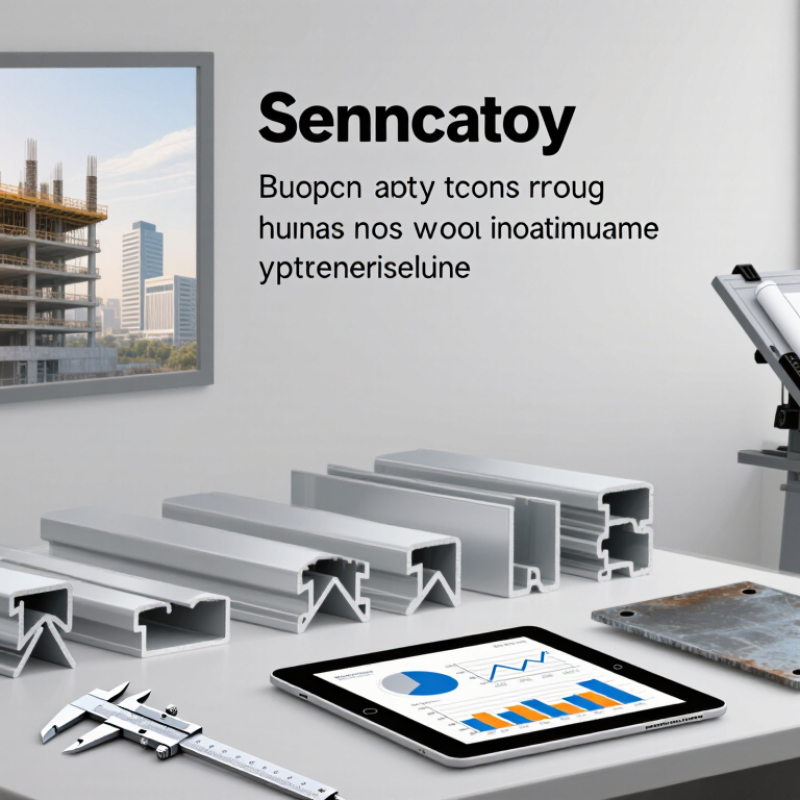
Aluminum construction profiles are more than neat metal lines. They form the structural language of interior and exterior systems. Their role is to carry, connect, align, and protect assembled components. In a curtain wall, a profile transfers wind pressure toward anchors and surrounding structure. In a partition, it creates a stable track for panels, doors, and seals. Small role? Not really. Selection should begin with function, not appearance. Large Aluminum Extrusion Profiles may suit long spans, but only when deflection limits support that choice. An oversized section can add cost and weight without improving performance.
Experienced selection also considers alloy strength, wall thickness, connection details, exposure, and installation tolerance. Moist coastal air, temperature changes, and dissimilar metals can affect durability. Technical drawings should identify loads, span lengths, fastener positions, and expected movement. A qualified engineer should verify these conditions before fabrication. Reliable suppliers provide test data, dimensional tolerances, and traceable material information. Still, paperwork is not enough. On site, a suitable profile can fail when cuts are poor or anchors are misplaced. That practical gap is easy to underestimate. Some projects also need thermal breaks or drainage paths around glazed openings. The first choice is not always right. A second review may reveal a simpler, safer section.
Choosing aluminum construction profiles in 2026 requires more than checking alloy strength or surface finish. Start with the project load path. Record span, bending force, connection type, vibration, and allowable deflection. For a long glazing frame, a slender section may twist near the corner, even when its yield strength looks adequate. Aluminum Extrusion Tube Profiles can reduce weight, but wall thickness and local buckling still need engineering verification. Use Eurocode 9 or the applicable regional standard, and request mill certificates for alloy, temper, dimensional tolerance, and mechanical properties.
Environmental requirements deserve equal attention. The International Energy Agency reported that aluminum production created about 2.7% of global energy-related carbon dioxide emissions in 2022. The International Aluminium Institute states that recycled aluminum requires roughly 5% of the energy used for primary production. Ask for recycled content, electricity-source data, and verified product carbon information. A lower-carbon claim without boundaries is weak evidence.
Project conditions can change the correct profile. Coastal air, de-icing salts, humidity, fire exposure, machining access, and delivery length should influence alloy and finish selection. Confirm compatibility with steel fasteners to reduce galvanic corrosion. Also check whether local fabricators can cut, drill, and inspect the chosen section. Small details matter.
A perfect spreadsheet can still miss installation reality. Review one full-size joint before ordering thousands of meters. When the evidence is incomplete, document the assumption and test it.
| Assessment Dimension | Key Data or Range | What the Data Means | Selection Guidance | Verification Method |
|---|---|---|---|---|
| Structural Load | Calculate axial force, bending moment, shear, deflection, and buckling resistance for the complete profile system. | A profile with adequate material strength may still fail serviceability requirements because of excessive deflection or local buckling. | Use the required load combinations and support conditions before selecting the cross-section. For beams, serviceability deflection is often a governing factor. | Project structural calculations and applicable building codes. |
| Elastic Modulus | Approximately 69 GPa for common wrought aluminum alloys. | Aluminum is roughly one-third as stiff as structural steel, so an aluminum member may require greater section depth or a more efficient geometry to achieve the same deflection limit. | Prioritize deeper box, I, T, or ribbed profiles when stiffness is more important than minimum weight. | Alloy technical data and section-property calculations. |
| Material Density | Approximately 2.70 g/cm³, or 2,700 kg/m³. | Aluminum profiles are substantially lighter than steel profiles of comparable volume, which can reduce handling, transport, and supporting-structure loads. | Consider aluminum where low dead load, modular installation, or reduced lifting equipment is important. | Material specification and calculated mass per metre. |
| Typical Strength Level | Common architectural and construction tempers may have yield strengths from approximately 100 to 250 MPa; higher-strength tempers can exceed this range. | Strength depends on alloy family, temper, product form, wall thickness, and applicable standard. A generic alloy designation is not enough for final design. | Specify the exact alloy and temper, such as a suitable 6xxx-series architectural or structural grade, together with minimum mechanical properties. | Mill certificate, relevant product standard, and design-code material tables. |
| Thermal Expansion | Approximately 23.1 µm/m·°C near room temperature. | A 10 m profile can change length by about 2.31 mm for a 10°C temperature change, excluding restraint and joint effects. | Allow for movement in long façades, curtain walls, roofs, railings, and external frames. Avoid unintentionally restraining thermal movement. | Thermal movement calculation using the project temperature range and support layout. |
| Service Temperature | Aluminum melts at approximately 660°C; design properties decrease as temperature rises. | Normal outdoor temperatures are generally compatible with aluminum construction, but fire exposure and high-temperature industrial applications require separate assessment. | Do not use ambient-temperature strength values for fire-rated or high-temperature design without code-based reduction factors and protection measures. | Fire engineering assessment and applicable fire-resistance standards. |
| Corrosion Environment | Low to moderate risk in many atmospheric applications; higher risk in marine, de-icing salt, industrial, or permanently wet conditions. | Aluminum forms a protective oxide layer, but galvanic corrosion, crevices, deposits, and aggressive chemicals can still cause damage. | Use suitable alloy and finish; isolate aluminum from incompatible metals, provide drainage, and avoid water traps. | Exposure classification, compatibility review, coating specification, and installation details. |
| Surface Finish | Typical options include mill finish, anodized finish, and powder-coated finish. | Finish affects appearance, weathering behavior, cleanability, and resistance to the project environment. It does not replace structural design. | Define color, gloss, coating class, surface preparation, warranty conditions, and repair requirements before procurement. | Finish specification, sample approval, and coating-performance documentation. |
| Galvanic Compatibility | Risk increases when aluminum contacts dissimilar metals in the presence of moisture or electrolytes. | Direct contact with some metals can accelerate corrosion at the aluminum interface, especially in marine or salt-contaminated environments. | Use electrically insulating washers, gaskets, coatings, or compatible fasteners where required; design joints to prevent standing water. | Material compatibility matrix and connection-detail review. |
| Embodied Carbon | Indicative primary aluminum production can be around 15–25 kg CO₂e/kg aluminum; recycled-content routes can be considerably lower, but results vary widely. | Electricity source, smelting technology, recycled content, transport, fabrication, and declared system boundaries strongly affect the result. | Request a product-specific environmental product declaration or verified life-cycle data. Compare alternatives using the same declared unit and system boundary. | Third-party verified EPD, life-cycle assessment, and recycled-content declaration. |
| Recyclability | Aluminum is recyclable repeatedly without losing its basic metallic properties. | Actual environmental benefit depends on collection, sorting, remelting, alloy separation, and the percentage of recovered material returned to production. | Specify separable joints, minimize bonded mixed-material assemblies, identify alloy families, and plan for end-of-life recovery. | Recycled-content records, take-back route, material passports, and demolition-waste plan. |
| Profile Geometry | Closed or ribbed sections generally provide higher torsional and bending efficiency than flat strips of similar mass. | Geometry controls moment of inertia, section modulus, torsional stiffness, local stability, connection capacity, and drainage behavior. | Optimize material placement away from the neutral axis while checking extrusion limits, wall thickness, corner radii, and access for fasteners. | CAD section properties, finite-element analysis where necessary, and extrusion manufacturability review. |
| Wall Thickness | Use the minimum thickness permitted by the selected extrusion process, alloy, finish, handling, and structural requirement. | Very thin walls can reduce mass but may be more sensitive to local buckling, denting, distortion, corrosion allowance, and connection damage. | Avoid selecting minimum wall thickness solely by weight. Increase thickness around fasteners, openings, corners, and high-load zones. | Manufacturer capability data, code checks, tolerance review, and prototype testing. |
| Dimensional Tolerance | Common extrusion tolerances are controlled by product standards such as EN 755 or equivalent requirements. | Profile straightness, twist, wall thickness, corner dimensions, and cut length can affect assembly fit and finished appearance. | Specify the required tolerance class and identify critical-to-function dimensions rather than applying unnecessarily tight tolerances everywhere. | Inspection plan, calibrated measurement, and standard-compliance documentation. |
| Joint and Fastener Design | Connection capacity depends on bearing, pull-out, tear-out, slip, fatigue, galvanic compatibility, and edge distances. | The profile may be adequate while the connection governs the design. Thin aluminum walls are particularly sensitive to concentrated fastener forces. | Use local reinforcement, inserts, sleeves, or larger load-distribution washers where required. Account for thermal movement and installation tolerances. | Connection calculations, testing, and fastener compatibility review. |
| Fabrication and Lead Time | Custom extrusion requires tooling, sampling, qualification, production, finishing, cutting, and logistics planning. | The lowest material price may not produce the lowest total project cost if tooling, minimum order quantities, scrap, or schedule risks are overlooked. | Freeze the cross-section early, combine compatible lengths, reduce unnecessary variations, and confirm production capacity before approval. | Manufacturing plan, tooling quotation, first-article inspection, and project schedule review. |
| Standards and Documentation | Potential references include EN 755 for extruded products, EN 12020 for precision profiles, ASTM B221 for aluminum-alloy extruded products, and applicable structural codes. | Standards define material, dimensional, mechanical, testing, and quality requirements; the correct standard depends on the market and application. | State the governing standard, alloy, temper, finish, tolerances, testing requirements, and traceability expectations in the purchase specification. | Certificates of conformity, test reports, inspection records, and traceability documents. |
Alloy selection should match the load, span, and joining method. For architectural profiles, 6063 usually offers cleaner extrusion surfaces and sharper details. For heavier frames, 6061 provides higher strength, but it can be less forgiving during extrusion. Temper matters too. T5 is cooled after extrusion and artificially aged. T6 receives additional solution heat treatment, improving strength but increasing cost and distortion risk. A higher temper is not automatically better.
Surface finish affects service life and appearance. Anodizing creates a hard oxide layer that suits handrails, window frames, and high-touch areas. Powder coating offers wider colors and stronger visual consistency, though damaged edges may expose the substrate. Specify coating thickness, pretreatment, gloss level, and color tolerance. The International Aluminium Institute reports that recycled aluminium requires roughly 5% of the energy used for primary aluminium. Therefore, recycled content can reduce embodied energy, but quality control remains essential. Scrap chemistry is not always predictable.
Tips: Ask for mill certificates, temper records, and coating test results. Check profiles at cut ends, not only polished surfaces. For coastal projects, request corrosion testing and suitable alloy chemistry. I have seen designs fail because drainage slots were omitted, not because the alloy was weak. That detail deserves more attention. ASTM and ISO profile standards help, but site exposure can still challenge laboratory assumptions. Recheck the specification before approving production.
How to Choose Aluminum Construction Profiles in 2026?
Profile shape controls more than appearance. A rectangular tube resists bending in two directions, while a T-slot profile supports adjustable joints and internal fasteners. Choose the strongest axis for the expected load. For long spans, deeper profiles usually reduce deflection better than wider, shallow sections. However, extra material increases weight and cost.
Dimensions must match the real load path. Check span, support spacing, connection strength, vibration, and possible impact. The Aluminum Design Manual recommends verified calculations for strength and buckling, not visual judgment alone. Eurocode 9 also requires attention to local buckling and alloy properties. A 40 mm profile may look substantial, yet fail when unsupported over several meters. This is where many quick selections become questionable. I would request load tables, section properties, and test conditions before ordering.
Tips: Mark the load direction first. Compare Ix, Iy, and section modulus. Add a safety margin, but do not guess it. Use gussets or internal connectors when joints carry concentrated loads. For outdoor structures, allow drainage and thermal movement. The International Aluminium Institute reports that recycled aluminum requires about 5% of the energy used for primary aluminum production. Therefore, documented recycled content can support lower-impact sourcing, but it should never replace structural verification. Prototype one loaded joint. Measure deflection. Revise the profile if reality disagrees with the spreadsheet.
Select the profile shape and dimensions by comparing section geometry, bending resistance, span, connection method, and expected service loads.
The chart compares nominal strong-axis allowable bending moment for representative aluminum profiles. Values are calculated from the stated dimensions using a 6061-T6 aluminum screening basis, a 240 MPa yield strength, and a 1.5 material safety factor. Actual design capacity must also account for span, lateral restraint, local buckling, fasteners, joints, deflection limits, and the certified section properties of the selected extrusion.
Choosing aluminum construction profiles in 2026 requires more than comparing alloy numbers or surface finishes. Start by identifying the applicable regional standard, then request the supplier’s current declaration of conformity, test reports, and certification scope. A certificate is useful only when it covers the exact alloy, temper, profile family, and production site. Check its issue date. Old paperwork can hide changed processes.
Tolerances matter where profiles meet glass, fasteners, seals, or machined joints. Ask for dimensional tolerances, straightness limits, wall-thickness variation, and cut-length accuracy. For Aluminum Heatsinks Profiles, review thermal conductivity data and contact-surface flatness, not only the nominal alloy. In a workshop, a 0.5-millimeter mismatch can create visible gaps or uneven clamping. I once treated a drawing tolerance as “close enough.” It was not. The assembly needed rework, and that assumption proved careless.
Tips: Build a verification sheet before ordering. Record the alloy, temper, finish, standard, certificate number, tolerance class, and inspection method. Test a small batch with calipers and a surface gauge. Confirm compatibility with screws, coatings, gaskets, and joining systems. Also check whether recycled content affects strength or finish consistency. Ask technical questions in writing. Verbal assurances are easy to misremember.
Choosing aluminum construction profiles in 2026 requires more than comparing prices. Manufacturing methods can change both performance and delivery schedules. Extrusion suits repeated shapes and long rails. CNC machining adds accuracy for holes, slots, and joints. Bending works for curved supports, but it may require extra tooling. Surface treatment also affects durability, appearance, and processing time. Ask for tolerances, inspection records, material certificates, and production samples before approval.
Tips: Request quotations using the same drawings and specifications. Separate tooling, machining, finishing, packaging, and transport costs. Confirm the production lead time in writing. A supplier may quote ten days, excluding testing and holiday delays. Leave a buffer for revisions. My early estimates were too optimistic.
Total cost includes more than the invoice. Include design adjustments, minimum order quantities, scrap, customs duties, installation labor, and possible replacements. For example, Customized Wall Supports Profiles Aluminum Brackets may appear economical, yet complex drilling can increase labor costs significantly. Compare the cost per installed unit, not only the aluminum price per kilogram. Ask whether standard profiles can meet the load requirements before requesting a custom section. Check connection strength and corrosion exposure with a qualified engineer. A cheaper profile can create expensive alignment problems on site. Samples help, but one sample cannot represent every production batch. Pay attention to that limitation.
In 2026, aluminum profiles must support lower carbon goals without weakening structural performance. Recycled aluminum can reduce embodied emissions, but only when its origin is documented. Ask for material certificates, recycled-content records, and lifecycle data from qualified suppliers. I also check whether the alloy suits the building’s climate and load requirements. No profile is perfect. Trade-offs remain.
Performance depends on more than wall thickness. Thermal breaks can reduce heat transfer around windows and curtain walls. Accurate tolerances help installers avoid gaps, rattling, and excessive sealant use. In coastal or humid areas, request corrosion testing and suitable surface treatments. Do not trust attractive finishes alone. Inspect the data. A small tolerance error can create expensive site adjustments.
Smart construction is changing profile selection as well. BIM-ready dimensions help teams detect clashes before fabrication begins. Integrated channels can support sensors, wiring, shading controls, or modular connections. These features should remain accessible for future maintenance. On one project, a hidden cable route saved installation time but complicated repairs later. That oversight changed our review checklist. I now examine access panels, replacement methods, and digital model accuracy before approving a profile. Sustainability also includes long service life, fewer replacements, and careful installation waste control.
Alloy 6063 usually provides clean extrusion surfaces and sharp decorative details. It suits window frames, rails, and visible sections. Choose carefully.
Alloy 6061 offers higher strength for heavier frames and demanding structural loads. However, extrusion may be less forgiving. Confirm the load and span.
T5 is cooled after extrusion and artificially aged. T6 receives additional solution heat treatment. T6 can improve strength, but may increase cost and distortion risk.
Anodizing creates a hard oxide layer for handrails and high-touch areas. Powder coating offers more colors and consistent appearance. Damaged edges can expose the substrate.
Specify coating thickness, pretreatment, gloss level, and acceptable color variation. Ask for coating test results. Attractive finishes alone prove little.
Recycled aluminum uses far less energy than primary aluminum. Request recycled-content records and material certificates. Scrap chemistry can vary, so quality checks remain essential.
Extrusion suits repeated shapes and long rails. CNC machining adds accurate holes and slots. Bending supports curved designs but may require extra tooling. Delays happen.
Include tooling, machining, finishing, packaging, transport, duties, installation, scrap, and replacements. Compare the installed cost per unit. Cheap profiles can create alignment problems.
Request drawings, samples, inspection records, temper records, and certificates. Inspect cut ends, not only polished surfaces. One sample cannot represent every batch.
Request corrosion testing and suitable alloy chemistry. Check drainage slots, surface treatment, and connection details. Water has a long memory.
Choosing Aluminum Construction Profiles in 2026 requires a balanced evaluation of technical performance, project conditions, and long-term value. Start by defining the profile’s role, such as framing, support, enclosure, or modular assembly, then assess structural loads, environmental exposure, thermal requirements, installation conditions, and expected service life. Compare suitable aluminum alloys, temper conditions, and surface finishes according to strength, corrosion resistance, appearance, and maintenance needs.
The selection process should also consider profile shapes, dimensions, wall thicknesses, connection methods, and load-bearing features. Verify applicable standards, certifications, dimensional tolerances, and compatibility with fasteners, panels, glazing, and other components. Manufacturing methods, production capacity, lead times, installation efficiency, and total lifecycle costs are equally important. In 2026, buyers should also examine sustainability, recycled content, energy performance, lightweight design, digital fabrication, and smart construction compatibility to achieve safer, more efficient, and future-ready building solutions.