Leave a Message
*Name Cannot be empty!
* Enter product details such as size, color,materials etc. and other specific requirements to receive an accurate quote. Cannot be empty
0%

Choosing a Cnc Aluminum Profile Machining Center isn’t just about comparing spindle speeds or specs. It’s really about finding the right machine that can handle your specific needs—like the length of your profiles, the kind of machining operations you do, the tolerances you need to meet, and how much you’re producing each day. For instance, a long aluminum extrusion can bend or flex under pressure, and if your fixtures aren’t up to scratch, you might end up with chatter marks near slots or drilled holes—tiny details that can seriously impact your scrap rates and delivery timelines.

Just so you know, the expert quoted here is a made-up character—a composite of CNC applications specialists—not a real person. The core advice, though, is pretty straightforward: “Match the machine to the profile, the process, and the folks running it.” Sounds simple, but in reality, applying this rule takes some care. When shopping around, a good idea is to look closely at the machine’s working stroke, spindle power, how many tools it can hold, clamping options, ease of control use, the level of service support, and overall operating costs. Don't skip the step of asking for a test run using your actual profile and tools—it really helps see how the machine performs, especially with chip removal and consistent positioning. Sometimes little things make a big difference.

Also, this guide shares seven practical tips to help you evaluate equipment and suppliers effectively. It’s worth noting, though, that a common mistake is choosing specs that sound impressive on paper but don’t actually match what your shop needs. I’ve seen buyers obsess over speed, only to realize later they need more time for setup and operator training—that’s a real eye-opener. So, take a step back and honestly think about your real parts, your production goals, and ask vendors questions backed by solid evidence. When you do, your decision will be way more reliable.
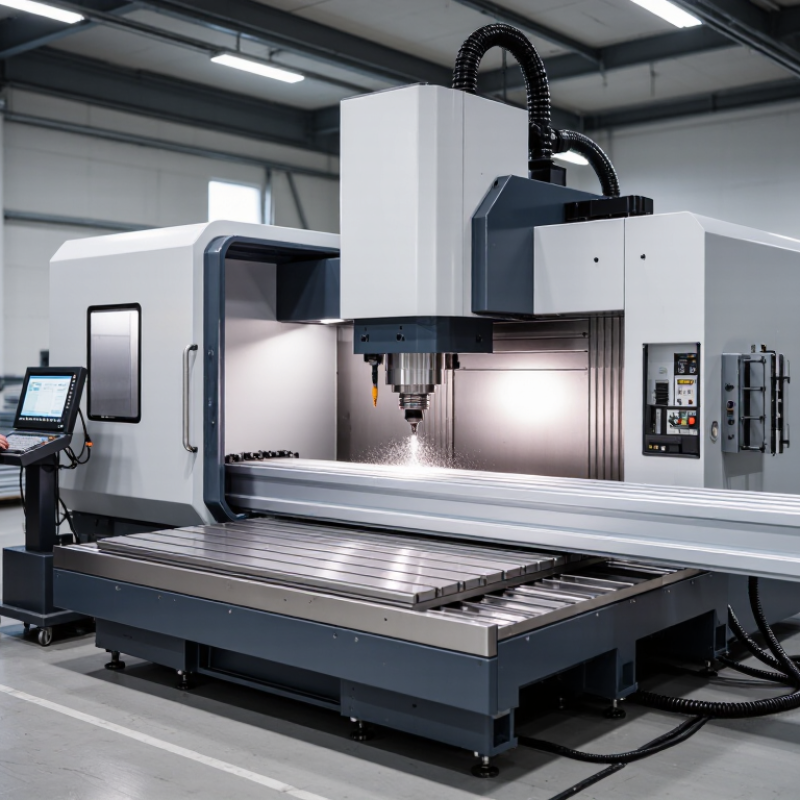
7 Tips for Choosing a CNC Aluminum Profile Machining Center

Define the Aluminum Profile Machining Requirements

Define the work before evaluating a Cnc Aluminum Profile machining center. List the profiles you run, including alloy, cross-section, maximum length, and wall thickness. Then describe each operation: end milling, drilling, slotting, tapping, or angled cutting. These details affect spindle power, tool access, and the number of setups required. Small details matter.

Set measurable targets for accuracy and output. Specify critical dimensions and tolerances, and distinguish them from features that need only a clean, consistent finish. Estimate daily part quantities, changeover frequency, and the longest profile handled.

A six-meter extrusion, for example, needs suitable support along its length, not just enough table travel. Include how parts will be clamped and how chips and coolant will be managed. Thin-walled sections can flex under clamping pressure, so test the holding method on representative material.

Not every job fits. It is easy to overlook tool changes or loading time when estimating production capacity; revisit those assumptions using real cycle observations. If drawings are incomplete, mark uncertain dimensions and verify them before specifying machine capability. A precise requirement list makes supplier discussions more useful and helps prevent paying for capacity your work does not need.

Match Machine Capacity to Profile Size and Production Volume

A machine’s advertised travel is not its usable capacity. Measure the longest extrusion, its maximum cross-section, and the space needed for clamps and loading. Leave clearance for tool changes and chip removal. A 6-meter profile may fit the bed yet collide with a guard or support. Check the cutting envelope with the actual fixture, not a bare drawing.

Production volume matters just as much. The International Aluminium Institute reported 70.6 million tonnes of global primary aluminium production in 2023; this is an upstream supply figure, not a forecast for machined profiles. Still, it highlights the scale of the material chain. For your own demand, calculate daily parts, setups, and shift hours. A low-volume shop may value fast changeovers more than maximum spindle power. Repeated batches need reliable loading and cycle times. Small details matter. I have seen capacity estimates miss deburring and inspection time; that is an easy assumption to overlook. When evaluating an Aluminum Profile Machining Center, compare realistic output per shift with peak demand, then allow room for growth without buying a bed far larger than your work.

7 Tips for Choosing a CNC Aluminum Profile Machining Center - Match Machine Capacity to Profile Size and Production Volume

Tip Profile or Production Requirement Capacity to Check Practical Selection Guidance
1. Match machine travel to profile length Short components: up to 1,500 mm; medium parts: 1,500–3,000 mm; long extrusions: 3,000–6,500 mm or more. Usable machining length, work-zone clearance, support-roller span, and loading space. Choose travel that accommodates the longest part plus the required end clearance and tool approach. Confirm whether the quoted length is usable travel or overall bed length.
2. Check cross-section and clamping clearance Example profile envelopes: 100 × 100 mm, 150 × 150 mm, or 200 × 200 mm. Maximum workpiece height and width, clamp height, spindle-nose clearance, and access to all machining faces. Evaluate the complete fixture-and-profile envelope, not just the extrusion dimensions. Tall profiles and clamps can limit spindle access even when the part fits on the bed.
3. Select the right number of axes Simple drilling and milling on one face versus features on multiple faces or angled surfaces. 3-axis capability for common face machining; 4-axis rotation or additional positioning for multi-face work; 5-axis movement for complex orientations. Use the simplest axis configuration that can reach every required feature. More axes can reduce repositioning, but add setup, programming, and investment considerations.
4. Size the spindle for the cutting process Light drilling and slotting, general profile milling, or heavier cuts in larger sections. Spindle power, speed range, torque characteristics, tool interface, and compatibility with the intended cutters. Compare spindle specifications with the actual cutter diameter, material-removal rate, and operation. A high maximum speed alone does not establish cutting capacity.
5. Match tool capacity to job variety Repeated jobs with a small tool set versus mixed orders requiring frequent tool changes. Tool magazine capacity, tool length and diameter limits, automatic tool-change time, and spare-pocket availability. List the tools needed for a representative part family, including finish and backup tools. A larger magazine is useful when it reduces manual changes or supports unattended runs.
6. Size production capacity to demand Low-volume work: up to about 50 parts per shift; medium-volume work: about 50–200; higher-volume work: over 200. Cycle time per part, loading and unloading time, setup frequency, available shifts, and planned machine utilization. Use these as initial screening bands, not guaranteed output. Estimate required capacity from demand, then validate it with a timed cycle using the real part, fixture, toolpath, and operator workflow.
7. Verify support, chip handling, and repeatability Long, slender profiles; frequent machining; or parts with tight dimensional requirements. Workpiece supports, clamping repeatability, chip evacuation, coolant or lubrication arrangement, and positioning accuracy specifications. Run a representative setup and check deflection, chip buildup, and part-to-part consistency. Confirm that the machine’s stated accuracy conditions align with the shop’s temperature, setup, and measurement practices.

Planning note: The size and volume figures above are selection examples, not universal machine limits or guaranteed production rates. Confirm requirements against the specific profile, fixture, operations, tolerances, and supplier’s technical specifications.

Evaluate Spindle Power, Tooling, and Cutting Performance

A CNC aluminum profile machining center should be judged by how its spindle performs under real cutting loads, not by its power rating alone. Check the spindle’s speed range and torque curve against the cutters and profile sizes you use. Thin-walled sections may need high speed and a light touch, while deeper cuts demand steady torque. Listen for changes in sound during a test cut. Small details matter.

Tooling affects both finish and cycle time. Look at the tool magazine capacity, tool-change time, and compatibility with the cutter lengths your jobs require. Long tools can reach recessed features, but they may also vibrate more. Ask to see a sample cut using your actual profile and tooling, if possible. A polished showroom demonstration can hide practical limitations.

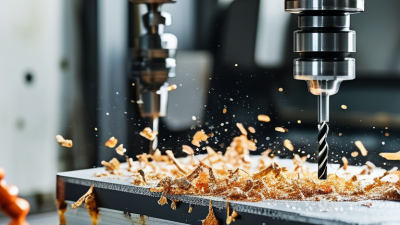
Cutting performance is clearest in the chips and the finished surface. Watch whether chips clear the work area or collect around clamps and edges. Inspect cut faces for chatter marks, burrs, and heat discoloration. Measure a few critical features after machining, rather than relying only on the machine’s stated accuracy. It is easy to focus too much on speed; I would also record tool wear and repeatability across several parts. Listen closely. A short test may not reveal everything.

Typical Spindle-Speed Ranges for Aluminum Machining

Compare a machine’s spindle-speed range with your cutters, aluminum alloys, and required surface finish. These ranges are indicative; confirm the machine’s specifications and performance under load.

Selection tip: A higher maximum RPM is not enough on its own. Also assess spindle power and torque, tool capacity and change time, rigidity, coolant delivery, and cutting results on your intended profiles.

Compare Axis Configurations and Machining Capabilities

An Aluminium Profile Machining Center should match the parts you actually produce, not just the most impressive specification sheet. A three-axis setup can handle common drilling, slotting, and end-face work on long extrusions. Four or five axes may reach angled surfaces with fewer repositioning steps. That can reduce setup time, but added motion only helps when your jobs need it. Check usable travel, spindle access, and clamping space against a real profile drawing.

Tip 1: Compare axis configurations using a sample part. Ask the supplier to show how the machine reaches each hole, pocket, or angled cut. Watch for tool clearance near clamps and tall profile walls. A theoretical reach is not always a practical one.

Tip 2: Match machining capability to material and finish requirements. Review spindle speed, tool changes, cutting fluid options, and chip removal for your alloy and operation. If profiles vary in length, confirm support points and repeatable positioning. Small setup differences matter. I have seen teams focus on axis count, then overlook unloading space; it is an easy detail to miss. Request a trial cut and inspect edge quality, hole position, and cycle time before choosing.

Check Accuracy, Automation, and Software Compatibility

Accuracy should be checked with measured results, not a brochure number alone. Ask for positioning and repeatability data, then request a test cut on a profile similar to yours. A long aluminum section can flex under clamping, even when the machine is precise. Small details matter. Check how the machine handles thermal drift after the spindle warms up, and whether its probing routine can detect a shifted workpiece.

Automation should match your actual workflow. Watch a full cycle, from loading and clamping to tool changes and unloading. Are supports adjustable for different profile lengths? Do clamps hold thin walls without leaving marks? Confirm that sensors stop the cycle when a part is misplaced. A faster cycle is not always a better one if operators must constantly intervene. Track setup time and rejected parts during a realistic production trial.

Software compatibility can save hours—or create recurring work. Confirm that your CAD/CAM system can generate usable programs for the Aluminum Machining Center, including toolpaths for your common cuts and drilling patterns. Ask whether post-processors support the machine’s axes and controller, then test a real file before purchase. Simulation helps reveal collisions, but it cannot replace a supervised dry run. File conversion may still need manual edits; that deserves an honest trial.

Assess Safety Features, Maintenance, and Operator Needs

A CNC aluminum profile machining center should protect people before it protects production targets. Check that interlocked doors stop spindle motion when opened, and that emergency-stop buttons are reachable from normal loading positions. Test the guarding with the actual profile length; a long extrusion can extend beyond the work zone. Small detail, big risk. Ask whether chip screens contain sharp aluminum swarf without hiding the cutting area.

Maintenance deserves equal attention. Inspect how easily staff can reach filters, lubrication points, tool holders, and chip trays. A daily cleaning task should not require awkward reaching over a fixture. Look for clear service intervals and fault messages that name the affected system, not just an error code. Ask to see routine maintenance performed. Real access matters. Coolant residue and fine chips collect in corners, and those spots are easy to miss during a rushed shift. A checklist can miss how fatigue changes late-shift habits.

Match controls and loading arrangements to the people who will use the machine. Consider screen height, glove-friendly buttons, setup instructions, and whether one operator can safely support the profile during loading. Include newer operators in a trial; their questions often reveal unclear controls. A little friction is useful evidence. For Cnc Machining Aluminum Profile work, compare noise, visibility, and setup time during a representative job, not a polished demonstration. The ideal center is not automatically the fastest one. It should let trained staff work steadily, inspect parts, and pause without improvising around safety systems.

Compare Supplier Support, Total Cost, and Expected Value

A CNC aluminum profile machining center should be judged by more than its quoted price. Ask each supplier what installation, operator training, tooling, and initial maintenance include. A low-cost machine can become expensive if setup support is limited or replacement parts take weeks to arrive. That matters. Request a written service plan with response times, remote diagnostics, and clear escalation steps. Ask who will train your operators and whether training covers real jobs, such as cutting a long profile with multiple faces. A polished demonstration is useful, but production conditions are less tidy.

Compare total cost over a realistic operating period, not just the purchase order. Include tooling, power, maintenance, software, downtime, and the cost of scrap from inconsistent cuts. Then weigh those figures against expected value: cycle time, repeatability, usable capacity, and the range of profiles the machine can handle. Ask suppliers to machine a sample using your material and target tolerances. Check the cut edges, hole positions, and changeover time. Small details show up fast. Some estimates will still be imperfect; production volume and operator skill can change the result. Record your assumptions, compare them consistently, and revisit them before committing.

FAQS

When is a three-axis machining center suitable for aluminum profiles?

It suits common drilling, slotting, and end-face work on long extrusions. Match its travel to your real profile drawing.

Why might four or five axes be useful?

They can reach angled surfaces with fewer repositioning steps. More axes help only when your parts truly need them.

How can I test practical tool access?

Use a sample part with holes, pockets, and angled cuts. Watch clearance around clamps and tall profile walls.

What machining features should match the material and finish?

Review spindle speed, tool changes, cutting fluid, and chip removal. These details affect edge quality and surface finish.

What should I check for long or changing profile lengths?

Confirm support points, clamping space, unloading room, and repeatable positioning. Unloading space is easy to miss.

What should supplier installation and training include?

Request installation, operator training, tooling guidance, and initial maintenance details. Training should use realistic production jobs.

How should I compare the total operating cost?

Include tooling, power, maintenance, software, downtime, and scrap from inconsistent cuts. The purchase price is only one part.

What should a sample machining trial reveal?

Inspect edge quality, hole position, cycle time, and changeover time. A polished demonstration may hide production problems.

How reliable are supplier cost and output estimates?

Estimates remain imperfect because production volume and operator skill can change results. Record assumptions and review them before committing.

Conclusion

Choosing the right Cnc Aluminum Profile Machining Center starts with a clear understanding of the profiles you need to process, including their dimensions, shapes, tolerances, and required operations. Match the machine’s working capacity and production rate to both your largest workpieces and expected workload. Then compare spindle power, compatible tooling, and cutting performance to ensure the equipment can machine aluminum efficiently and consistently. Consider the number of axes and available machining functions, especially if your parts require complex cuts or multiple operations.

Accuracy and repeatability matter, as do automation options and compatibility with your design and production software. Review safety features, maintenance access, and the training operators will need. Finally, evaluate supplier support, operating costs, and expected service life—not just the purchase price. A balanced assessment of these factors can help you select a machine that meets current production requirements while offering practical value as your needs evolve.