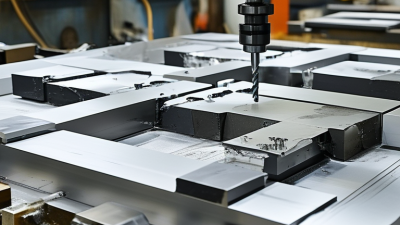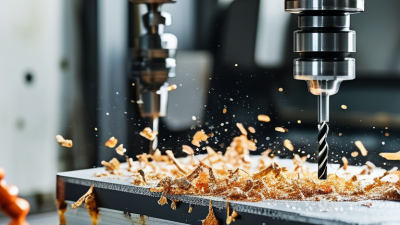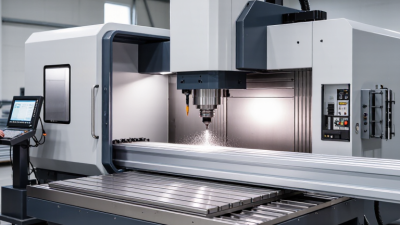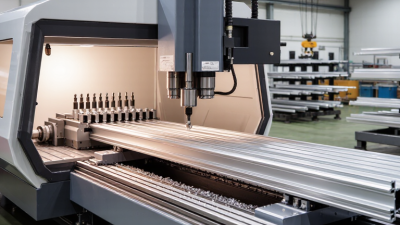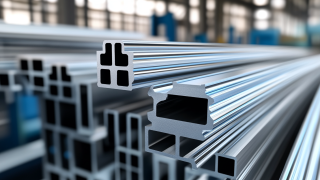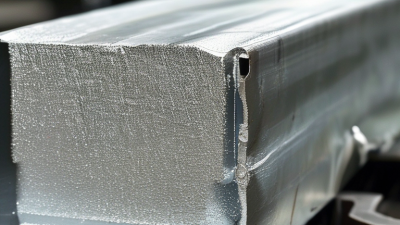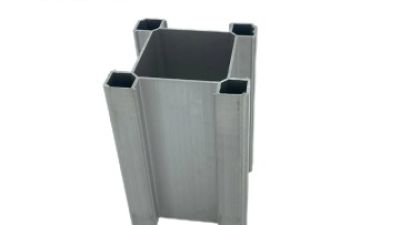
China’s aluminum-processing world is definitely shifting toward production that’s faster, smarter, and a lot easier to trace. According to the International Aluminium Institute, global primary aluminum output hit about 72.8 million tonnes in 2023, and China was still the biggest producer by far. That kind of scale? It creates serious demand for an accurate Aluminum Profile Machining Center.
And honestly, the details matter here. A dependable center has to handle cutting, drilling, tapping, milling, and profile positioning without needing a ton of manual fiddling. Buyers should look at spindle speed, axis accuracy, automatic tool changing, clamping stability, software compatibility, and how quickly after-sales support responds. The China Machine Tool Industry Association has repeatedly pushed intelligent manufacturing, equipment reliability, and process integration as key industry priorities. Energy matters too. The International Aluminium Institute points out that recycled aluminum can need roughly 95% less energy than primary production. So efficient machining can cut down scrap, rework, and unnecessary transport.
Professor Jun Ni, a manufacturing systems expert at the University of Michigan, gives a pretty practical reminder: “Data must serve the process, not replace it.” That idea applies to every supplier comparison, really. A glossy brochure doesn’t prove much. Factory testing, sample profiles, calibration records, operator training, and service coverage tell you more. Some suppliers may brag about impressive precision, but then give you limited evidence under continuous production conditions. That’s a weakness you shouldn’t ignore.
This guide looks at leading Chinese suppliers through a practical lens. It weighs engineering experience, machine configuration, customization, export capability, certifications, and customer support. No ranking is ever perfect. A workshop making thermal-break window frames may need different equipment than an automotive-profile manufacturer. And the best Aluminum Profile Machining Center isn’t always the priciest one. It’s the machine that gives you repeatable results on the profiles you actually run.
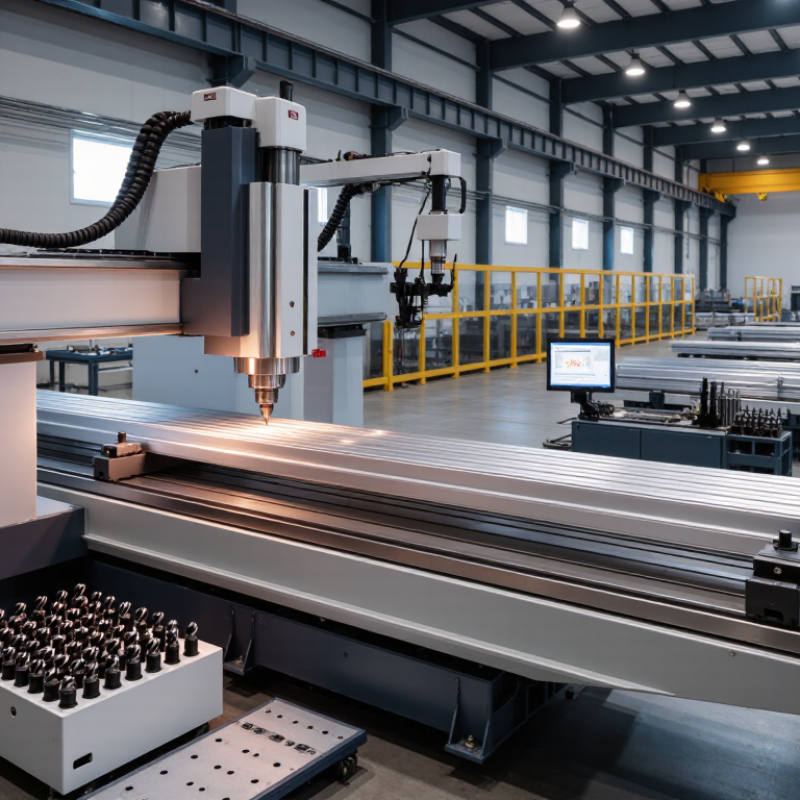
A reliable aluminum profile machining center supplier offers more than a machine catalog. It understands extrusion behavior, cutting forces, tool wear, and production rhythm. This practical experience helps engineers select a Cnc Aluminum Profile Machining Center for windows, frames, rails, or industrial structures.
Technical competence should appear in measurable details. A capable supplier explains spindle speed, axis travel, positioning accuracy, fixture design, and chip evacuation. It should also provide sample machining with the customer’s profile, drawings, and target tolerances.
Watching a test cut reveals important details, such as burrs around drilled holes or vibration during long cuts. Small flaws matter.
Documentation builds authority and trust. Look for inspection records, component specifications, maintenance guidance, operator training, and clear warranty terms. A dependable supplier can describe factory testing, calibration procedures, electrical protection, and spare-part availability without vague promises. It should communicate in engineering language, not only sales language.
Real production feedback is equally valuable. Ask how the supplier handled profile deformation, mixed-batch dimensions, coolant stains, or unexpected tool consumption. Not every project runs perfectly. Some tolerances may need review after the first trial. That honesty is useful. A supplier willing to discuss limitations often provides better long-term support than one promising effortless results. Response time matters too, especially when a machine stops beside a full rack of unfinished aluminum profiles.
China Top Aluminum Profile Machining Center Suppliers
Key Machining Technologies Used in Aluminum Profile Processing
Aluminum profile machining centers combine cutting, drilling, milling, and tapping in one controlled workflow. In practical production, three-axis machines handle standard slots and holes efficiently. Complex frames may require four-axis or five-axis movement. This reduces reclamping errors. However, more axes do not automatically improve quality. Technicians must still verify tool paths, fixtures, and profile deflection.
End milling creates slots, pockets, and accurate joint surfaces. Drilling and tapping units prepare connection points for assembly. Integrated saw blades can cut profiles to repeatable lengths with clean ends. A probing system checks workpiece position before machining begins. Small errors matter. A 0.2-millimeter shift can affect frame alignment during installation.
Tool selection is equally important. Carbide cutters with polished flutes help reduce material buildup on aluminum. Air blast or controlled coolant can improve chip removal and surface finish. Vacuum tables and soft clamps protect visible profile surfaces, though they require careful pressure adjustment. Reliable suppliers document dimensional checks, tool maintenance, and sample approval procedures. Yet production floors are not perfect. A clean first article may hide problems during longer runs. Operators should review burrs, hole depth, cutting marks, and temperature changes throughout production. That discipline builds more dependable machining results.
Typical dimensional tolerance capability for common aluminum profile machining operations. Actual results depend on alloy, profile geometry, tooling, machine condition, and process control.
Lower tolerance values indicate higher potential precision under suitable production conditions.
Chinese aluminum profile machining centers are designed around the real behavior of extruded aluminum. Engineers study profile length, wall thickness, alloy hardness, and common cutting operations before selecting machine dimensions. A long bed may support curtain-wall sections, while compact tables suit furniture or industrial frames. The design must control vibration without adding unnecessary weight. This balance is difficult.
Manufacturers usually build the frame from welded or cast structures, then machine key surfaces after stress relief. Guideways, ball screws, spindle units, and servo systems are matched to required accuracy and production speed. Fixtures receive careful attention. Soft jaws and adjustable supports help prevent dents or profile movement during drilling, tapping, and sawing. Coolant delivery also matters, because aluminum chips can cling to tools and damage finished surfaces.
Quality control continues through assembly and testing. Technicians check axis alignment, spindle runout, positioning accuracy, and repeated cuts on actual aluminum samples. They may inspect a 6000-series profile with calipers and a coordinate measuring device. Documentation should include test results, maintenance instructions, and recommended tool settings. However, a polished test piece does not prove perfect factory performance. Real production brings dust, operator mistakes, and changing profile batches. Suppliers should discuss these limits honestly and adjust fixtures or software when field feedback exposes weak points.
China Top Aluminum Profile Machining Center Suppliers
When comparing suppliers, study the machine’s working envelope before its advertised speed. Confirm maximum profile length, section height, and clamping width. These dimensions determine whether long frames or compact components can be held safely. Spindle power and speed also matter, but higher rpm is not automatically better. For aluminum, stable torque, low vibration, and suitable tooling often produce cleaner edges. Ask for positioning accuracy, repeatability, and documented inspection methods. Numbers without test conditions can mislead buyers.
Tips: Request a sample-cut trial using your actual aluminum profiles. Check hole position, cut quality, burrs, cycle time, and operator access. Review the control system, tool magazine capacity, automatic lubrication, chip removal, and dust protection. A rigid machine may reduce vibration, while effective clamping prevents profile movement during drilling. Service details deserve equal attention. Confirm installation support, spare-part availability, training, and response times in writing. Avoid judging suppliers only by factory videos or low quotations.
I have found that small specification gaps become expensive during daily production. A slightly limited tool magazine can increase manual changes. Weak chip evacuation may affect finished surfaces and maintenance time. Buyers should request calibration records, electrical schematics, and a clear acceptance checklist. It is also wise to test repeated runs, not only one impressive sample. No machine is perfect. Supplier transparency, practical testing, and measurable after-sales commitments provide stronger evidence than polished claims.
When evaluating China’s top Aluminium Profile Machining Center suppliers, quality control should begin with traceability. Each profile needs an identifiable alloy, temper, batch, and production date. Operators should verify dimensions with calibrated gauges and coordinate measuring machines. First-article inspection is essential before repeated cutting, drilling, or tapping begins.
ISO’s 2022 Survey recorded about 1.26 million ISO 9001 certificates worldwide. This figure shows the system’s broad acceptance, but certification alone cannot guarantee accurate machining. Buyers should request calibration records, inspection plans, nonconformance reports, and corrective-action evidence. ISO 14001 can also indicate structured environmental management. For automotive projects, IATF 16949 alignment may provide stronger process discipline.
The International Aluminium Institute reported approximately 41.5 million tonnes of primary aluminium production in China during 2023. Such scale supports extensive manufacturing capability, yet volume can hide weak controls. A reliable supplier monitors tool wear, spindle temperature, burr formation, and surface roughness during production. Statistical process control helps detect drift before rejected parts accumulate. Small details matter.
Some factories still treat inspection as paperwork. That deserves scrutiny. Ask for recent sample reports, not polished promises. Standards should cover packaging, corrosion protection, and final functional checks. Perfect production is unlikely, and honest suppliers should explain their limits, rework rates, and improvement actions clearly.
China Top Aluminum Profile Machining Center Suppliers
Selecting an Aluminum Machining Center requires more than comparing prices and technical specifications. Experienced suppliers should explain spindle performance, cutting accuracy, fixture design, and daily production capacity. During factory evaluations, ask for sample profiles, tolerance records, and maintenance schedules. Clear documentation improves trust. Small details matter.
Customization begins with understanding the profile, alloy, wall thickness, and production volume. A professional engineering team can adjust tooling, clamping methods, software settings, and safety features for specific workflows. For example, narrow profiles may need additional support to prevent vibration during drilling. Trial cuts should confirm surface quality and dimensional stability. Some suppliers promise full customization but provide limited engineering feedback. That gap deserves attention. Practical sourcing is rarely perfect, and overlooked details can appear after installation.
After-sales support should continue beyond delivery. Remote diagnosis, spare-parts availability, installation guidance, and operator training reduce unexpected downtime. A reliable service team should offer clear response times and explain maintenance tasks in plain language. Training may include tool replacement, lubrication checks, alarm handling, and precision verification. No support plan is perfect. Yet honest suppliers discuss limitations instead of hiding them. Regular performance reviews can reveal wear before it affects finished profiles. Keep communication records, inspection data, and service reports. These materials help both sides respond faster when production conditions change.
Choosing China’s top aluminum profile machinery suppliers requires more than comparing website photos and listed prices. Start by checking their experience with Cnc Machining Aluminum Profile projects, especially your alloy, wall thickness, and required tolerances. Ask for sample parts made from similar profiles. Inspect cut edges, drilled holes, and surface marks under clear lighting.
A reliable supplier should explain spindle power, axis accuracy, fixture design, software compatibility, and maintenance access. Request inspection records, calibration evidence, and a written tolerance range. Production capacity also matters. A machine may perform well for one sample but struggle during long shifts. Ask how operators manage chip removal, coolant control, tool wear, and profile deformation. These details reveal practical knowledge.
Tips: Send a detailed drawing and material specification. Ask for a video of the machine running your profile. Confirm lead times, spare-part availability, training, and after-sales response. Check whether technical documents are clear and consistent.
Do not trust polished promises alone. A factory tour can look impressive while quality control remains vague. Independent testing may add time, but it can prevent expensive rework. I would also compare two or three trial results, not just one successful piece. Some suppliers may lack perfect documentation yet provide strong engineering support; that deserves careful discussion, not automatic rejection. Reliability is built through measurable evidence, honest communication, and repeatable performance.
| Evaluation Dimension | Suggested Weight | What to Verify | Practical Benchmark for Aluminum Profile Machining | Scoring Guidance |
|---|---|---|---|---|
| Machine Configuration | 15% | Number of axes, machining direction, profile clamping method, and suitability for drilling, tapping, milling, sawing, and end machining. | 3-axis systems suit standard operations; 4-axis and 5-axis configurations improve access to multiple faces and reduce repositioning. | Award a higher score when the configuration matches the required part geometry without unnecessary complexity. |
| Working Envelope | 10% | Maximum profile length, machining height, width, table capacity, and usable clamping area. | Common profile machining centers are configured for lengths from approximately 3,000 mm to 12,000 mm, depending on the machine design. | Select a machine with at least 10–20% more usable capacity than the longest regular workpiece. |
| Spindle and Cutting Performance | 12% | Spindle power, maximum speed, tool interface, cooling method, and compatibility with aluminum cutting tools. | High-speed aluminum machining commonly uses spindle speeds in the approximate range of 8,000–24,000 rpm, subject to tool diameter and cutting conditions. | Prioritize stable torque, low vibration, and verified cutting results over maximum rpm alone. |
| Accuracy and Repeatability | 15% | Positioning accuracy, repeatability, backlash control, thermal stability, and test-part measurement results. | A practical comparison range for many industrial machines is approximately ±0.01–0.02 mm repeatability, subject to axis travel, environment, and measurement method. | Require a documented acceptance test using the buyer’s part or an agreed standard test piece. |
| Automation and Productivity | 10% | Automatic tool changer, workpiece probing, barcode or program management, chip removal, and loading or unloading options. | Automatic tool changers and centralized lubrication are common productivity features; automated loading is more valuable for repetitive, high-volume production. | Estimate output using cycle time, setup time, operator involvement, and expected machine availability. |
| Control System and Software | 10% | Controller language, CAD/CAM compatibility, remote diagnostics, data backup, user permissions, and program transfer methods. | The system should support common CNC program formats, clear alarm messages, parameter backup, and operator training in English or the required local language. | Score higher when the controls integrate with existing production software and require minimal manual data conversion. |
| Build Quality and Key Components | 10% | Machine-bed rigidity, guideways, ball screws or rack-and-pinion drives, electrical components, spindle bearings, and enclosure design. | Look for a rigid base, protected transmission components, effective chip management, accessible maintenance points, and documented component specifications. | Use component traceability, assembly photographs, factory inspection, and reference installations as evidence. |
| Quality Management and Inspection | 8% | Incoming inspection, assembly checks, geometric testing, electrical testing, final run-off, and calibration records. | A reliable supplier should provide inspection records, machine test procedures, serial-number traceability, and a documented factory acceptance test. | Give priority to measurable quality procedures rather than general claims about quality. |
| Safety and Regulatory Documentation | 5% | Risk assessment, guards, emergency stops, electrical diagrams, operating manuals, and destination-market compliance documents. | Documentation should identify applicable electrical, machinery, guarding, and workplace-safety requirements for the importing country. | Verify certificates and declarations independently; do not rely only on logos shown in marketing materials. |
| After-Sales Service and Spare Parts | 10% | Installation support, commissioning, operator training, response time, troubleshooting, spare-parts availability, and service coverage. | The supplier should provide a parts list, recommended consumables, remote-support procedures, warranty terms, and a clear escalation process. | Score based on written service commitments and evidence from comparable installations. |
| Total Cost of Ownership | 5% | Equipment price, tooling, packaging, freight, installation, energy use, maintenance, software, and expected downtime. | Compare the five-year cost of ownership rather than the purchase price alone, including consumables and service travel. | Choose the lowest verified lifecycle cost that meets quality, capacity, safety, and delivery requirements. |
| Recommended Evaluation Result | 100% | Use a weighted score from 1 to 5 for each dimension, multiply it by the suggested weight, and confirm the result through technical documents, sample machining, factory inspection, and written commercial terms. | ||
Aluminum profiles for assembly line brackets provide a strong, flexible, and efficient foundation for modern production systems. Their lightweight structure offers excellent strength while reducing the burden on supporting frames, making them suitable for workstations, conveyors, guards, inspection units, and equipment supports. Precision-made channels and connecting surfaces help maintain reliable alignment, allowing machinery and fixtures to remain stable during continuous operation.
The modular design makes installation straightforward and supports quick adjustments as production requirements change. Profiles can be cut, connected, and reconfigured with practical fastening solutions, reducing the need for complicated welding or permanent modifications. This flexibility helps manufacturers expand work areas, reposition equipment, and integrate new processes with less downtime across industries such as automotive manufacturing, electronics assembly, packaging, and food processing.
Built for demanding industrial environments, these profiles can be selected in sizes and configurations suited to different loads and layouts. Their clean, organized appearance also supports safer cable routing, clearer access, and easier maintenance. By combining dependable structural performance with simple customization, aluminum profiles help create efficient assembly line brackets that adapt to evolving production goals.
Engineers should study profile length, wall thickness, alloy hardness, and common cutting operations. A long bed supports curtain-wall sections. Compact tables suit smaller frames.
Check maximum profile length, section height, and clamping width. These dimensions decide whether profiles sit safely during cutting and drilling. Do not trust speed alone.
Adjustable supports and soft jaws reduce movement and surface dents. They should hold thin walls without crushing them. Clamping still needs testing.
No. Stable torque, low vibration, and suitable tools often create cleaner edges. Higher speed can worsen burrs or surface damage when settings are unsuitable.
Use the buyer’s actual aluminum profiles. Check hole positions, burrs, cut edges, cycle time, and operator access. One attractive sample proves very little.
Request positioning accuracy, repeatability, alignment checks, and spindle runout records. Inspect repeated cuts, not one perfect part. Real production may behave differently.
Request calibration records, inspection plans, electrical drawings, and acceptance checklists. Also ask for nonconformance records and corrective actions. Paperwork alone is not proof.
Poor chip removal can scratch surfaces and increase maintenance time. Coolant delivery and dust protection should be tested during actual cutting. Small chips matter.
Confirm installation support, training, spare-part access, and written response times. A limited tool magazine may create frequent manual changes. That cost is easy to miss.
No. Certification shows structured management, not perfect daily production. Ask about tool wear, spindle temperature, surface roughness, and rework rates. Suppliers should admit weaknesses.
China’s top Aluminum Profile Machining Center suppliers combine engineering expertise, precision manufacturing, and responsive customer service to support demanding aluminum processing applications. Their capabilities typically include CNC milling, drilling, tapping, sawing, routing, and multi-axis machining, with equipment designed for stable performance, high accuracy, efficient material handling, and flexible production. When comparing suppliers, buyers should examine spindle power, machining dimensions, axis configuration, positioning accuracy, automation options, software compatibility, cycle efficiency, and overall energy consumption.
Reliable suppliers also maintain systematic quality control throughout design, component sourcing, assembly, testing, and final inspection. Certifications, production standards, process documentation, and equipment safety should be evaluated alongside customization capabilities, installation guidance, operator training, spare-parts availability, and after-sales support. A thorough supplier assessment should consider technical communication, manufacturing experience, delivery reliability, quality consistency, total operating costs, and the ability to provide practical solutions for specific profile sizes and production goals. This balanced approach helps buyers select a capable partner and achieve dependable, long-term machining performance.