Leave a Message
China has really stepped up as a major player when it comes to precision aluminum extrusion and machining services. If you're curious about the top suppliers in this space, especially those involved with Cnc Aluminum Profiles, this guide's got you covered. But, fair warning — we're focusing on real evidence and actual performance, not just shiny catalogs that look good online.
In this review, we dig into things like extrusion quality, CNC precision, alloy choices, surface finishing, and inspection records. We also check if each company can handle different needs, from working off drawings and prototypes to small batch runs and steady, larger-volume production. Brands like FONNOV, Wellste, Huawei Aluminum, and Gold Apple are evaluated based on practical manufacturing factors—stuff like how straight the profiles are, how accurately holes line up, the consistency of their anodizing, how well they package, and how quick they are to respond.
When it comes to CNC machining aluminum profiles, having fancy equipment isn't enough. Factors like tool selection, clamping pressure, cutting parameters, and the skill of the operator can all dramatically influence the final product. Mike Lynch, a well-known CNC manufacturing consultant, always reminds people that “Good CNC results start with disciplined process planning.” That’s a tip worth keeping in mind, especially when you’re comparing Chinese suppliers.
Some factories might boast strong extrusion capabilities but only offer limited options when it comes to machining. Others might produce super precise parts but struggle with keeping their delivery on time. Honestly, no supplier is perfect. It's a smart move to ask for material certificates, sample inspections, tolerance data, and clear, detailed drawings. Sometimes, the way a supplier responds to tough questions tells you more than what’s on their website.
This intro is here to help you compare the top 10 CNC aluminum profile suppliers in China — based on their capabilities and how dependable they are. But don’t forget to be cautious. Prices can fluctuate, equipment gets older, and even one good sample doesn’t guarantee they’ll perform the same way every time. True confidence comes from consistent results, transparent communication, and documented quality control. Keep these in mind, and you’ll be better equipped when choosing your partner.
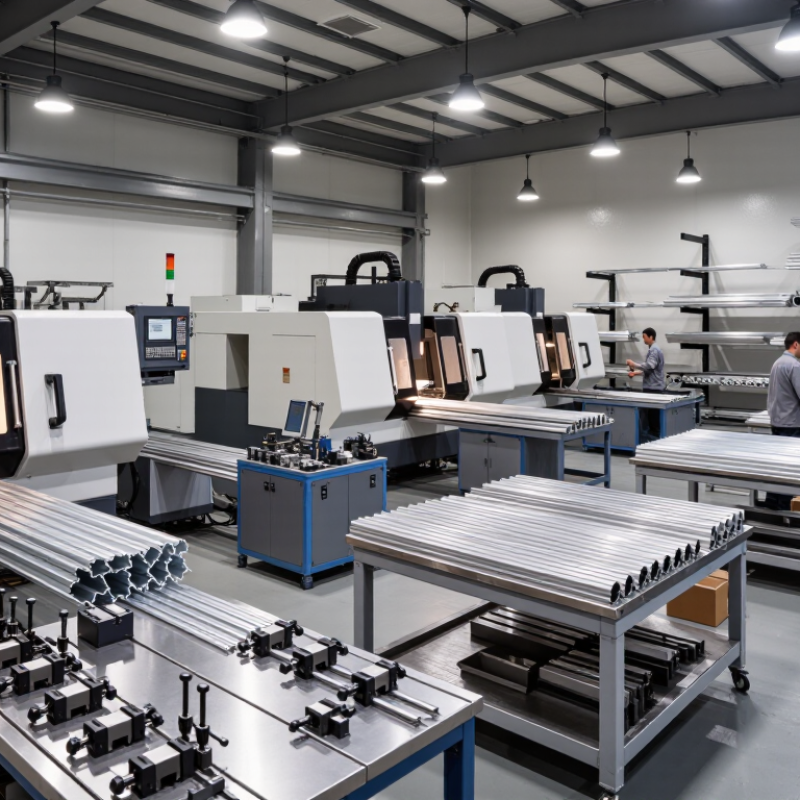
CNC aluminum profile suppliers provide more than machined metal sections. They usually support material selection, profile cutting, drilling, milling, tapping, and surface finishing. Experienced suppliers can recommend aluminum grades for strength, weight, corrosion resistance, and machining behavior. This advice matters when a lightweight frame must still resist vibration.
Their services often include custom drawings, sample production, dimensional inspection, and batch manufacturing. Some suppliers use coordinate measuring machines to check hole positions and profile length. Others provide anodizing, powder coating, brushing, or protective packaging. These details affect appearance and service life. Ask for inspection records, material certificates, and clear tolerance limits before production begins.
A reliable supplier should also explain lead times, tooling costs, minimum order quantities, and packaging methods. Good communication prevents small drawing errors from becoming expensive defects. I have found that a perfect-looking quotation may still omit thread depth or edge treatment. That deserves a careful review. Not every supplier handles complex profiles equally well. Requesting a sample can reveal burrs, uneven coating, or difficult assembly points early. Suppliers with practical engineering experience may suggest stronger joints, drainage holes, or easier machining access. These suggestions are valuable, but they should remain tied to your drawings and actual working conditions.
The table summarizes commonly available capabilities and product specifications in China's CNC aluminum profile manufacturing sector. Values are indicative market ranges and should be confirmed with each supplier through drawings, samples, and inspection reports.
| Rank | Supplier Type | Common Aluminum Alloys | Typical Temper | Profile Size Capability | CNC Machining Tolerance | Standard Surface Finishes | Maximum Profile Length | Value-Added Services | Typical MOQ | Quality Documentation |
|---|---|---|---|---|---|---|---|---|---|---|
| 01 | Integrated extrusion and CNC manufacturer | 60636061 | T5 / T6 | Up to approximately 300 mm in diameter or width | Generally ±0.05 mm for precision features | Anodizing, powder coating, electrophoresis, mill finish | Commonly up to 6,000 mm before machining | Extrusion die design, CNC milling, drilling, tapping, deburring | Low-volume prototypes from 10–50 pieces; production orders commonly 100+ pieces | Material certificate, dimensional inspection report, coating thickness report |
| 02 | Architectural aluminum profile specialist | 60636060 | T5 | Suitable for light and medium structural profiles | Approximately ±0.10 mm for general machined dimensions | Anodized, powder coated, wood-effect transfer, mill finish | Typically 5,800–6,000 mm | Cutting, punching, slotting, end milling, assembly preparation | Usually 100–500 pieces depending on profile complexity | Alloy certificate, anodizing or coating inspection, final QC checklist |
| 03 | Industrial automation profile supplier | 60636061 | T5 / T6 | Common modular sizes from 20 × 20 mm to 100 × 100 mm | Approximately ±0.05–0.10 mm | Clear anodizing, black anodizing, powder coating | Up to approximately 6,000 mm | Precision cutting, drilling, tapping, connector and frame preparation | Small batch orders commonly accepted from 20–100 pieces | Dimensional report, material traceability, sampling inspection records |
| 04 | CNC enclosure and heatsink manufacturer | 606360616082 | T5 / T6 | Small to medium profiles with complex fins and cavities | Approximately ±0.03–0.08 mm on critical machined areas | Clear anodizing, black anodizing, chemical conversion, powder coating | Usually 1,000–3,000 mm for complex heatsink profiles | Fin machining, slotting, drilling, tapping, assembly and thermal interface preparation | Prototype quantities from 5–20 pieces; mass production commonly 100+ pieces | Material certificate, CMM report where required, surface-treatment report |
| 05 | Custom industrial extrusion supplier | 606160636005A | T5 / T6 | Light, medium, and heavy-wall custom sections | Approximately ±0.10 mm for standard CNC work | Mill finish, anodizing, powder coating, polishing, brushing | Typically up to 6,000 mm | Custom die development, CNC sawing, milling, drilling, tapping and welding | Commonly 300–1,000 kg for new extrusion projects | Alloy and temper certificate, extrusion dimensional report, batch traceability |
| 06 | Precision CNC machining service provider | 6061-T67075-T6 | T6 | Machined components from small profiles to approximately 500 mm workpieces | Approximately ±0.02–0.05 mm for selected critical dimensions | Hard anodizing, standard anodizing, powder coating, bead blasting | Profile length depends on machine travel; commonly 1,000–3,000 mm | 3-axis to 5-axis milling, turning, drilling, tapping, engraving and assembly | Prototype orders from 1–10 pieces are often available | FAI report, CMM inspection, material certificate, process inspection records |
| 07 | Solar and mounting profile supplier | 6005A60636061 | T5 / T6 | Rails, brackets, channels, frames, and structural mounting sections | Approximately ±0.10 mm for machined mounting features | Anodizing, mill finish, powder coating | Typically 5,800–6,000 mm | Cut-to-length, drilling, punching, slotting, corner-key and fastener preparation | Usually 100–500 pieces or one small production batch | Material certificate, coating report, dimensional inspection and packing record |
| 08 | Medical and laboratory equipment profile supplier | 60616063 | T5 / T6 | Compact profiles with cleanable surfaces and controlled geometry | Approximately ±0.03–0.08 mm on specified features | Clear anodizing, hard anodizing, powder coating, polishing | Usually up to 3,000–6,000 mm | Precision machining, deburring, cleaning, kitting and controlled packaging | Prototype quantities from 10 pieces; production quantities negotiated by project | Inspection report, material traceability, cleaning record, process documentation |
| 09 | Transportation and equipment component supplier | 606160826063 | T6 | Medium and heavy-wall profiles for brackets and equipment structures | Approximately ±0.05–0.10 mm | Hard anodizing, anodizing, powder coating, brushing | Commonly up to 6,000 mm before secondary processing | 5-axis machining, drilling, tapping, countersinking, welding and subassembly | Typically 50–200 pieces for repeat components | Material certificate, first-article inspection, dimensional report, batch records |
| 10 | Prototype and low-volume custom profile supplier | 606160637075 | T5 / T6 | Small custom sections and machined profile components | Approximately ±0.05–0.10 mm, subject to drawing requirements | Bead blasting, anodizing, powder coating, polishing, brushing | Usually 500–3,000 mm for prototype processing | Rapid quoting, prototype machining, 3D drawing review, laser marking and small-batch assembly | Single-piece prototypes or batches from 10 pieces | Material certificate on request, inspection report, sample approval record |
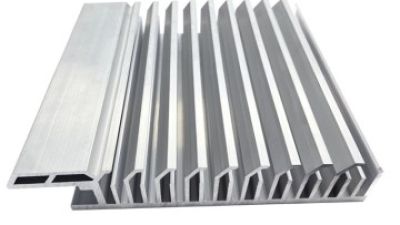
Aluminum Profile Radiator Heat Sinks are becoming an increasingly important solution for thermal management as electronic systems grow more compact and powerful. Manufactured through industrial aluminum extrusion, these passive cooling components use high-conductivity aluminum alloys and dense fin structures to enlarge the heat-transfer surface. Heat moves from electronic devices into the profile and is then released through natural or forced air convection, helping maintain stable operating temperatures without pumps, refrigerants, or additional energy consumption. Aluminum’s thermal conductivity, commonly around 200 W/m·K for widely used grades, supports an effective balance between performance, weight, and manufacturing cost.
Market demand is being strengthened by electric vehicles, renewable-energy equipment, industrial automation, LED systems, and high-density power electronics. Grand View Research’s industry analysis indicates that the global heat-sink market is expected to expand at an annual rate of approximately 7% through 2030, reflecting the need for reliable cooling in increasingly miniaturized devices. Industry reports also highlight rising adoption of customized extruded profiles, which allow engineers to adjust fin spacing, profile dimensions, and mounting features for different airflow conditions. Compared with more complex active cooling assemblies, aluminum extrusion offers scalable production, strong recyclability, and consistent thermal performance, making it a practical choice for industrial and electronic equipment.
Review extrusion quality, machining accuracy, surface treatment, and process control. Ask for clear alloy grades, heat-treatment records, and dimensional tolerances. Vague answers deserve caution.
Request a sample using the same drawing, alloy, and production method as your order. Check hole positions, threads, flatness, cut edges, and surface finish. Use calibrated tools.
Request material certificates, inspection reports, batch records, and corrective-action records. Certificates help, but they cannot replace physical sample inspection.
Measure critical dimensions with a coordinate measuring machine, micrometer, or calibrated caliper. Inspect hole positions, perpendicularity, burrs, and surface roughness. Record the results.
Alloy 6063 suits smooth extrusion surfaces and decorative sections. Alloy 6061 offers greater strength for structural parts. The correct choice depends on load, temper, and application.
A capable supplier should work from CAD drawings and support cutting, drilling, tapping, and multi-axis milling. Ask for first-article inspection results. Catalog claims are not enough.
Ask about billet temperature, die alignment, extrusion speed, tool wear, and operator checks. Review equipment maintenance and monthly capacity. Later parts can drift.
Request packaging photos and confirm protection for corners, anodized surfaces, and machined edges. Profiles should be separated and secured against movement. Scratches are expensive.
A video audit reveals equipment, storage, training, and workflow. An independent inspection gives more objective evidence before shipment. Use both when the order is large.
Common uses include machine frames, guarding, conveyor rails, solar supports, and heat sinks. A 40-by-40-millimeter frame may hold sensors and protective panels. Check corrosion needs carefully.
This guide explores what Cnc Aluminum Profile suppliers in China can provide, including standard and custom profiles, precision machining, surface treatments, assembly support, and packaging for international delivery. It explains how buyers can evaluate manufacturers by reviewing production capacity, technical expertise, quality control systems, certifications, communication, lead times, and export experience. Key manufacturing processes such as extrusion, cutting, drilling, milling, anodizing, and powder coating are also discussed, along with the importance of dimensional accuracy, material consistency, surface quality, and inspection procedures.
The article introduces the top 10 supplier types and selection considerations without focusing on specific brands. It compares product ranges, customization options, and applications in automation, construction, transportation, electronics, renewable energy, and industrial equipment. Buyers will also learn how pricing is influenced by alloy, profile complexity, order volume, tooling, finishing, and shipping requirements. By balancing quality, customization, service, delivery reliability, and total cost, companies can choose a suitable Cnc Aluminum Profile manufacturing partner for long-term projects.