Leave a Message
Picking the right China manufacturer for Aluminum Extrusion Tube Profiles isn't just about scanning prices on websites. You’ve really gotta dig deeper—look into their experience in production, how good they are at engineering, their control over materials, and whether they’re reliable with after-sales support. A good supplier should be able to explain things like alloy choices, extrusion limits, surface treatments, and inspection methods without making you feel lost.
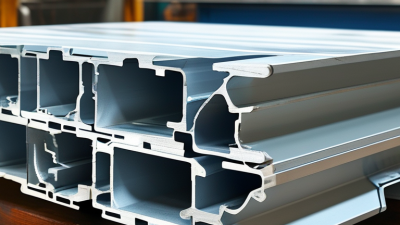
Honestly, seasoned manufacturers tend to work with alloys like 6063-T5, 6061-T6, and 6005-T5, each impacting strength, machinability, weight, and the overall finish differently. It’s worth asking if they control things like billet temperature, die design, cooling techniques, stretching, and aging processes. Those little details can really impact how straight the profiles are and how stable they stay in dimensions.
And yep, those small things matter a lot.
When you’re evaluating a supplier, make sure you ask for actual samples, tolerance reports, mill certificates, and coating records. Check how they handle custom dies, trial runs, packaging, and replacements — these are all signs of how reliable they are. For anodized tubes, look for consistent color and thickness, and for powder-coated ones, check if they resist scratches during handling. Certifications like ISO 9001 are good to have, but keep in mind—they don’t guarantee everything on their own. A supplier might look great on paper but still have issues with communication or inconsistent batches.
Even the most experienced factories might need a few trial runs—especially for complex hollow sections. That’s why it’s smart to compare samples, see how quick their responses are, review technical drawings, and get a realistic idea of lead times before you sign any deal. Ultimately, the best manufacturer is one that’s transparent about their process, honest about limitations, and willing to improve based on your feedback.
This guide is meant to help you keep those practical factors in mind so you can find a reliable long-term partner in China for your aluminum extrusion needs.
China’s aluminum extrusion tube profile industry has become a major link between primary aluminum production and advanced manufacturing. According to the International Aluminium Institute, China produced about 41.5 million tonnes of primary aluminum in 2023. This large material base supports steady demand for extruded tubes used in automotive cooling systems, construction frames, solar structures, and industrial equipment.
Market research from Grand View Research valued the global aluminum extrusion market at approximately USD 85.6 billion in 2023. The report also identifies China as one of the largest production and consumption centers. Tube profiles are important because extrusion can create thin walls, internal channels, and complex cross-sections with less machining. In practice, engineers often choose 6063 alloy for appearance and formability, while 6061 is preferred when higher strength matters. Tolerances still require attention.
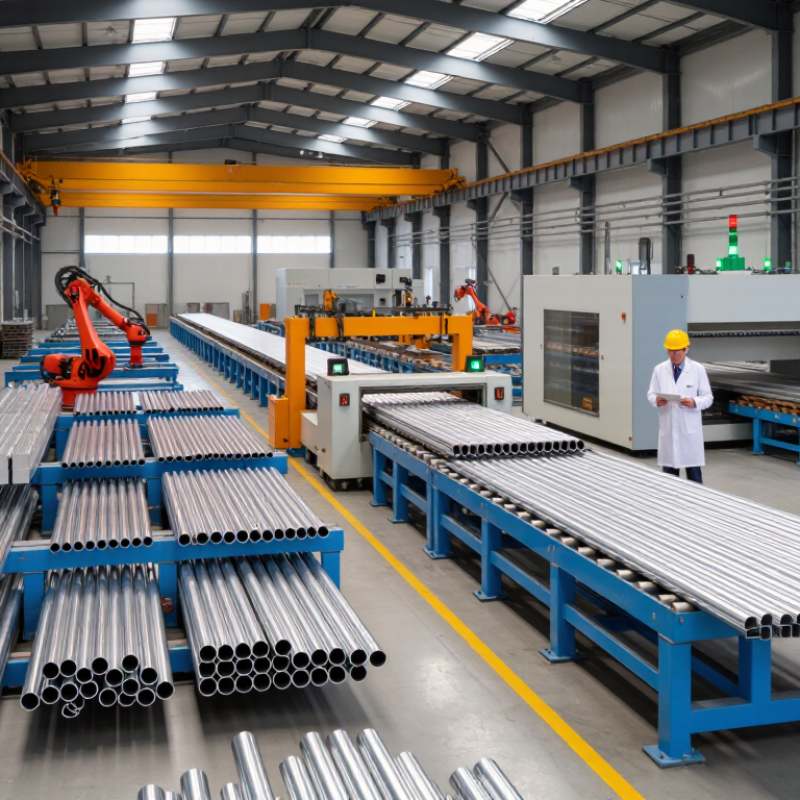
China’s role is not limited to volume. Its supply chain connects billet casting, die design, extrusion, heat treatment, surface finishing, and export logistics. The China Nonferrous Metals Industry Association has repeatedly highlighted the sector’s shift toward higher-value fabricated products rather than simple metal output. Yet this transition is uneven. Some factories still compete mainly on price, and published capacity does not always prove consistent quality. Buyers should examine tensile-test records, dimensional inspection data, alloy certificates, and batch traceability before selecting a tube profile manufacturer. A polished sample can mislead. Process evidence matters more.
| Industry Dimension | Verified Industry Data | Market Role in China | Typical End-Use Areas |
|---|---|---|---|
| Product Scope | Seamless or hollow aluminum profiles produced by forcing a heated billet through a shaped die. Tube profiles may be round, square, rectangular, multi-void, or custom-shaped. | Provides lightweight, corrosion-resistant sections for engineered structures and fluid, air, or cable routing applications. | Construction, machinery, transportation, renewable-energy equipment, furniture, and heat-transfer assemblies. |
| Primary Alloy Families | 6xxx-series alloys, especially 6063 and 6061, are widely used because magnesium and silicon enable heat treatment and good extrusion performance. | Supports a broad product mix ranging from architectural profiles to higher-strength industrial components. | 6063: architectural frames and decorative profiles; 6061: machinery, transport, and structural components. |
| Common Tempers | Typical tempers include T5 and T6. T5 is cooled after extrusion and artificially aged; T6 is solution heat-treated and artificially aged. | Allows manufacturers to balance surface quality, dimensional stability, strength, and cost for different applications. | T5: architectural and general-purpose sections; T6: load-bearing or higher-strength industrial profiles. |
| Relevant Product Standards | Common references include ASTM B221/B221M for aluminum-alloy extruded bars, rods, wire, profiles, and tubes; EN 755 for extruded products; and EN 12020 for precision extruded profiles. | Standards provide a common basis for alloy designation, temper, mechanical properties, dimensions, tolerances, and inspection. | International procurement, engineering approval, export documentation, and quality-control programs. |
| Key Manufacturing Stages | Billet preparation, die design, hot extrusion, stretching or straightening, cutting, heat treatment when specified, surface finishing, dimensional inspection, and packing. | Creates an integrated supply chain capable of producing both standard sections and application-specific profiles. | Standard tube stock, precision profiles, cut-to-length components, anodized sections, and powder-coated architectural products. |
| Dimensional Requirements | Important control points include outside dimensions, wall thickness, straightness, twist, corner radius, hole or void geometry, and cut length. Tolerances depend on the alloy, profile size, and applicable standard. | Dimensional capability determines suitability for automated assembly, sliding systems, frames, and precision mechanical parts. | Industrial frames, enclosures, rails, structural supports, heat sinks, and modular construction systems. |
| Surface Treatments | Common finishes include mill finish, anodizing, powder coating, liquid coating, polishing, brushing, and wood-grain transfer finishing. | Expands the addressable market by improving appearance, wear resistance, and protection against atmospheric corrosion. | Building façades, windows and doors, interior systems, public facilities, equipment frames, and consumer products. |
| Construction and Infrastructure Role | Aluminum profiles are used where low density, corrosion resistance, appearance, and ease of fabrication are important. Aluminum’s density is approximately 2.70 g/cm³. | Supports lightweight building systems and helps reduce handling and installation loads compared with many steel alternatives. | Curtain walls, window and door systems, partitions, railings, sunshades, and modular structures. |
| Transportation and Equipment Role | Extruded tube profiles can combine multiple functions in one section, reducing part count and enabling integrated channels, ribs, and mounting features. | Enables lightweight design, efficient assembly, and customized structural solutions for equipment manufacturers. | Automotive components, rail interiors, electric-vehicle structures, machine guards, conveyors, and automation equipment. |
| Energy and Electrical Applications | Aluminum combines useful electrical and thermal conductivity with low density, making extruded profiles suitable for selected heat-management and electrical-support applications. | Serves equipment sectors requiring lightweight thermal paths, protective housings, mounting rails, or cable-management structures. | Heat sinks, LED housings, solar mounting systems, battery enclosures, inverter assemblies, and cable trays. |
| Customization Capability | Custom extrusion dies can produce complex cross-sections, including multi-chamber tubes, asymmetric profiles, integrated grooves, and reinforcing ribs. | Differentiates engineered profile supply from commodity metal distribution and supports application-specific product development. | Robotics, automation, architectural systems, transport structures, lighting, and specialized machinery. |
| Sustainability and Circularity | Aluminum can be recycled repeatedly without losing its basic material properties. Recycling aluminum generally requires substantially less energy than producing primary aluminum from ore. | Recycling supports material recovery, reduces dependence on primary metal, and strengthens the industry’s circular-economy value proposition. | Construction refurbishment, vehicle recovery, industrial scrap management, and closed-loop manufacturing programs. |
| Core Competitive Factors | Material yield, extrusion speed, die life, dimensional control, alloy and temper consistency, surface quality, finishing capability, delivery reliability, and traceability. | These factors influence total delivered cost, qualification success, production continuity, and long-term customer adoption. | OEM supply, construction projects, export orders, industrial distribution, and engineered-to-order manufacturing. |
Note: Technical properties, tolerances, alloy availability, and finishing requirements should be confirmed against the applicable product standard and project specification.
6063-T5 offers smoother surfaces and better anodizing results. It suits frames, handrails, and moderate loads. 6061-T6 provides higher strength for demanding mechanical applications. T5 and T6 describe tempers, not different alloys.
Choose it when appearance, clean corners, and consistent dimensions matter. It works well for architectural frames and decorative structures. The load must remain moderate. Looks can mislead.
Select 6061-T6 for structural tubes, equipment frames, and transport components. It handles higher tensile and mechanical loads. Forming requires more careful die design. It is less forgiving.
Yes, design matters greatly. A thicker wall or stronger cross-section may improve performance. Review load paths, tolerances, welding plans, and exposure conditions. Alloy choice alone is not enough.
Confirm outer diameter, wall thickness, straightness, cut length, and surface finish. Put every limit on the drawing. Check a real assembly sample. Watch for distortion, burrs, and poor fit.
Request inspection records from an actual production batch. A 500-millimeter sample may look accurate. Longer profiles can reveal wall variation or bending. Do not rely on catalog images alone.
Ask whether the minimum applies to each size, alloy, finish, or total order. Request prices for trial and repeat orders. Confirm tooling, setup, packaging, and leftover-material costs. Low MOQ may not mean low cost.
Request alloy certificates, temper certificates, surface-treatment reports, and dimensional inspection records. Check certificate numbers and issuing organizations. Confirm the test methods. A scanned file deserves verification. Truthfully, documents cannot replace physical inspection.
No. It indicates a documented quality system, not automatic product compliance. Compare reports with your drawing and tolerances. For regulated uses, request relevant declarations and laboratory tests. Limits should be explained honestly.
China’s aluminum extrusion industry plays an important role in supplying lightweight, durable, and customizable components for construction, transportation, machinery, and industrial applications. Aluminum Extrusion Tube Profiles are commonly produced from 6063-T5 for excellent surface quality and formability, while 6061-T6 is selected when higher strength and structural performance are required. During manufacturing, aluminum billets are typically heated to approximately 400–500°C before precision extrusion, followed by cutting, aging, and dimensional inspection.
A reliable supplier should demonstrate effective quality controls based on standards such as EN 755-9, ASTM B221, and ISO 9001. Surface treatment options may include anodizing with layers of about 10–25 μm or powder coating for improved corrosion resistance and appearance. When evaluating a supplier, buyers should carefully compare dimensional tolerances, alloy and temper consistency, minimum order quantities, production capacity, inspection procedures, and relevant certifications. Clear communication and documented quality records are also essential for ensuring stable, repeatable results.