Leave a Message
*Name Cannot be empty!
* Enter product details such as size, color,materials etc. and other specific requirements to receive an accurate quote. Cannot be empty
0%

So, what's actually going to be the best Aluminium Extrusion Automotive solution in 2026? Honestly, it depends—on the part, the vehicle platform, and the production process. A lightweight door beam isn't asking for the same thing as a battery enclosure or a suspension component, right? Every design ends up being a balancing act between strength, crash performance, corrosion resistance, manufacturability, and cost. No pressure or anything. Honestly, picking the right alloy is only half the battle. You’ve also got to think about temper, profile geometry, wall thickness, how you’re joining things, and heat treatment — all of it matters.

Okay, think about a long, thin-walled profile coming right out of the press. Even small tweaks in the die design can throw off straightness, mess with surface quality, and create more machining waste. And those little details? They end up affecting how well things fit during assembly and your overall production yield. So when you're comparing suppliers, don't just look at strength numbers. What really matters is how they control their process, how they test things, whether they can trace parts back, and if they've actually got experience with automotive programs. Ask them for relevant test data, and ask them to walk you through how the profile behaves after forming, joining, and finishing. A good supplier should be able to explain that in plain terms—not just hand you a spec sheet. You know, it’s the real parts that actually tell the story—everything else is just filler, I guess.

Here’s the thing: if you’re going to quote an expert by name, you really need to check it against the original source before publishing. No verified quote or source showed up here, and making words up and pinning them on someone is a quick way to lose people’s trust. So this guide is more about the practical side of picking an extrusion—what actually benefits from it, how the common alloys stack up, and what kind of evidence should back a supplier’s claims. Sure, there are still trade-offs. Just because something's lighter doesn't always mean it's better, you know? A profile might look great on paper, but actually producing it consistently? That's a whole different story. At the end of the day, the best option is the one that fits the vehicle's requirements and can be made reliably at scale.

Best Aluminium Extrusion for Automotive in 2026?

Automotive Aluminium Extrusions: Density of 2.70 g/cm³ vs Steel’s 7.85

Best Aluminium Extrusion for Automotive in 2026?

Automotive aluminium extrusions offer a clear density advantage: aluminium is about 2.70 g/cm³, compared with steel at roughly 7.85 g/cm³. For equal volumes, aluminium weighs around 65% less. That matters. A lighter door beam, battery enclosure, or roof rail can help reduce vehicle mass and support efficiency targets.

But density alone does not choose the best material. Not automatically. Aluminium alloys and steel differ in strength, stiffness, joining behavior, and crash response. Engineers must assess the full part, not just a small material sample. A carefully shaped extrusion can place material where loads are highest, while hollow sections may provide useful stiffness with less mass. Still, joints, wall thickness, and manufacturing tolerances can change the result. The comparison is useful, but it can oversimplify a real vehicle design.

Tips: Compare components at equal performance, not equal volume. Review load paths, corrosion protection, and joining methods early. An Aluminium Extrusion T Slot Profile can suit adjustable fixtures or support structures, but confirm its fit and load capacity before using it in a vehicle assembly. A density advantage is valuable; it is not a complete design decision.

How the Extrusion Process Shapes 6xxx-Series Automotive Profiles

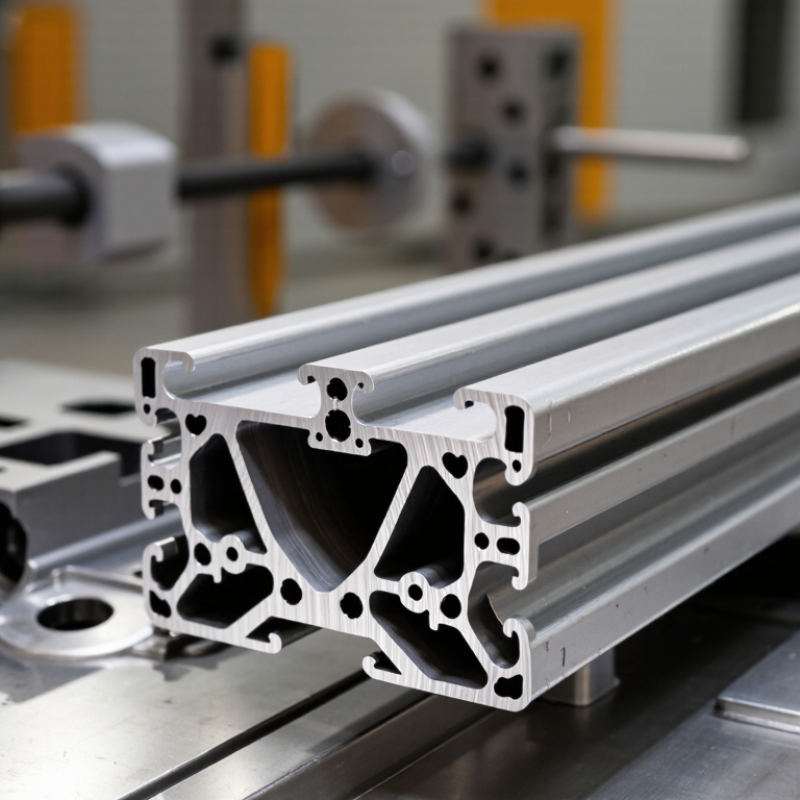
In a 6xxx-series aluminum profile, extrusion turns a heated billet into a cross-section designed for a specific automotive function. Die openings, bearing lengths, and metal flow influence wall thickness, corner fill, and dimensional consistency. That matters. A narrow channel may cool differently from a thick rib, causing uneven flow or distortion after pressing. Press speed, billet temperature, and quenching must be controlled together; changing one can affect strength and surface quality.

Magnesium and silicon enable these alloys to respond to heat treatment. Depending on the process route, quenching and artificial aging can develop useful strength, but they may also expose weaknesses in process control. Hollow profiles add another challenge: internal seams and thin walls need careful design and inspection. A clean-looking part is not proof of consistent properties. Cut samples, dimensional checks, and mechanical tests help verify that the extrusion meets its requirements. Even then, profile strength alone cannot predict crash performance; the assembled component must be assessed in its intended structure. Minor distortion can still complicate joining, so extrusion trials sometimes need another adjustment.

6061-T6 vs 6063-T6: Typical Tensile Strengths of About 310 and 205 MPa

Best Aluminium Extrusion for Automotive in 2026?

For automotive parts, 6061-T6 and 6063-T6 serve different priorities. Typical tensile strengths are about 310 MPa and 205 MPa, respectively. The gap matters for load-bearing brackets, crash structures, and other components where strength is critical. But tensile strength alone does not decide the best alloy. Wall thickness, joint design, fatigue loads, and the relevant product specification all affect performance.

6061-T6 is often considered when higher strength is needed, while 6063-T6 can suit profiles where surface finish and complex shapes matter. An Aluminium Extrusion Tube must also be checked for its actual temper, dimensions, and supplier test data. Published values are typical, not a guarantee for every section. I would avoid choosing an alloy from a headline number alone; that shortcut can miss real design constraints.

Tips: Compare certified mechanical data for the exact tube size and temper. Check weld performance and corrosion exposure, too. Small details matter. If weight savings are the goal, test the finished design under realistic loads before settling on a material.

Where Extrusions Fit: Battery Enclosures, Crash Rails, and Body Structures

Best Aluminium Extrusion for Automotive in 2026?

Extrusions fit automotive structures where strength, low mass, and repeatable geometry matter. In crash rails, carefully shaped profiles can absorb impact energy through controlled deformation. In body structures, long sections can connect floor, sill, and roof assemblies with fewer joints. The profile still needs testing: a lighter part is not automatically a safer one.

Battery enclosures combine several needs: protect cells, manage heat, and resist road debris. The IEA’s Global EV Outlook 2024 reports that electric car sales reached nearly 14 million in 2023, about 18% of global car sales. That growth raises demand for well-designed pack structures, but does not make one alloy or shape suitable for every vehicle. Details matter. An Aluminium Extrusion Pipe may suit fluid routing or selected support functions; it is not a substitute for a purpose-designed enclosure profile.

The Aluminum Association and DuckerFrontier’s 2020 study, Aluminum Content in North American Light Vehicles 2020–2030, projected average aluminum content rising from 459 pounds per vehicle in 2020 to 570 pounds by 2030. For 2026 designs, engineers can use that trend as context, not a specification. Joining methods, corrosion, repairability, and production tolerances all deserve early review. Some designs will need compromise. That is worth admitting.

Best Aluminium Extrusion for Automotive in 2026? Where Extrusions Fit

Battery enclosures, crash rails, and body structures use extruded aluminium where lightweight, stiffness, and adaptable cross-sections are valuable.

Approximate material densities in kg/L. Density is a material-level comparison, not a measure of crash performance; section geometry, alloy and temper, joining, and vehicle-level validation all matter. Extrusions can form battery-tray rails and enclosures, energy-absorbing crash rails, and structural body members.

Designing for Crash Loads, Joining, Corrosion, and Manufacturing Tolerances

Best Aluminium Extrusion for Automotive in 2026?
Designing for Crash Loads, Joining, Corrosion, and Manufacturing Tolerances

Automotive extrusion design starts with the load path, not the profile’s appearance. During a crash, wall thickness, internal ribs, and corner radii affect how a section folds. A stiff design may transfer force elsewhere instead of absorbing it. Engineers should assess the full assembly, including fasteners, adjacent panels, and likely impact directions. Simulation helps, but physical testing remains essential.

Tips: Keep joining zones accessible for tools and inspection. Specify coatings and drainage details where moisture can collect. Dissimilar metals may need isolation to reduce galvanic corrosion. Small details matter.

Manufacturing tolerances should reflect both extrusion capability and assembly needs. Long profiles can bow or twist, while temperature and die wear may shift dimensions. Set critical dimensions around real interfaces, then confirm them with production samples. Extrusion Aluminium Profilé Personnalisé can suit a specific package, but customization alone does not guarantee better performance. I would be cautious about locking a design before checking cut length, machining variation, and joining distortion together. Good drawings state datums, inspection points, and acceptable variation clearly.

Best Aluminium Extrusion for Automotive in 2026? — Designing for Crash Loads, Joining, Corrosion, and Manufacturing Tolerances

Quick answer: There is no single best extrusion alloy for every automotive component. For structural profiles, compare 6005A-T6, 6082-T6, and 6061-T6 against the required crash response, joining process, corrosion environment, profile complexity, and production tolerances.

Alloy and temper Typical application fit Strength and design considerations Crash-load considerations Joining considerations Corrosion considerations Extrusion and tolerance considerations Practical selection guidance
6005A-T6 Structural profiles, rails, cross-members, and battery-enclosure components where a balance of strength and extrudability is needed. Medium-to-high strength for a 6xxx-series extrusion. Actual minimum properties depend on product standard, section thickness, and temper. Can support energy-absorbing designs, but crash performance depends on section geometry, wall thickness, temper, loading direction, and controlled folding—not alloy strength alone. Suitable for common aluminium joining methods. Fusion welding locally reduces strength in the heat-affected zone; account for this in design and validation. Offers good general atmospheric corrosion resistance. Surface treatment may be appropriate for appearance, exposure, or contact with dissimilar metals. Often a practical choice for structural shapes. Thin walls, intricate cavities, and tight dimensional requirements still need profile-specific feasibility review. A strong starting candidate when structural performance and production-friendly extrusion are both priorities.
6082-T6 Higher-load structural parts, supports, and machined or extruded components requiring substantial strength. Generally among the stronger common 6xxx-series extrusion options, though attainable properties and profile availability depend on section size and applicable specification. Useful where strength is important, but higher strength does not automatically provide better crash energy absorption. Validate force-displacement response and failure mode on the actual section. Weldable by common processes, with local softening in the heat-affected zone. Joint design, filler selection, and post-weld property assumptions matter. Good general corrosion resistance in typical service; protect against galvanic corrosion where the profile contacts dissimilar metals. Complex, very thin-walled shapes may be more challenging than simpler profiles. Confirm achievable tolerances and straightness with the extruder. Consider when higher strength is needed and the required profile geometry can be produced and joined reliably.
6061-T6 Structural brackets, chassis-related parts, and components needing a widely used heat-treatable alloy with established fabrication experience. Good strength-to-weight potential. Certified properties vary with product form, thickness, and specification; use the applicable material certificate for design. Crashworthiness must be established through component-level analysis and testing. Avoid treating a handbook yield value as a predictor of energy absorption. Suitable for welding and mechanical joining. Welding can reduce strength near the joint; fastener bearing, tear-out, and fatigue also require design checks. Good general corrosion resistance. Consider coatings, isolation, and drainage details for wet or salt-exposed assemblies. Available for many extrusion designs, but tolerance capability is governed by section dimensions, shape complexity, and the agreed extrusion standard. Consider when material availability, fabrication experience, and a balanced property set suit the part requirements.
6063-T6 Complex or thin-walled profiles, trim, covers, and parts where surface finish and profile detail are important. Typically lower strength than structural choices such as 6082-T6; confirm the required mechanical properties for the exact section and temper. May suit lightly loaded components, but should not be selected for a major crash load path without verified structural calculations and testing. Common joining methods can be used, with heat-affected-zone softening considered for welded assemblies. Good general corrosion resistance and suitability for many anodized finishes, subject to finishing-process requirements. Often well suited to intricate shapes and surface-sensitive applications. Tight tolerances still require an agreed drawing, measurement method, and capability review. Consider where profile complexity or finish is more important than maximizing structural strength.
Any candidate alloy in a welded condition Assemblies with welded joints in structural or enclosure applications. Do not assume the parent-material T6 strength remains unchanged beside a fusion weld. Design using appropriate joint and heat-affected-zone properties. Weld location and local softening can influence where a profile folds or fractures. Validate the complete assembly under representative loading. Specify the welding process, joint preparation, filler, inspection, and any required post-process treatment. Joining sequence can affect distortion. Seal joints and manage crevices and water traps. Isolate aluminium from electrically connected dissimilar metals where galvanic corrosion is possible. Welding and fixturing can introduce distortion; define post-joining datum points and inspection requirements on the component drawing. Choose the alloy and temper for the finished assembly, not just the unjoined extrusion.

Design and sourcing note: Strength figures are intentionally not shown as universal values because guaranteed properties depend on the product specification, section thickness, temper, and test direction. Specify the governing material and extrusion standards (for example, the applicable ASTM B221 or EN 755 requirements), dimensional tolerances, straightness, surface condition, and inspection method on the purchase documents. For crash-critical parts, use material certificates and validate the production-intent geometry and joining process through engineering analysis and physical testing.

Choosing an Automotive Extrusion in 2026: Strength, Mass, Cost, and Recyclability

Best Aluminium Extrusion for Automotive in 2026?

Choosing an Automotive Extrusion in 2026: Strength, Mass, Cost, and Recyclability

The best automotive extrusion is not automatically the lightest or strongest option. It must suit the part, production method, and expected loads. For a battery enclosure rail, engineers might compare alloy strength, wall thickness, and crash behavior. A thinner profile can reduce mass, but it may need extra support or more demanding joining. That can raise cost.

Mass matters.

Review strength alongside stiffness, fatigue performance, and corrosion exposure. A component near a wheel faces a different environment from an interior support. Check how the profile will be cut, bent, and joined; a design that looks efficient on screen may prove awkward on the production line. Cost should include finishing, scrap, tooling, and assembly, not just the metal price. Recyclability also depends on alloy choice and how easily the part can be separated from coatings and attached materials.

Not always simple.

Tips: Ask suppliers for mechanical data tied to the proposed temper and profile, then validate it with representative samples. Compare total part cost and mass, and document the assumptions. Recycled content can help, but confirm quality consistency for the application. A small trial may reveal a detail the drawings missed.

Extruded Aluminium Roof Racks: Insights from Grand View Research’s Automotive Roof Rack Market Report

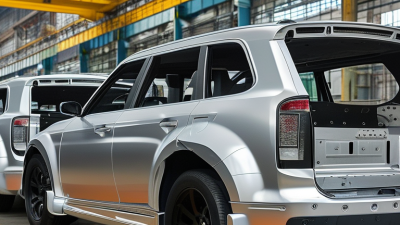
Extruded aluminium roof racks combine low weight, structural strength and adaptable profiles to carry luggage, bicycles and other recreational equipment. Aluminium is shaped through an extrusion process, then assembled and finished into a frame designed to mount on a vehicle roof. This construction can help keep added rack weight modest while providing practical support for everyday travel and outdoor use. Capacity and compatibility vary by vehicle and rack design, so the vehicle’s roof-load limit remains an important specification.

The market outlook reflects growing interest in versatile vehicle storage. Grand View Research’s *Automotive Roof Rack Market Report* estimates that the global market was valued at approximately US$2.57 billion in 2023 and projects a compound annual growth rate of 6.4% from 2024 to 2030. These figures provide context for the broader market, rather than a separate forecast for extruded aluminium racks. As consumers seek flexible ways to transport gear, aluminium’s balance of strength, light weight and ease of forming makes it a relevant material option for roof-rack designs.

FAQS

What does extrusion control in an automotive aluminum profile?

Die openings, bearing lengths, and metal flow shape wall thickness, corner fill, and dimensional consistency. Small changes matter.

Why must press speed, billet temperature, and quenching be controlled together?

They interact. A narrow channel may cool differently from a thick rib, causing uneven flow or distortion.

How do 6061-T6 and 6063-T6 compare in typical tensile strength?

6061-T6 is about 310 MPa; 6063-T6 is about 205 MPa. These are typical values, not guarantees.

Which alloy may suit a higher-strength automotive part?

6061-T6 may suit higher-strength needs. But joints, wall thickness, fatigue loads, and specifications also matter. One number is not enough.

When might 6063-T6 be considered?

It can suit complex profile shapes and surface-finish priorities. The exact design still needs testing.

How should hollow profiles be inspected?

Check internal seams and thin walls. Cut samples, dimensional checks, and mechanical tests help verify consistency. Looks can mislead.

Does profile strength predict crash performance?

No. Assess the assembled component in its intended structure, under realistic loads. I would not skip that step.

What should be checked for an aluminum extrusion tube?

Confirm its temper, dimensions, and mechanical data for the exact size. Also review weld performance and corrosion exposure. Small details matter.

Conclusion

Aluminium Extrusion Automotive solutions offer a useful balance of low mass, strength, and design flexibility. At a density of about 2.70 g/cm³—compared with steel’s 7.85 g/cm³—aluminium can help reduce vehicle weight. The extrusion process shapes 6xxx-series alloys into profiles suited to structural and packaging needs. Typical tensile strengths illustrate the trade-offs: 6061-T6 is about 310 MPa, while 6063-T6 is about 205 MPa, with the right choice depending on the part’s requirements.

Extruded profiles can be used in battery enclosures, crash rails, and body structures, but successful designs must account for crash loads, joining methods, corrosion protection, and manufacturing tolerances. In 2026, selecting an automotive extrusion means weighing strength against mass and cost, while also considering durability and recyclability. Matching the alloy, profile geometry, and production process to the intended application helps create components that meet performance goals without adding unnecessary material or complexity.