Leave a Message
*Name Cannot be empty!
* Enter product details such as size, color,materials etc. and other specific requirements to receive an accurate quote. Cannot be empty
0%

If you're in the market for an Aluminum Profile Cnc machine in 2026, the first thing you need to think about is the kind of profiles you're actually working with day to day. Let's face it—a long extrusion, a narrow frame, and a thick structural section each throw different challenges your way. They affect how much travel you need, how you clamp things down, and even which cutting tools you'll want in your spindle. So yeah, before you start comparing specs, take a good look at what you're really cutting. That'll steer you in the right direction, trust me. You know, Edwards Deming—the guy who knew a thing or two about manufacturing quality—once said, "Quality comes not from inspection, but from improvement of the production process." And that really hits home here. It's not about having a machine that looks great on paper; it's about one that can churn out consistent results, time after time.

Sure, spindle power matters, but there's way more to it. You gotta look at the actual machining length, axis travel, tool capacity, the control system, and not to mention how well the machine grips different profiles. And don't just take their word for it – ask for a demo with material that's similar to what you use. Check the edges, hole placement, and how long the cycle takes. Little things can trip you up, you know? Like chips getting stuck around a clamp – that can stop a run cold. Or awkward loading that slows down every shift. Honestly, no machine is perfect for everything. Honestly, a machine with more capacity might not be the right pick if setting it up is a pain or local service is hard to come by.

Thinking about upgrading your machining setup? This guide gives you the lowdown on machine types, practical features, how accurate they really are, and the total cost of ownership – so you can make a decision you'll feel good about. We also look at how CNC machining aluminum profile fits into different production volumes, whether you're doing one-offs or high-volume runs. Sure, specs are great for narrowing things down, but honestly, you should test out some real parts and talk to the operators before making the final call. You know, it's honestly so easy to miss that distinction. But if you actually take the time to test it properly, you'll start noticing trade-offs that no brochure would ever mention.
Which Aluminum Profile CNC Machine Is Best in 2026?

What an Aluminum Profile CNC Machine Does

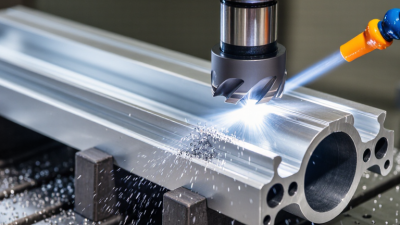
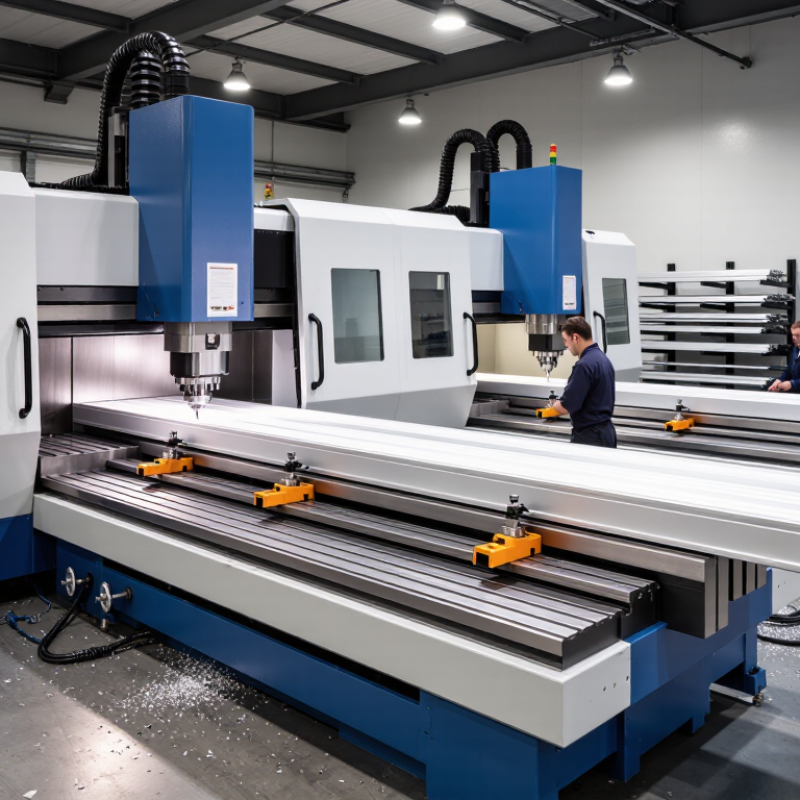
An Aluminum Profile Cnc machine cuts and machines long extruded sections used in frames, doors, railings, and equipment housings. It can trim a bar to length, drill mounting holes, mill slots, and create pockets for connectors. The work starts with a drawing or programmed toolpath. The machine then positions the profile and guides cutting tools through the required operations.

A typical setup uses clamps to hold the extrusion steady while a saw or milling spindle works along it. This matters because thin-walled profiles can flex under pressure. Operators check the extrusion’s dimensions, loading direction, and support points before cutting. Small details count. A misplaced hole can make an otherwise clean frame difficult to assemble. Some machines also use automatic tool changes, which reduce manual steps but still require careful setup.

In 2026, the best machine depends on the profile sizes, tolerances, and daily production volume—not just its advertised speed. Watch how easily it handles different cross-sections, clears chips, and keeps cuts consistent across a full bar. A fast cycle is useful, but poor clamping can waste material. Even a well-programmed machine needs inspection; extrusion variation and tool wear can affect the finished part. Operators should verify sample cuts before running a large batch.

Key Machine Types Available in 2026

In 2026, aluminum profile CNC machines generally fall into several practical types. Three-axis routers suit straight cuts, slots, and drilled patterns on common extrusions. They are often easier to program and maintain, but cannot reach every angled face in one setup. A fourth axis rotates the workpiece, helping operators machine multiple sides without repeated repositioning. That can reduce handling time. It does not automatically improve accuracy; clamping still matters.

Five-axis machining centers handle complex angles and profiles with fewer setups. They may be worthwhile for intricate parts, though programming and operator training add cost. Saw-and-drill systems combine cut-to-length work with hole making, which fits repetitive production better than sculpted components. Dedicated extrusion centers may include long beds and multiple clamping zones. Check the usable travel, not just the machine’s advertised capacity. A long profile can flex during cutting.

For a Cnc Aluminum Profile operation, match the machine to the part drawing, batch size, and required tolerances. Ask how chips are cleared from deep slots, and inspect sample cuts for burrs and heat marks. Small details count. Also test the control interface with a real job file. I would not choose solely by spindle power; that shortcut can be misleading. Calibration needs attention, too. A capable machine still depends on sound fixtures, sharp tooling, and consistent workholding.

How Profile Size and Material Shape Machine Choice

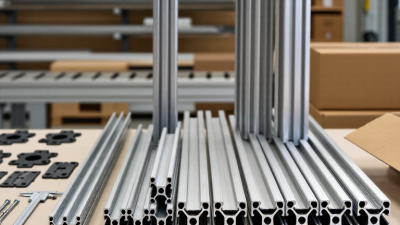
A suitable aluminum profile CNC machine starts with the part, not the machine’s headline specifications. Measure the longest profile, its widest cross-section, and the space needed for clamps and tool movement. A long extrusion may fit the working area yet still flex during cutting. That matters. Add adjustable supports along the bed, and check whether the spindle can reach every face without repositioning.

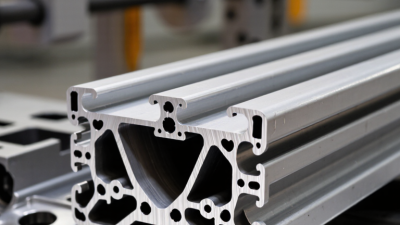
Shape affects workholding and tool access. Thin-walled profiles can vibrate or deform under clamping pressure, so broad, gentle support is often safer than a few tight contact points. Closed sections may limit access to internal features, while angled channels can require custom fixtures or a fourth axis. More axes are not automatically better. They add cost and setup demands, and some parts need only accurate three-axis machining.

Material grade and temper also change cutting behavior. Softer aluminum may produce long chips; harder alloys can need different feeds and tooling. Ask for a test cut using a profile close to your actual size and shape. Inspect the edge finish, burrs, dimensions, and chip evacuation. I would also verify the full support layout, not just the advertised travel. That detail is easy to miss, and it can matter more than expected.

Which Aluminum Profile CNC Machine Is Best in 2026?

How profile size and material shape machine choice

How to read this: The chart compares representative tensile-strength ranges for common aluminum alloys. Alloy strength can affect cutting conditions, but it does not determine machine size by itself.

Choosing a machine: Match the work envelope and support system to the profile’s length, width, and shape. Long or slender extrusions need adequate bed length and secure clamping; stronger alloys may call for more rigid setups and adjusted tooling and feeds. Confirm the machine’s usable capacity against your actual profile and operation.

Representative tensile-strength ranges in MPa; values vary with product form, temper, and applicable standard. These ranges are for comparison, not guaranteed specifications.

Core Features for Accurate and Efficient Machining

For accurate aluminum profile machining, rigidity matters as much as spindle speed. A solid frame helps limit vibration when a cutter meets thin walls or long sections. Small details matter. Check whether the workholding system supports the profile without bending it, especially near clamps and cutouts.

A Cnc Aluminum Profile Machining Center should offer dependable positioning, practical tool changes, and a control system operators can set up consistently. Servo-driven axes and a calibrated probing routine can reduce alignment errors across repeated jobs. Look for clear access to the cutting area, too. It makes chip removal and inspection easier, although some layouts still leave awkward corners to clean.

Effective cooling and chip evacuation protect both the tool and the finish. Test the machine with your actual alloy, profile length, and target tolerances; catalog figures cannot show every shop-floor condition.

Record dimensions from several parts, not just one. That takes time. Still, it can reveal drift before a production run grows. No feature list replaces careful setup, and a machine that is fast on paper may need a slower feed for a fragile profile. That trade-off deserves honest review.

Comparing Machines by Application and Production Volume

For aluminum windows, doors, and light frames, the best CNC machine is often a compact machining center with reliable cutting, drilling, and slotting capability. It should handle the longest profile on your schedule without awkward repositioning. Check the usable machining length, clamp range, and tool capacity against real parts, not just a sample brochure. Small details matter.

A fabricator running varied, low-volume orders may benefit more from quick setup and flexible programming than maximum spindle speed. Frequent profile changes can make a simple fixture system valuable. For repeat production, automatic loading, multiple tool stations, and stable cycle times can reduce handling between operations. Faster is not always better. If setup takes too long, the quoted cycle time may mean little.

High-volume lines need machines that keep output consistent across long shifts. Ask how chips are cleared, how clamps avoid finished surfaces, and how maintenance affects daily availability. A machine built for heavy throughput may be excessive for a shop cutting a few dozen parts each day. Conversely, a basic saw-and-drill setup may create bottlenecks as orders grow. Compare expected weekly volume, operator skill, part complexity, and available floor space. A tidy spreadsheet can still miss the noise of changing jobs; that estimate deserves a second look.

How to Evaluate Cost, Support, and Long-Term Value

For an aluminum profile CNC machine, the lowest purchase price rarely tells the whole story. Compare the full cost: tooling, software, installation, operator training, maintenance, and expected downtime. Ask for a written quote that separates these items. A fast spindle sounds impressive. Real production is less tidy.

Deloitte’s 2024 Smart Manufacturing Survey found that 86% of surveyed manufacturing executives expect smart manufacturing to drive competitiveness within five years. That signals rising expectations for connected equipment, but it does not guarantee savings for every shop. For Extrusion Aluminum Profile CNC Machining, test a representative profile and batch size. Check cut quality, repeatability, changeover time, and scrap. Watch the operator load a long extrusion, not just a short sample.

Support affects long-term value. Ask how quickly technicians respond, which spare parts are locally available, and what training covers. Request references from shops running similar profiles and shifts. Compare the machine’s service terms with your planned workload. A modestly priced machine may be sensible if support is dependable. A premium system may not pay back. I would still verify projected cycle times on your own parts; estimates can be optimistic. Keep those test results with the quote.

Which Aluminum Profile CNC Machine Is Best in 2026? — How to Evaluate Cost, Support, and Long-Term Value

Evaluation Factor 3-Axis Profile CNC 4-Axis Profile CNC 5-Axis Profile CNC What to Verify Before Buying
Typical machining capability Moves along three linear axes; suitable for many drilling, milling, slotting, and end-machining operations. Adds a rotary axis, allowing angled machining without manually repositioning the workpiece for each angle. Adds two rotational axes to the three linear axes, enabling machining at multiple orientations and on complex surfaces. Confirm which axes are simultaneous, which operations require repositioning, and whether the machine supports the actual part geometry.
Best-fit applications Repeated, comparatively straightforward profile work with machining features accessible from the available directions. Profiles that need angled holes or features on more than one face, with fewer manual setups. Complex parts requiring access from multiple directions, compound angles, or more involved contouring. Provide representative drawings and sample parts; ask for a machining demonstration using the intended tooling and workholding.
Setup and handling May need additional clamping or repositioning when features are on different faces. Rotary positioning can reduce some manual repositioning, depending on the part and machine configuration. Can reduce repositioning for suitable parts, but programming, workholding, and process planning may be more involved. Compare total cycle time, setup time, operator handling, and scrap risk—not cutting time alone.
Relative purchase cost Generally the lowest-cost option among these configurations when capacity and build quality are comparable. Generally costs more than a comparable 3-axis machine because of the added rotary capability and associated controls. Generally the highest-cost option of the three; the premium is worthwhile only if the extra capability is used. Request itemized quotations with the same working length, spindle, tooling, software, guarding, commissioning, and warranty scope.
Tooling and operating costs Tooling needs depend on the profile, material, cut quality, and operations; standard cutters may cover many routine jobs. May require suitable rotary-axis workholding and additional tooling for angled or multi-face operations. May require more specialized workholding, cutting tools, programming, and operator training for complex jobs. Price cutters, collets, fixtures, spare parts, software options, maintenance, and training as part of total cost of ownership.
Programming and skills Often simpler to program for parts with accessible features and established machining sequences. Requires correct rotary-axis setup and verification of tool orientation and clearances. Typically demands more advanced programming and collision-checking for multi-axis work. Check software compatibility, post-processor availability, training format, and whether the team can support the required workflow.
Service and support Support quality depends on service coverage, technician availability, and access to replacement components. In addition to standard support, confirm service expertise for the rotary axis and its control system. Confirm access to technicians and software support capable of diagnosing multi-axis control and programming issues. Ask for written response targets, remote-diagnostic arrangements, local service coverage, training details, and parts lead-time commitments.
Downtime and maintainability Fewer axes can mean fewer axis-specific components to maintain, but downtime still depends on design, use, and service access. Rotary-axis components add maintenance needs; preventive maintenance and correct setup help protect performance. More complex motion systems can require more specialized troubleshooting and maintenance knowledge. Review the maintenance schedule, documentation, diagnostic tools, recommended spares, and warranty exclusions.
Long-term value Strong value when most work fits three-axis machining and a higher-axis machine would be underused. Can provide value when reduced repositioning and improved access offset the added purchase and operating costs. Can provide value for recurring complex work that benefits materially from multi-axis access; added capability alone does not guarantee a return. Estimate annual production volume, labor saved, setup reduction, quality impact, utilization, financing, and service costs.
Practical buying decision Choose when the part mix is mainly straightforward and the machine meets required capacity and tolerance needs. Consider when angled or multi-face features are common and fewer manual setups can improve the production process. Consider when complex geometry or multi-directional machining is a regular requirement, not an occasional possibility. Choose the least complex configuration that reliably meets current and well-supported future production needs.

Comparison note: Cost and productivity depend on working length, spindle and control configuration, tooling, software, workholding, local service, and the part mix. Relative cost descriptions assume machines with comparable capacity and build quality; obtain like-for-like quotations and validate performance on representative parts.

A Step-by-Step Framework for Choosing the Best Machine

Choosing the best aluminum profile CNC machine starts with the work you actually run. List profile lengths, wall thicknesses, alloys, and daily volume. Include the longest part and the most awkward cut. Measure twice. A machine sized only for today’s common profiles may struggle with a larger job next month.

Match the spindle and cutting setup to your materials and operations. Check the work envelope, axis travel, clamping range, and tool capacity against real parts. Ask for a test cut using a profile similar to yours. Inspect the edge for burrs, the hole positions for accuracy, and the cut face for chatter. Clamps matter. Poor support can spoil a clean toolpath.

Then compare production needs with service and operating costs. Ask how often tools need changing, whether the controls fit your operators’ experience, and how quickly routine maintenance can be done. Review dust and chip collection around the actual cutting area. A quoted cycle time is useful, but it may not include loading, measurement, or setup changes. That is an easy detail to miss. Keep room in the decision for a less impressive, more realistic production estimate.

FAQS

What does an aluminum profile CNC machine do?

It cuts long extruded sections and can drill holes, mill slots, and create pockets for connectors.

How is an aluminum profile held during machining?

Clamps secure the profile while a saw or milling spindle works. Thin walls can flex, so support points matter.

What should operators check before cutting?

Check dimensions, loading direction, and clamp positions. A misplaced hole can complicate frame assembly.

Which machine suits window and door profiles?

A compact machining center may work well for cutting, drilling, and slotting. Check that its machining length fits your longest profile.

What matters most for shops handling varied orders?

Quick setup and flexible programming can help when profiles change often. Maximum spindle speed may matter less.

What features can help repeat production?

Automatic loading and multiple tool stations can reduce handling. Faster is not always better.

How should buyers compare production capacity?

Compare weekly volume, part complexity, operator skills, and floor space. A spreadsheet can still miss the disruption of frequent job changes.

Why inspect sample cuts before a large run?

Profile variation and tool wear can affect finished parts. Check a few cuts first. Small errors add up.

Conclusion

Choosing the best Aluminum Profile Cnc machine in 2026 starts with understanding the work it needs to perform. Different machine types suit different operations, such as cutting, drilling, milling, or handling multiple tasks in one setup. The size, shape, alloy, and wall thickness of the profiles also affect the required working area, spindle capacity, tooling, and clamping system. Features such as reliable motion control, accurate positioning, effective chip removal, and straightforward programming can improve both precision and efficiency.

The right choice also depends on the application and expected production volume. A smaller operation may prioritize flexibility and manageable operating costs, while higher-volume production may benefit from automation and faster cycle times. Compare the total cost of ownership, including installation, tooling, maintenance, training, and technical support—not just the purchase price. By defining production needs, checking machine capabilities, and weighing long-term value, buyers can make a practical choice that fits their profiles, workflow, and budget.