Picking the right [Aluminum Heatsinks Profiles](https://www.tc-aluminum.com/aluminum-heatsinks-profiles) is less of a simple purchasing task these days and more of a practical engineering decision. Devices keep getting smaller, while processors, LED systems, telecom units, and EV components all pack in more concentrated heat. MarketsandMarkets projects the global thermal management market will grow from around USD 16 billion in 2023 to more than USD 22 billion by 2028. That jump says a lot: efficient, lightweight, and scalable cooling parts are in real demand.
Aluminum still shows up everywhere for good reason. It's light, conducts heat reasonably well, resists corrosion, and is flexible to manufacture. Grand View Research calls aluminum extrusion a major industrial market, helped along by transportation, construction, and electrical uses. For heatsink buyers, extrusion also gives you precise fins, mounting channels, and repeatable lengths. And that really matters when you're sourcing globally. Even small geometry changes can shift airflow, contact resistance, packaging volume, and final assembly costs.
Professor Avram Bar-Cohen, a well-known thermal-management researcher, has stressed that “Thermal management must be treated as a system-level design challenge.” That idea shapes this look at seven Aluminum Heatsinks Profiles for global buyers. Each one should be judged against real operating conditions—wattage, ambient temperature, airflow, surface finish, alloy, and installation direction. Raw numbers alone can lead you in the wrong direction. A profile that looks great in a lab might struggle inside a sealed enclosure. And sometimes the cheapest option ends up costing more after machining and freight. So this guide compares practical profile designs, but it also admits one uncomfortable truth: there's no universal heatsink. Buyer specs are often incomplete—and that's a weakness worth checking carefully before you place any purchase order.
What Defines a High-Performance Aluminum Heatsink Profile?
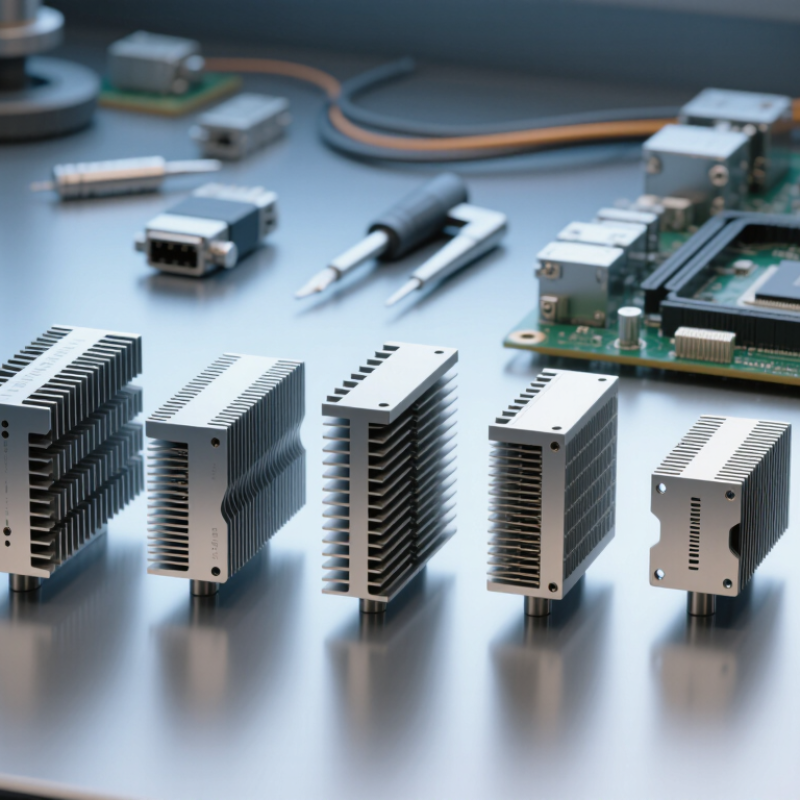
A high-performance aluminum heatsink profile begins with efficient heat transfer, not appearance. In production work, I inspect alloy composition, base thickness, fin spacing, and extrusion consistency. A broad, flat base spreads heat from the component into the profile. Thin fins increase surface area and improve airflow. But thinner is not always better. Crowded fins can restrict natural convection and trap dust. The alloy should offer strong thermal conductivity, stable machining behavior, and adequate mechanical strength. Large Aluminum Extrusion Profiles can support demanding assemblies, but size alone does not guarantee performance. No profile is perfect.
Reliable evaluation needs more than a catalog drawing. Engineers should check flatness, dimensional tolerance, burrs, and contact pressure during installation. I also compare measured thermal resistance with simulation results under realistic airflow. A small gap between the device and heatsink can defeat an otherwise excellent design. Surface treatment matters when corrosion resistance or electrical insulation is required. Anodizing may improve durability, but its thermal effect needs practical testing. I have rejected profiles that looked impressive on paper yet performed poorly in crowded enclosures. Material batches, cutting quality, and mounting torque can all change results. Real assemblies often expose weaknesses that laboratory tests miss. That gap deserves careful review.
Flat-Plate Heatsink Profiles for Simple Thermal Management
Flat-plate heatsink profiles offer practical thermal management for equipment with steady, moderate heat loads. Their broad, low-profile surfaces fit beneath power modules, LED assemblies, control boards, and compact enclosures. Aluminum provides useful conductivity without adding excessive weight. In real installations, I have found that contact quality often matters as much as fin design.
The seven best profiles usually differ in thickness, width, fin height, and mounting style. A thicker base can spread heat more evenly across uneven loads. Higher fins improve airflow exposure, but they also need more enclosure space. Natural convection works quietly, while forced airflow can reduce operating temperatures further. Still, laboratory results may not match dusty, enclosed equipment. That gap deserves attention.
Tips: Measure the component footprint before choosing a profile. Keep the base flat and remove surface debris. Use a suitable thermal interface material with controlled pressure. Leave clearance above the fins for airflow. Check temperatures at the hottest point, not only near the edges. Anodized surfaces may improve durability, but they do not fix poor contact. I once selected a profile that looked efficient on paper, yet its narrow base created uneven cooling. That choice needed reconsideration. Buy according to measured heat, available space, airflow, and installation access.
Pin-Fin Profiles for Compact and High-Density Cooling
When comparing the seven best aluminum heatsink profiles, pin-fin designs deserve close attention. They suit compact devices with crowded heat sources. Their vertical pins create more surface area within a limited footprint. Air can move between the pins and remove heat efficiently. In practical enclosure work, I check temperature rise, pressure drop, and mounting flatness before selecting a profile. Shorter pins often support natural convection better. Taller pins may perform well with forced airflow. However, narrow gaps can collect dust and complicate cleaning. That trade-off is easy to miss.
Aluminum Extrusion Tube Profiles
can support lightweight thermal assemblies and protected internal channels. Still, extrusion limits the shape, spacing, and height of each pin. Global buyers should compare pin diameter, pitch, base thickness, alloy data, and dimensional tolerances. A thin base saves weight. Too thin may warp during machining or installation. Use a reliable thermal interface material and control mounting pressure carefully. Ask for test results with clear airflow, power, and ambient-temperature conditions. Data without test conditions is weak evidence. In prototype reviews, I have seen a wider pin pitch cool more evenly, despite lower calculated surface area. That result changed my preference. No profile is perfect.
Slotted Heatsink Profiles for Enhanced Airflow
7 Best Aluminum Heatsink Profiles for Global Buyers?
Slotted heatsink profiles create direct air paths between fins. This design can reduce stagnant air around hot surfaces. In practical evaluations, narrow slots often cool more consistently than solid fin walls. However, slot width matters. Oversized gaps reduce surface area, while tight gaps restrict airflow and collect dust.
ASM Handbook, Volume 2, reports thermal conductivity near 200 W/m·K for common 6063 aluminum alloys. That makes Aluminum Construction Profiles suitable for lightweight thermal frames and enclosure assemblies. ASHRAE TC 9.9 recommends server inlet temperatures between 18°C and 27°C. A slotted profile supports this target when fan direction, fin spacing, and mounting pressure are properly matched.
Airflow is not automatic.
The 2024 U.S. Department of Energy data-center report estimates electricity use at 176 TWh in 2023. Cooling efficiency therefore deserves serious attention. For global buyers, compare thermal resistance, alloy temper, profile length, and tested airflow data. An anodized surface can improve durability, but it does not replace good contact with the heat source. I have seen designs fail because installers used thick thermal pads and uneven screws. That detail is easy to miss. Check pressure, flatness, and fan clearance before approving large-volume production.
7 Best Aluminum Heatsink Profiles for Global Buyers? - Slotted Heatsink Profiles for Enhanced Airflow
Dimensions are representative commercial ranges for extruded aluminum heatsink profiles. Actual thermal performance depends on material temper, surface finish, mounting flatness, component contact area, orientation, ambient temperature, and airflow volume.
Serrated-Fin Profiles for Greater Surface Area
Serrated-Fin Aluminum Heatsink Profiles for Greater Surface Area
Serrated-fin aluminum heatsink profiles use repeated tooth-like edges to enlarge the cooling surface. These narrow fins disturb airflow and help move heat away from the base. The effect is useful in LED housings, power supplies, industrial controllers, and compact enclosures.
More surface area helps, but airflow still decides performance. A profile with tightly spaced serrations may trap dust or create excessive pressure drop. That can reduce cooling in systems using small fans. For global buyers, compare fin height, pitch, base thickness, and cross-sectional weight. Ask for thermal resistance data under stated airflow conditions. Numbers without test conditions can mislead.
Material choice matters too. Aluminum alloys designed for extrusion offer a practical balance between conductivity, strength, and manufacturing cost. Check dimensional tolerances, surface flatness, and cut-length accuracy before approving production samples. Anodized surfaces may improve corrosion resistance and appearance, but they do not fix poor thermal contact. Use a thin interface layer and even mounting pressure.
Small details matter. A rough cut can complicate assembly. Inadequate packaging can bend tall fins during transport. Serrated profiles also require careful cleaning before installation. More fins are not always better. The best design matches surface area with real airflow, available space, and service conditions. That balance is easy to underestimate.
Radial Heatsink Profiles for Circular Components
7 Best Aluminum Heatsink Profiles for Global Buyers?
Radial Heatsink Profiles for Circular Components
Radial aluminum heatsink profiles spread fins outward from a circular base. They work well with LEDs, power resistors, sensors, and compact motor housings.
A solid radial profile offers strong thermal contact and simple machining. A star-shaped extrusion provides more surface area with moderate weight. Pin-fin radial designs perform better when airflow changes direction. Low-profile radial fins suit narrow enclosures. Tall fins support natural convection, but they need enough vertical clearance.
Seven practical options include solid radial, star radial, pin-fin radial, skived radial, serrated radial, low-profile radial, and fan-assisted radial profiles. Each design balances diameter, fin height, weight, and pressure drop. Bigger is not always better.
During selection, measure the component’s mounting surface first. A small mismatch can create uneven contact and raise thermal resistance. Check the base thickness, fin spacing, alloy, and surface finish. Aluminum alloy 6063 is commonly chosen for extrusion because it balances conductivity and manufacturability.
Airflow deserves careful attention. Dense fins may look efficient, yet they can restrict a small fan. Widely spaced fins often perform better in dusty or naturally ventilated equipment. Orientation also matters. Hot air must escape, not collect beneath the profile.
A perfect drawing can still fail in testing. Contact pressure, thermal pads, and assembly tolerances change real results. Prototype testing with a thermocouple remains valuable. I would also question catalog thermal ratings, because laboratory conditions rarely match the final enclosure.
7 Best Aluminum Radial Heatsink Profiles for Circular Components
Representative comparison of common aluminum radial heatsink geometries. Lower thermal resistance indicates better cooling performance under natural convection at approximately 50 W heat dissipation and 25°C ambient temperature.
Values are typical engineering estimates for unbranded aluminum profiles. Actual performance varies with alloy, surface finish, airflow, mounting quality, component orientation, and operating conditions.
Modular Heatsink Profiles for Flexible Installation
7 Best Aluminum Heatsink Profiles for Global Buyers?
Modular Heatsink Profiles for Flexible Installation
Modular aluminum heatsink profiles help engineers adapt cooling systems without rebuilding the entire assembly. Common options include flat-back, U-channel, finned, pin-fin, angle, T-slot, and custom-cut profiles. Each design supports a different installation challenge. Flat-back profiles suit compact panels and smooth mounting surfaces. U-channels protect edges while guiding airflow. Finned profiles offer balanced cooling for control cabinets and power electronics.
Pin-fin profiles perform well when airflow changes direction. Angle profiles simplify corner mounting and improve structural support. T-slot designs allow brackets, covers, and sensors to move along the rail. Custom-cut sections reduce waste during production. Still, modular parts can create small gaps between sections. These gaps may increase thermal resistance. I have seen installations fail because mechanical flexibility received more attention than contact pressure.
Tips: Confirm the heat load, airflow direction, mounting space, and surface finish before ordering. Ask for dimensional drawings, alloy details, tolerance data, and thermal test conditions. Use thermal interface material when the mating surfaces are uneven. Keep fasteners evenly tightened. Uneven pressure can distort the profile and reduce heat transfer. For global purchasing, check packaging strength, corrosion protection, and measurement units. Millimeters matter. A profile that fits one enclosure may interfere with another. Prototype the assembly before approving a large shipment. Testing often reveals assumptions that drawings cannot.
How Global Buyers Can Compare and Specify Profiles
7 Best Aluminum Heatsink Profiles for Global Buyers?
When comparing seven aluminum heatsink profiles, start with the thermal load, not the catalog shape. A profile for a 60-watt enclosure may fail near 150 watts. Check the required thermal resistance, airflow, mounting direction, and available space. Measure the heat source footprint carefully. A two-millimeter gap can weaken contact performance.
Review alloy, temper, surface treatment, and extrusion tolerances together. Common choices include 6063 for clean shapes and 6061 for stronger brackets. Ask for conductivity data, hardness values, and dimensional limits.
Standards such as ASTM B221 or EN 755 can improve supplier communication. Still, certificates need verification. Paperwork is not proof of production consistency.
For global projects, specify cutting length, hole locations, flatness, burr limits, packaging, and inspection samples. Customized Wall Supports Profiles Aluminum Brackets may require thicker walls around threaded holes. Test the actual assembly with thermal pads, screws, and the intended enclosure.
Many specifications look precise but ignore transport vibration or installation errors. I have seen a well-designed profile underperform because the protective film remained on one contact surface. That detail was missed.
Avoid choosing by weight alone. Compare thermal results, machining cost, lead time, and replacement availability in the destination market. Use a drawing with tolerances, not only a product photograph.
FAQS
Vertical pins create more cooling surface within a small footprint. Air can pass between crowded heat sources. Space remains limited.
Shorter pins often support natural convection better. Taller pins may work well with forced airflow. The wrong height can reduce performance.
Narrow gaps may improve surface area but collect dust more easily. Cleaning becomes difficult. This trade-off is easy to miss.
Compare pin diameter, pitch, base thickness, alloy data, and dimensional tolerances. Also check mounting flatness. Small dimensional errors can prevent proper contact.
A thin base reduces weight and may fit tighter spaces. However, it can warp during machining or installation. Lighter is not always better.
Flat-back sections suit compact panels. U-channels protect edges and guide airflow. T-slot sections allow brackets and sensors to move along the rail.
Small gaps may form between separate sections. These gaps increase thermal resistance. Flexible hardware can distract from contact pressure. That happened in practice.
Request results showing airflow, power, ambient temperature, and test setup. Data without conditions is weak evidence. Test first.
Confirm heat load, airflow direction, mounting space, and surface finish. Review drawings and tolerance data. Prototype before approving a large shipment.
Check packaging strength, corrosion protection, and measurement units. Tighten fasteners evenly. Millimeters matter.
Conclusion
Choosing the right Aluminum Heatsinks Profiles is essential for achieving reliable thermal performance across different applications and operating environments. This guide explains what makes an aluminum heatsink profile effective, including material quality, fin geometry, surface area, airflow, weight, and installation flexibility. It introduces flat-plate profiles for straightforward thermal management, pin-fin designs for compact and high-density cooling, slotted profiles for improved air movement, and serrated-fin structures that increase surface area without excessive bulk.
The article also covers radial profiles for circular components and modular profiles that support flexible mounting and system integration. For global buyers, the selection process should consider heat load, available space, airflow conditions, orientation, manufacturing tolerances, corrosion resistance, finishing requirements, packaging, and supply consistency. By comparing these factors carefully, buyers can specify a profile that balances cooling efficiency, durability, installation needs, and total project value.