Leave a Message
*Name Cannot be empty!
* Enter product details such as size, color,materials etc. and other specific requirements to receive an accurate quote. Cannot be empty
0%

As global electronics become smaller and more powerful, heat removal is no longer a secondary design task. The International Energy Agency reported that data centers consumed about 460 TWh of electricity in 2022. Their demand could exceed 1,000 TWh by 2026. More computing means more heat inside tighter enclosures.

This pressure is reshaping the market for Aluminum Heatsinks Profiles. Grand View Research identifies lightweight aluminum alloys, higher thermal performance, and energy-efficient cooling as important market drivers. MarketsandMarkets also highlights data centers, electric vehicles, telecommunications, and power electronics as major thermal-management applications. These reports do not make every profile suitable. They show where selection mistakes become expensive.

Dr. Kaveh Azar, founder of Thermal Engineering Associates, has stated, “Thermal management is not an option; it is a necessity.” That principle remains practical for global buyers. A profile may look excellent in a catalogue, yet perform poorly after anodizing, cutting, assembly, or airflow restrictions. Small details matter. Fin spacing matters. Contact pressure matters.

The best 2026 choices should therefore balance thermal resistance, alloy conductivity, extrusion complexity, weight, surface treatment, and supply reliability. Aluminum 6063 remains popular for complex extrusions, while Aluminum 6061 can offer stronger structural performance. Still, alloy alone cannot guarantee results.

This guide compares leading Aluminum Heatsinks Profiles for international projects. It considers real production conditions, not only laboratory claims. Some rankings may remain debatable. That is useful. Buyers should question thermal data, request test methods, and verify consistency before placing large orders.

2026 Best Aluminum Heatsink Profiles for Global Buyers

Aluminum Heatsink Fundamentals: 2.70 g/cm³ Density and 205 W/m·K Conductivity

2026 Best Aluminum Heatsink Profiles for Global Buyers

Aluminum heatsink selection starts with two practical numbers: 2.70 g/cm³ density and 205 W/m·K thermal conductivity. The Aluminum Association’s Aluminum Standards and Data lists aluminum near this density. ASM International reference tables show that conductivity varies by alloy, temper, and temperature. Therefore, 205 W/m·K should be treated as a design reference, not a universal promise.

Low density reduces handling weight and shipping costs. A solid 100 × 100 × 20 millimeter block weighs about 540 grams before machining. Fins weigh less. They also increase the cooling surface dramatically. Thin extruded fins can move heat from a compact enclosure into moving air. Geometry still matters. A high conductivity value cannot rescue blocked airflow or poor contact pressure.

For global buyers, request alloy, temper, conductivity test temperature, and dimensional tolerances. Ask for test evidence, not only catalog figures. JEDEC JESD51 thermal measurement methods can support more consistent evaluation across suppliers. In practical inspections, a flat base, clean fin channels, and stable mounting often matter more than a small conductivity difference. Numbers need context. Aluminum 6063 may approach the 205 W/m·K range, while stronger alloys can conduct less heat. That trade-off deserves review. Surface oxidation, interface material, fan direction, and ambient temperature can change actual performance. My own design preference is cautious: compare measured thermal resistance under the intended airflow, then verify the profile at production scale.

2026 Best Aluminum Heatsink Profiles for Global Buyers - Aluminum Heatsink Fundamentals: 2.70 g/cm³ Density and 205 W/m·K Conductivity
Profile Type Typical Aluminum Alloy & Temper Representative Profile Envelope Typical Fin Height Base Thickness Density at Room Temperature Thermal Conductivity at Approximately 20°C Recommended Application
Straight-Fin Extrusion 6063-T5 40–150 mm wide × 20–80 mm high 15–60 mm 3–8 mm 2.69 g/cm³ 201–209 W/m·K LED power supplies, control cabinets, industrial electronics and general-purpose cooling
High-Fin Extrusion 6063-T6 50–180 mm wide × 35–100 mm high 30–80 mm 4–10 mm 2.69 g/cm³ 202–209 W/m·K Higher natural-convection capacity where installation space allows a taller profile
Compact Low-Profile Extrusion 6060-T5 30–120 mm wide × 10–35 mm high 8–25 mm 2.5–6 mm 2.70 g/cm³ 200–209 W/m·K Compact LED modules, small control boards and low-clearance enclosures
Heavy-Duty Structural Heatsink 6061-T6 60–200 mm wide × 25–100 mm high 20–75 mm 5–12 mm 2.70 g/cm³ 167 W/m·K Applications requiring higher mechanical strength, mounting load capacity and corrosion resistance
High-Conductivity Flat-Base Profile 1050A-H14 or equivalent high-purity aluminum 40–160 mm wide × 8–35 mm high 5–28 mm 3–8 mm 2.705 g/cm³ Approximately 222 W/m·K Short heat-spreading paths and applications prioritizing thermal conductivity over structural strength
Pin-Fin Extrusion 6063-T5 or 6063-T6 40–150 mm wide × 20–80 mm high 15–65 mm 3–8 mm 2.69 g/cm³ 201–209 W/m·K Natural or forced airflow from multiple directions, including compact power electronics
Cross-Cut or Slotted-Fin Profile 6063-T5 50–180 mm wide × 25–90 mm high 20–70 mm 4–9 mm 2.69 g/cm³ 201–209 W/m·K Systems with changing airflow direction or limited orientation during installation
Baseplate with Integrated Fins 6063-T6 80–250 mm wide × 20–90 mm high 12–70 mm 6–15 mm 2.69 g/cm³ Approximately 205 W/m·K Power modules, motor drives, industrial controllers and multi-component thermal interfaces
Technical note: Aluminum density and thermal conductivity vary with alloy, temper, purity and measurement method. The commonly used reference value of approximately 2.70 g/cm³ applies to many aluminum extrusion alloys, while approximately 205 W/m·K is a practical reference value for 6063-series aluminum. Actual heatsink performance also depends on fin spacing, airflow, contact resistance, surface treatment and installation orientation.

Profile Shapes Compared: Pin-Fin, Plate-Fin, and Extruded Designs

Choosing the right aluminum heatsink profile starts with airflow, load, and available space. Pin-fin designs expose many short pins to air from several directions. They suit irregular airflow and compact electronics. However, closely packed pins can collect dust and increase pressure drop.

Plate-fin designs use parallel fins with clear channels. They guide air efficiently, especially when a fan follows the fin direction. Their simple geometry often supports easier cleaning and predictable thermal testing. Extruded designs offer strong, consistent profiles for repeatable production. Large Aluminum Extrusion Profiles can cover broad surfaces, but their length may require careful control of flatness and mounting pressure. No shape wins every test. That is worth remembering.

Tips: Compare thermal resistance, airflow resistance, weight, and contact flatness at the same time. Inspect the base after machining. A tiny gap can matter more than a taller fin. Test the finished assembly under realistic fan speed and ambient temperature. Datasheet values alone can mislead.

Alloy Selection Guide: 6063-T5 at ~201 W/m·K Versus 6061-T6

For global buyers, alloy selection begins with the thermal path, not the catalog label. Aluminum 6063-T5 typically offers thermal conductivity near 201 W/m·K, making it a strong choice for finned heatsink profiles. Its excellent extrusion performance supports thin fins, narrow channels, and smooth surface finishes. This matters when airflow is limited.

6061-T6 usually provides higher mechanical strength but lower thermal conductivity, often around 167 W/m·K. It suits brackets, structural frames, and heatsinks exposed to greater loading. However, its lower conductivity can increase thermal resistance in compact designs. The simple answer is not always right. A stronger alloy may still be the better engineering choice.

In practice, review the complete profile drawing, wall thickness, fin spacing, and contact surface. A 6063-T5 profile with poorly formed fins may perform worse than a well-designed 6061-T6 profile. Check the supplier’s mill certificate, temper condition, dimensional tolerances, and thermal data source. Conductivity values can vary with measurement methods and production batches. Do not rely on one rounded number. I would also inspect sample extrusions for burrs, twisting, and uneven fin height before approving volume production. Anodizing can improve surface durability, but its effect on heat transfer depends on thickness and application. Temperature testing under actual airflow remains essential.

Thermal Performance Metrics: Rθ, Airflow, Fin Density, and Surface Area

The best 2026 aluminum heatsink profiles should be judged by measured Rθ, not appearance. Rθ represents temperature rise per watt, so lower values indicate better heat transfer. JEDEC JESD51 testing guidance emphasizes controlled mounting, airflow, and temperature conditions. Without those details, comparisons become unreliable.

ASM Handbook data places common 6063 aluminum alloys near 200 W/m·K thermal conductivity. However, alloy conductivity alone does not guarantee cooling performance. ASHRAE airflow guidance shows that forced convection can greatly improve heat removal compared with still air. In practical designs, airflow around 25–100 W/m²·K may be achievable, while natural convection is often much lower. Fin density matters too. Around 8–14 fins per inch can balance surface area and air resistance, but dense fins may restrict low-pressure fans.

More surface area helps only when air can reach it. A 100 mm Aluminum Extrusion Tube Profiles section with deep fins may outperform a smaller profile, yet pressure drop can reduce actual airflow. I still distrust catalog Rθ values without test fixtures and fan curves. That is the weak point.

For global buyers, request Rθ measured in °C/W, airflow in CFM or m³/h, fin spacing, base thickness, and surface-area calculations. Anodizing can improve surface emissivity, but it cannot repair poor contact between the profile and heat source. Small mounting gaps matter. Real assemblies often perform worse than laboratory samples.

Manufacturing Standards: ASTM B221 Extrusion and ISO 2768 Tolerances

In 2026, the best Aluminum Construction Profiles for heatsinks will be judged by more than thermal performance. Global buyers should verify ASTM B221 extrusion compliance before comparing shapes or prices. This specification addresses aluminum alloy, temper, mechanical properties, and extrusion dimensions. It gives purchasing teams a reliable technical baseline.

ISO 2768 tolerances matter when drawings omit individual limits. The selected tolerance class should match the profile’s function, length, wall thickness, and machining needs. A tight class may improve assembly, but it can increase production cost and rejection risk. I have seen profiles pass material tests yet fail during installation because slot widths drifted slightly. Standards help, but drawings must remain clear. They are not magic.

Tips: Request the alloy and temper certificate, dimensional inspection report, and extrusion lot traceability. Check several points along the profile, not only one sample. Measure fin spacing, base flatness, wall thickness, and cut length. Confirm whether ISO 2768 applies to unfinished extrusion or later machining. A practical tolerance decision often needs revision after prototype assembly. Small errors become visible when multiple heatsinks connect. Keep acceptance criteria written into the purchase specification.

Surface Treatments Ranked: Anodizing, Powder Coating, and Bare Aluminum

2026 Best Aluminum Heatsink Profiles for Global Buyers

Surface treatment can change how an aluminum heatsink performs, looks, and survives shipping. In practical testing, bare aluminum usually offers the lowest thermal resistance. Its exposed metal transfers heat efficiently and suits protected indoor assemblies. However, it scratches easily and may develop oxidation in humid environments.

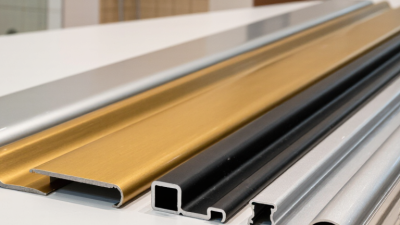
Anodizing ranks highly for balanced performance. It creates a thin, hard oxide layer that improves corrosion resistance and surface durability. Black anodizing can increase radiative heat release, but the effect depends on airflow and operating temperature. Powder coating provides strong color control and impact resistance. Yet its thicker insulating layer may reduce heat transfer, especially around mounting surfaces. Keep those areas uncoated when possible. No ranking is absolute. I have seen a well-designed coated profile outperform a poorly ventilated bare one.

Tips: Match treatment thickness with the thermal path. Ask for coating data, surface hardness, and emissivity values. Check whether the finish covers contact faces, grooves, or threaded holes. For global purchasing, confirm salt-spray results and packaging protection. Bare aluminum can arrive marked after a long sea journey. That detail is easy to underestimate. Also, test the complete assembly, not only the profile. A small gap, loose fastener, or uneven thermal pad can matter more than the finish itself.

2026 Best Aluminum Heatsink Profiles for Global Buyers

Surface Treatments Ranked: Anodizing, Powder Coating, and Bare Aluminum

Anodizing ranks first for heatsink applications that require a strong balance of heat dissipation, corrosion resistance, and finish durability. Bare aluminum provides the highest direct thermal performance but offers minimal surface protection. Powder coating delivers strong protection and color flexibility, but its thicker polymer layer adds thermal resistance and is generally less suitable for primary heat-transfer surfaces.

Reference basis: 6063-series aluminum typically has thermal conductivity near 200–210 W/m·K. Typical anodized layers are approximately 10–25 μm, while architectural powder coatings are commonly about 60–120 μm. Protection ratings are comparative engineering benchmarks on a 1–5 scale.

Global Buyer Checklist: Thermal Load, Dimensions, MOQ, Compliance, and Cost

For global buyers, selecting aluminum heatsink profiles starts with the thermal load, not appearance. In 2026, calculate heat output, airflow, ambient temperature, and allowable component temperature. A 120-watt module may require more surface area in a sealed enclosure. Ask for thermal resistance data under stated test conditions. Real installations often perform differently. Measure twice.

Check the profile envelope carefully. Confirm length, wall thickness, mounting holes, flatness, and clearance around cables. For Customized Wall Supports Profiles Aluminum Brackets, request a detailed drawing before approving tooling. Include cutting tolerance and surface treatment requirements. A small dimensional error can create mounting stress or poor contact. Keep records. MOQ also matters. Clarify sample quantities, production minimums, replacement policy, and lead times for custom extrusion dies.

Compliance documents should match the destination market and application. Request alloy certificates, material declarations, coating information, and relevant safety test reports. Do not accept a generic certificate without traceable batch details. Cost comparisons must include tooling, machining, finishing, packaging, freight, duties, and possible inspection fees. The cheapest quotation can become expensive after revisions. I have seen buyers underestimate packaging damage. That risk deserves a line in the purchase plan. Evaluate supplier process control, inspection photographs, and response quality before committing. Some checks feel excessive, but missing one can delay an entire shipment.

6061 Special Aluminum Profiles for Mobile Phone Shells: Features, Benefits, and Applications

6061 Special Aluminum Profiles for Mobile Phone Shells: Features, Benefits, and Applications

6061 special aluminum profile is a high-performance material developed for modern mobile phone housings. As an Al-Mg-Si-Cu alloy, it offers a balanced combination of medium strength, fracture toughness, corrosion resistance, fatigue resistance, and formability. Its relatively low density—about 2.70 g/cm³—helps manufacturers create rigid yet lightweight shells, while its stable machining performance supports precise dimensional control for buttons, camera openings, speakers, and internal interfaces.

The material is particularly suitable for CNC cutting, milling, drilling, anodizing, and coloring. Anodizing can improve surface hardness and corrosion protection while providing consistent decorative finishes. According to the International Aluminium Institute, recycling aluminum requires only around 5% of the energy used for primary production, making aluminum housing components attractive for manufacturers seeking improved material efficiency and lifecycle performance. Proper heat treatment and surface preparation can further enhance the profile’s durability and appearance.

These profiles can be customized into different cross-sections, wall thicknesses, lengths, and shapes according to the structural and aesthetic requirements of various mobile phone models. They are applicable to mid-range and premium device housings, frame structures, decorative trims, and precision enclosure parts. Their combination of machinability, protection, appearance, and recyclability makes 6061 aluminum a practical solution for lightweight, durable, and visually refined mobile phone shells.

FAQS

What aluminum properties matter most when choosing a heatsink?

Aluminum density is about 2.70 g/cm³. A common conductivity reference is 205 W/m·K. Treat it as a design estimate, not a guarantee. Alloy, temper, and temperature can change performance.

How much can a 100 × 100 × 20 millimeter aluminum block weigh?

A solid block weighs about 540 grams before machining. Finned designs usually weigh less. Their fins increase cooling area without adding much mass.

How do pin-fin, plate-fin, and extruded heatsinks differ?

Pin-fins accept airflow from several directions. They suit compact devices with irregular airflow. Plate-fins guide air through parallel channels. Extruded profiles offer consistent shapes for repeated production.

Can high thermal conductivity compensate for poor heatsink design?

No. Blocked airflow can defeat excellent material conductivity. Poor contact pressure also raises thermal resistance. A small base gap may matter more than taller fins.

What information should buyers request from a supplier?

Request the alloy, temper, test temperature, and dimensional tolerances. Ask for traceable test evidence. Generic catalog figures may hide important conditions. Check batch details.

How should a buyer evaluate heatsink performance?

Compare thermal resistance under the intended airflow. Use the real fan speed and ambient temperature. Inspect the finished base, fin channels, and mounting pressure. Datasheet values alone can mislead.

What dimensions require careful inspection?

Confirm length, wall thickness, mounting holes, flatness, and cable clearance. Review cutting tolerances and surface treatment requirements. A small dimensional error can create mounting stress. Measure twice.

What costs should a global buyer include?

Include tooling, machining, finishing, packaging, freight, duties, and inspection fees. Also confirm minimum quantities and lead times. Cheap quotations can become expensive after revisions. Packaging damage is easy to underestimate.

Conclusion

Choosing the right Aluminum Heatsinks Profiles requires balancing thermal performance, design requirements, manufacturing quality, and total cost. Aluminum offers a practical combination of low density, around 2.70 g/cm³, and strong thermal conductivity of approximately 205 W/m·K. Pin-fin, plate-fin, and extruded profiles each provide different benefits depending on airflow, available space, surface area, and cooling load. For alloy selection, 6063-T5 is often valued for its thermal conductivity near 201 W/m·K and good extrusion performance, while 6061-T6 may be preferred when greater mechanical strength is needed.

Buyers should evaluate thermal resistance (Rθ), airflow conditions, fin density, and effective surface area before finalizing a design. Manufacturing specifications such as ASTM B221 extrusion requirements and ISO 2768 dimensional tolerances can support consistent production. Surface treatments, including anodizing, powder coating, or leaving the aluminum bare, should be selected according to corrosion protection, appearance, and heat-transfer priorities. A complete purchasing checklist should also cover thermal load, dimensions, minimum order quantity, compliance documentation, lead time, and cost.